Dog Health
Dog Diarrhea: Causes, What to Feed & When to See a Vet
Dog diarrhea is one of the most common reasons owners go looking for answers, and one of the most variable. A single soft stool after a rich treat is a very different situation from three days of watery diarrhea in a puppy. This guide covers the whole picture — what diarrhea in dogs actually is, what commonly causes it, what to give and feed a dog with diarrhea, how to help at home, and the specific signs that mean the decision belongs to a veterinarian rather than the internet.
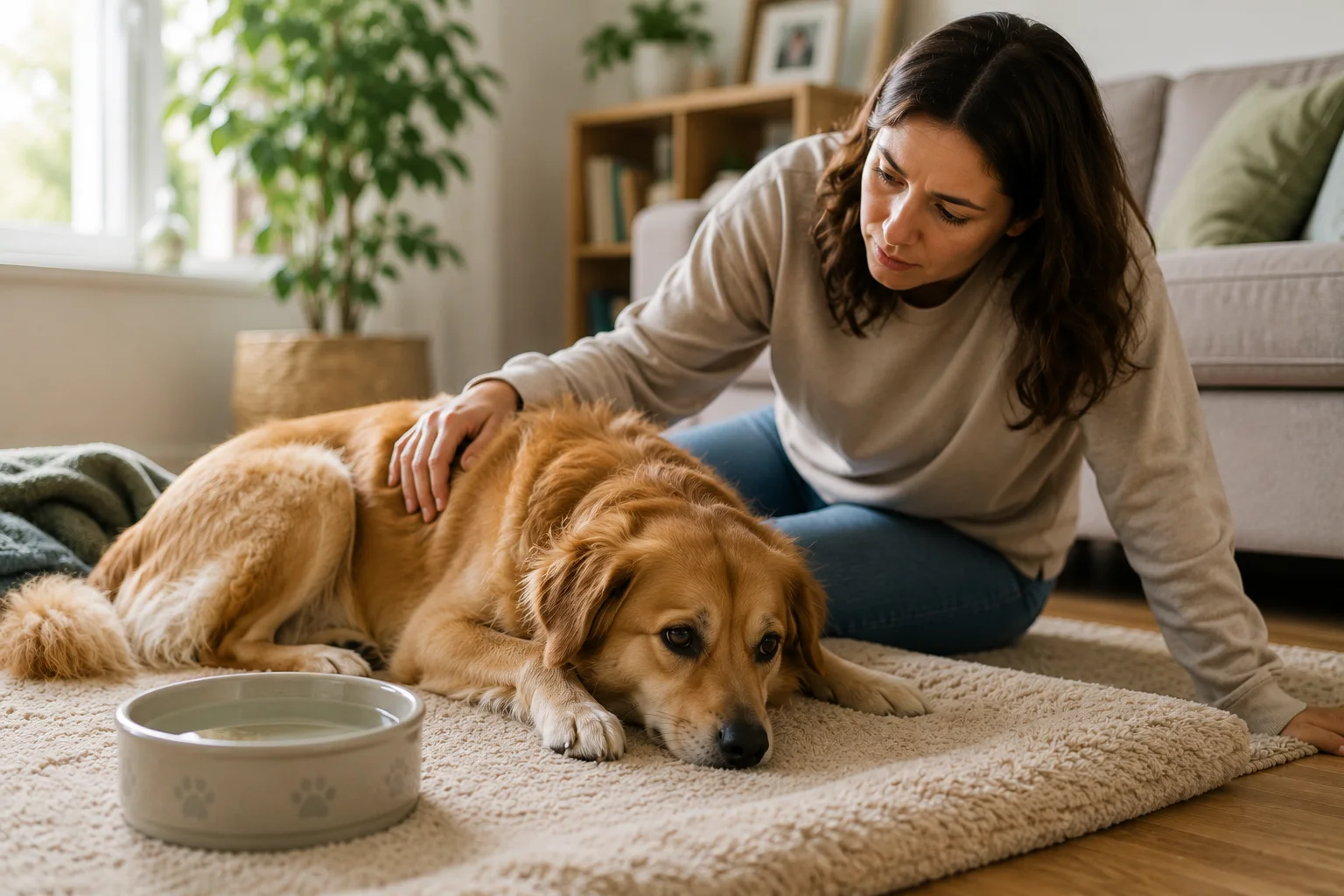
What should you do when your dog has diarrhea?
If your dog has diarrhea but is otherwise bright, eating and drinking, mild diarrhea in an otherwise healthy adult dog can often be monitored at home for a day or so. Keep fresh water available at all times so your dog stays hydrated, and offer small amounts of plain, easy-to-digest food such as boiled chicken and white rice instead of rich meals, treats or table scraps. Watch the stool, appetite, energy and hydration closely. Contact your veterinarian promptly if you see blood, black tarry stools, repeated vomiting, an inability to keep water down, severe lethargy, a painful or swollen belly, or suspected poisoning — and sooner rather than later for puppies, senior dogs, or any dog with an existing health condition. This is general guidance, not a diagnosis.
What counts as dog diarrhea?
Dog diarrhea is a change in stool consistency and frequency: stools that are looser, more watery, or more frequent than normal for that particular dog. Some day-to-day variation is normal in healthy dogs, so "normal" is best judged against your own dog's usual output rather than an absolute standard. A single soft stool is not the same event as repeated liquid diarrhea, and telling the two apart is the first useful step.
A simple mental scale helps. Stool runs from firm and easy to pick up, through soft but still holding shape, to soft and losing shape, to no shape at all, to watery or liquid diarrhea. Moving down that scale — especially a jump of two or more steps, a runny stool, or frank liquid — is what's worth paying attention to. Owners describe the same thing in many ways: dog loose stool, loose stools, runny stool, watery stool, watery diarrhea in dogs, "the runs", or a dog that suddenly has soft, unformed poop.
Two other dimensions matter as much as consistency. Frequency: is your dog going three or four times a day instead of once, or straining repeatedly with little result? And duration: a single loose stool that resolves is very different from loose stools every time for three days. Veterinarians divide cases into acute (sudden onset, usually short-lived) and chronic (lasting or recurring over weeks), because the two lead to quite different approaches.
It's also worth separating soft stool in a dog who is otherwise acting fine — bright, eating, drinking and playing normally — from diarrhea in a dog who is flat or unwell. The first is usually a milder, often diet-related event you can watch for a day or so; the second is a reason to call your vet whatever the stool looks like. The rest of this guide helps you tell them apart.
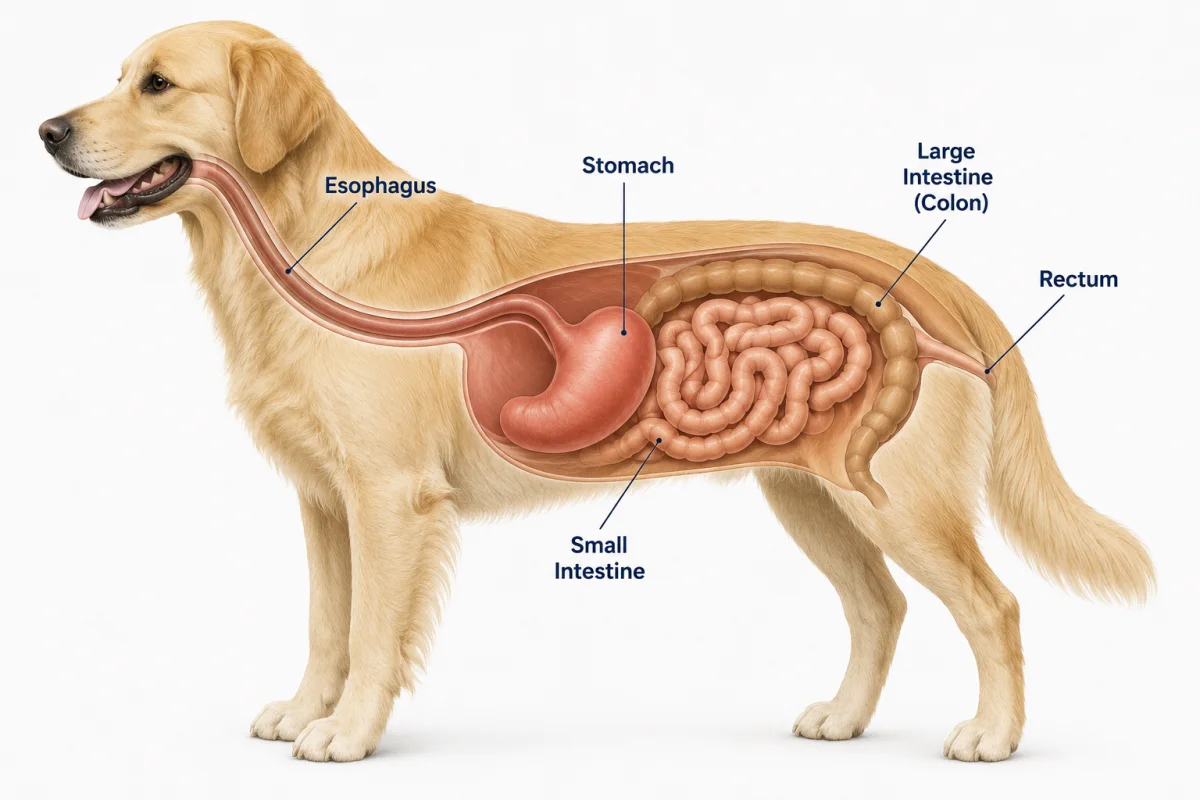
Why does my dog have diarrhea?
Diarrhea is a symptom, not a diagnosis, and the list of possible causes is long. Owners often ask why do dogs get diarrhea, or more personally, why does my dog get diarrhea so often — and in everyday practice, most cases of diarrhea in dogs trace back to a handful of familiar ones. You usually cannot be certain which applies to your dog at home, so treat the list below as context for a conversation with your vet rather than a way to self-diagnose.
Dietary changes and food
A sudden change of food is one of the most common and most avoidable causes of loose stools. Switching brands or recipes without a gradual transition gives the gut no time to adapt. Rich, high-fat meals and frequent changes of treats can do the same.
Eating something they shouldn't
Dietary indiscretion — scavenged food, bin raiding, table scraps, a rich chew, or something picked up on a walk — is the classic cause of sudden, one-off diarrhea in an otherwise well dog. It is also why so many episodes appear out of nowhere. Grass is one of the things dogs pick up outdoors, and if yours grazes regularly it is worth deciding whether you should let your dog eat grass and where.
Stress and routine changes
Boarding, travel, moving house, a new pet or a new baby, or any significant change in routine can all show up in a dog's stools. Stress-related diarrhea is usually short-lived once things settle.
Parasites and infections
Intestinal parasites such as worms and protozoa like Giardia are common, especially in puppies and dogs with outdoor access. Bacterial and viral infections range from mild to serious — parvovirus in unvaccinated puppies sits at the emergency end of that spectrum.
Medications and antibiotics
Antibiotics in particular commonly loosen stools by disturbing the normal gut bacteria, and other medications can do the same. If diarrhea starts during or just after a course of medication, mention it to the prescribing vet.
Food intolerance or sensitivity
A specific ingredient a dog doesn't handle well can cause recurring rather than one-off loose stools. This is more of a pattern over time than a single event, and it often overlaps with the sensitive-stomach picture.
Underlying health problems
Chronic inflammatory conditions, pancreatic or liver disease, endocrine problems and some cancers can all cause persistent or recurring diarrhea. These need veterinary diagnosis; no home routine resolves them.
Toxins or foreign bodies
Poisonous plants, human foods such as xylitol, chocolate or grapes, household chemicals, or a swallowed object are urgent causes. Suspected poisoning or a foreign body is a reason to contact your vet or an emergency service immediately, not to wait and watch.
Common causes of sudden vs. recurring diarrhea
It helps to notice whether the problem appeared suddenly or keeps coming back, because the two patterns tend to point in different directions. Sudden, one-off diarrhea in a dog who is otherwise well is most often down to dietary indiscretion, an abrupt food change, stress or a passing infection. Diarrhea that recurs or drags on is more likely to involve parasites, a food intolerance, or an underlying condition, and it is the pattern that most warrants a veterinary work-up rather than another round of home care.
Because that list spans "ate something silly" to "needs treatment today", the practical question usually isn't "what exactly caused it?"; it's "does this dog need a vet, and when?" The sections below are built around that decision.
What should I give a dog with diarrhea?
For a mild episode in an otherwise well adult dog, keep fresh water available at all times and offer small amounts of plain, low-fat, highly digestible food, fed little and often. The aim is food that is gentle on a recovering gut, not a special cure. Two options fit that description: a veterinary gastrointestinal diet, which is complete, balanced and formulated for digestive upset, or a simple home-prepared bland meal such as boiled skinless chicken with plain white rice. What you give matters less than keeping it plain, keeping portions small, and keeping water available.
- Fresh water, always. Fluid loss is the real risk with diarrhea. Keep water available and encourage small, frequent drinks; if your dog is also vomiting, offer small amounts often rather than letting them gulp a large bowl.
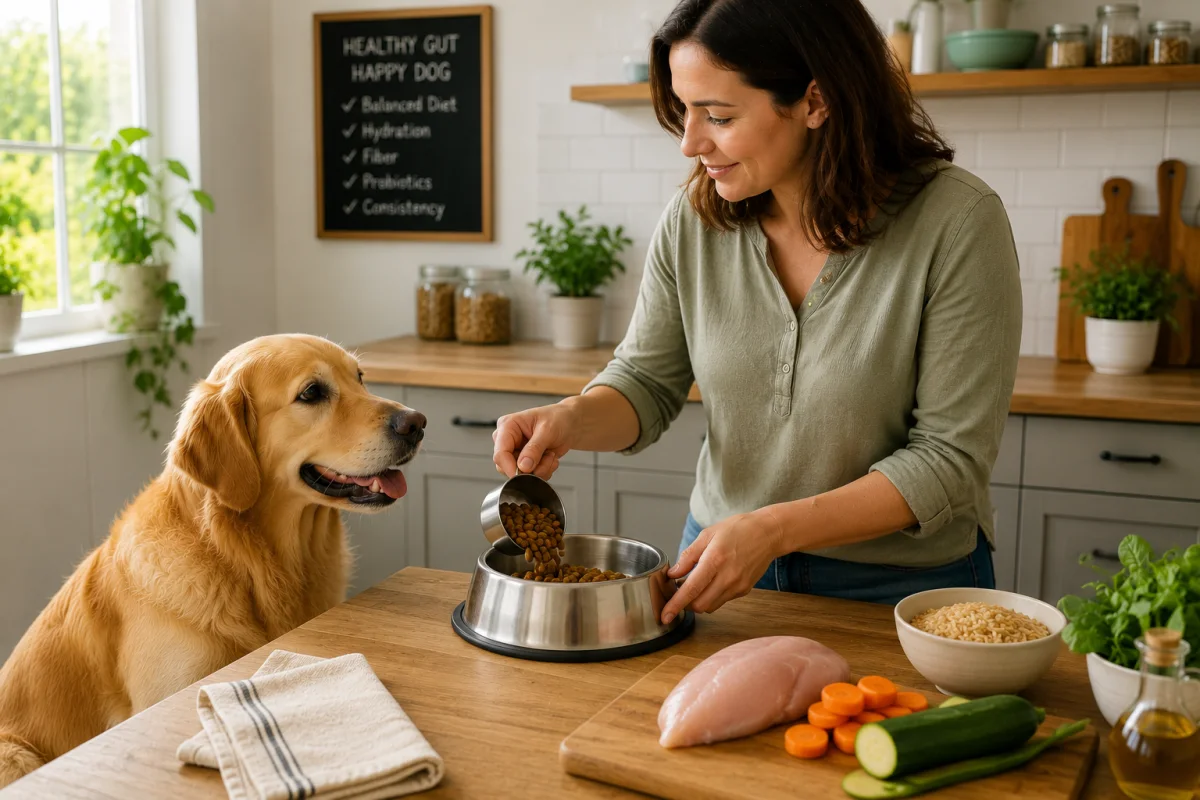
- A short-term home-prepared bland meal. Plain boiled chicken or turkey with white rice is the traditional home option for what to give a dog for diarrhea. Keep it unseasoned, skip butter and oil, and offer small portions several times a day. It suits a mild, short-lived case, but it is not complete and balanced, so treat it as a short bridge back to normal food rather than a long-term diet.
- Plain pumpkin, in moderation. A little plain canned pumpkin (not pie filling) adds soluble fibre that can help firm stools for some dogs. It may help; it isn't a guaranteed fix, so introduce it in modest amounts.
- A veterinary sensitive or gastrointestinal diet. Highly digestible, lower-fat "sensitive-stomach" or GI diets are made for exactly this, and because they are complete and balanced they are often preferable to a home bland meal, especially if feeding needs to continue for more than a day or two. What actually matters is digestibility, a moderate fat level and a simple ingredient list, the same criteria in our guide to the best dog food for a sensitive stomach. For anything beyond a mild case, your vet may recommend a prescription gastrointestinal diet.
- Back to normal, gradually. As stools firm up, mix the regular food back in over two to three days rather than switching abruptly, so you don't restart the upset.
What not to give. Don't give human anti-diarrhea medicines, painkillers or anything else from your own cabinet unless your veterinarian has specifically told you to; several common products are unsuitable or unsafe for dogs, and dosing mistakes are easy. Avoid rich or fatty foods, dairy, table scraps and sudden new ingredients while the gut is recovering. A food intolerance or allergy can also make a particular ingredient the wrong choice, so a diet that worked for another dog will not always suit yours. Remember too that a home bland diet is a short-term bridge, not a balanced long-term diet: puppies, very small breeds, seniors, pregnant dogs and dogs with conditions such as diabetes should be fed on veterinary advice rather than a home recipe.
Should I starve my dog with diarrhea?
Prolonged fasting is no longer the default advice for a dog with diarrhea. Current veterinary guidance leans toward keeping the recovering gut supplied with nutrients, so for a mild case in an otherwise healthy adult dog, small amounts of an appropriate, digestible food are usually more helpful than withholding food altogether. Fresh water should always stay available; do not restrict water as a home measure.
There are exceptions. If your dog is vomiting significantly, cannot keep food or water down, or your veterinarian has specifically advised resting the gut for a short period, follow that guidance. Puppies are a separate case and should not be placed on an adult fasting routine; veterinary advice matters more for them (see puppy diarrhea below). If you are unsure whether to feed, that uncertainty is itself a good reason to call your clinic.
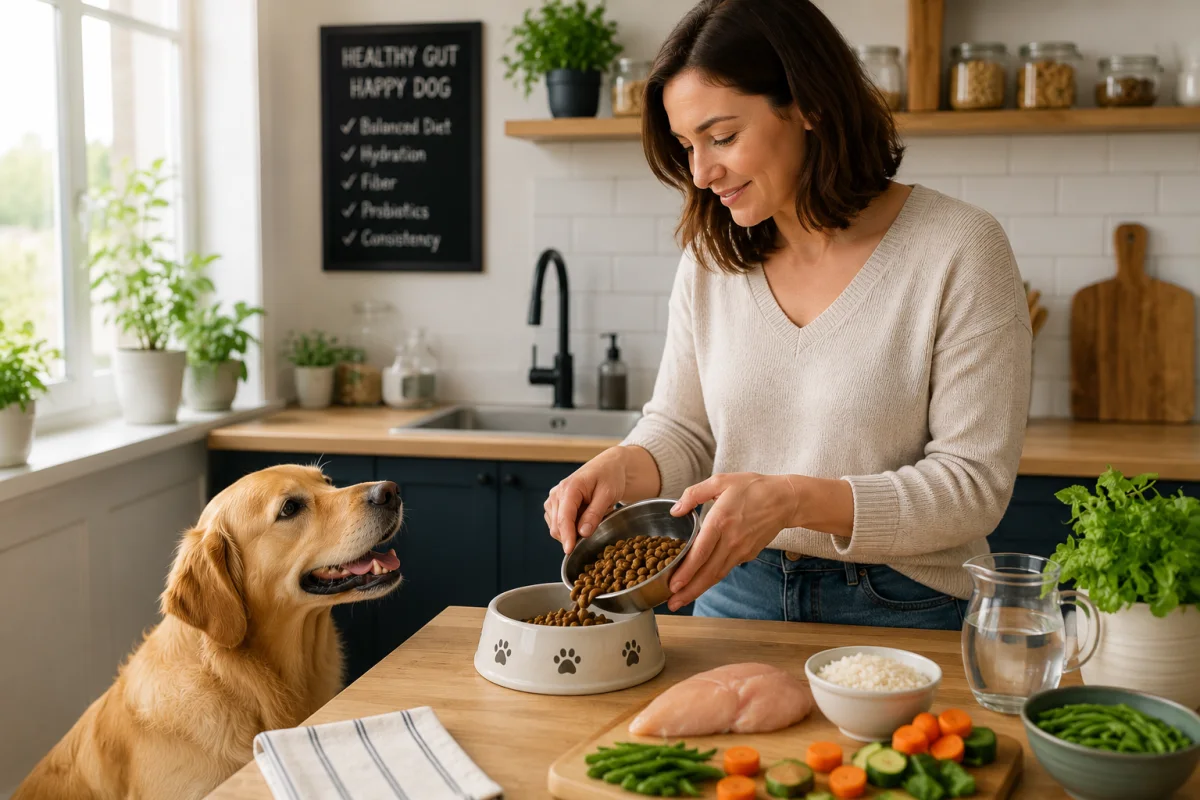
How to feed a dog with diarrhea
Feed small, plain, low-fat meals more often than usual, keep water constantly available, and avoid treats and rich food until stools firm up. The routine matters as much as the ingredients:
- Small, frequent meals rather than one or two large ones, so the gut isn't overloaded.
- Fresh water at all times, encouraging small, regular drinks.
- Plain and low-fat — unseasoned, no butter, oil, gravy or rich additions.
- No treats, chews or table scraps for a few days while things settle.
- Watch tolerance — if a food clearly makes things worse, stop it and reassess.
- Return to normal food gradually over two to three days as stools improve.
If your dog won't eat at all, don't force food, but do treat a complete loss of appetite alongside diarrhea as a reason to check in with your vet — see diarrhea and not eating below.
What foods should you avoid when your dog has diarrhea?
While the gut is settling, avoid anything rich, fatty or unfamiliar — high-fat meals and fried food, table scraps, dairy, novel treats and chews, and any abrupt change of diet. These are among the most common things that keep loose stools going or make them worse, so cutting them out is often as useful as anything you add in.
- Rich, fatty and fried foods. High-fat meals are hard on a recovering gut and a frequent trigger for loose stools; keep meals plain and low-fat.
- Table scraps and leftovers. Human food and offcuts are a classic cause of sudden diarrhea and pull against a steady, consistent diet.
- Dairy, when poorly tolerated. Many dogs handle milk badly, so milk, cheese and ice cream can worsen diarrhea in dogs that aren't used to them.
- New or unfamiliar treats and chews. A recovering gut is not the moment to introduce a new treat, dental stick or long-lasting chew; hold changes until stools are firm again.
- Sudden diet changes. Even switching to a "better" food abruptly can restart the upset — any change should be gradual over several days.
- Anything scavenged. Bin contents, compost and things picked up on walks are exactly what you're trying to rule out, so limit access while your dog recovers.
If loose stools keep returning whenever your dog eats a particular food or treat, that pattern is worth noting and raising with your vet. A genuinely digestible everyday diet — the focus of our companion guide to dog food for diarrhea — tends to be far more useful than repeatedly reaching for a quick fix.
How to help a dog with diarrhea
The most useful help you can give at home is steady hydration, gentle food, close monitoring, and knowing when to escalate. A simple, practical framework:
- Keep water available and encourage drinking. Fluid loss is what turns diarrhea from a nuisance into a medical problem, fastest in small dogs and puppies.
- Offer a plain, low-fat diet in small meals. Boiled chicken and rice, a little plain pumpkin, or a vet-recommended sensitive/GI food.
- Keep portions small and frequent rather than one big meal, and skip treats and scraps.
- Reduce stress. A calm, quiet few days with a steady routine gives the gut the best chance to settle.
- Monitor the whole dog. Track stool consistency and frequency, appetite, energy, hydration, and any vomiting or blood — notes make a vet call far more useful.
- Don't give human medication unless your vet has told you to.
- Know when to escalate. If there's no clear improvement within about two days, or any warning sign appears, contact your veterinarian.
How long does dog diarrhea last?
Mild, acute diarrhea in an otherwise healthy adult dog often settles within a day or two of supportive care. Improvement matters more than an exact number of days: loose stools that are becoming firmer, less frequent and less watery are a good sign, even before things are fully back to normal.
When there is no improvement after roughly 48 hours, it is worth contacting your veterinarian rather than continuing to manage things at home. Diarrhea that is still going at three days should not simply be treated at home any longer, and diarrhea that keeps returning over weeks points to a cause that needs a diagnosis rather than repeated home care.
Some dogs warrant a lower threshold: puppies, senior dogs, very small breeds and dogs with existing health conditions have less margin and should be checked sooner. And warning signs override the clock entirely: blood, repeated vomiting, an inability to keep water down, marked lethargy or a painful belly mean you contact your vet now, whatever the timeline (see when it's an emergency).
How to stop dog diarrhea
There is no universal way to stop dog diarrhea — or to stop diarrhea in dogs generally — instantly, and it's worth being honest about that. Diarrhea is the body's response to something — a dietary upset, an infection, stress, or an underlying problem — so the right way to stop it depends on the cause and severity. Anyone promising a guaranteed fast cure is overstating what's possible.
For a mild, diet-related episode in a well adult dog, the practical route to firmer stools is the supportive care already described: fresh water, a plain low-fat diet in small meals, no treats or rich food, and a calm few days. Many of these episodes settle within a day or two. A little plain pumpkin firms stools for some dogs, and a highly digestible food reduces the undigested residue that can keep diarrhea going.
What you should not do is chase a quick fix with human anti-diarrhea tablets, or keep trying home approaches for days while a dog gets worse. If diarrhea is severe, bloody, watery and frequent, lasts beyond about two days, or comes with vomiting, lethargy or a painful belly, the fastest safe route to stopping it is a veterinarian who can identify and treat the actual cause.
How to treat diarrhea in dogs
It helps to separate two different things: supportive home care for mild cases, and veterinary diagnosis and treatment for everything else. When people search for how to treat dog diarrhea or for treating diarrhea in dogs, they're usually mixing these two together. BestPetCareTips is an editorial pet-care publisher, not a veterinary provider — we can explain the landscape, but we cannot diagnose or treat your dog, and this guide is not a substitute for a vet who can examine them.
Supportive home care is what an owner can reasonably do for a mild episode in an otherwise healthy adult dog with none of the warning signs below: maintain hydration, feed a plain low-fat diet in small meals, avoid treats and rich food, keep things calm, and monitor closely. This supports recovery; it does not treat an underlying disease.
Veterinary treatment is a different matter. A vet can assess hydration, check for parasites and infection, run tests where needed, and prescribe appropriate treatment — which may include specific medication, fluids, or a prescription gastrointestinal diet. That clinical decision belongs to them, particularly for persistent, severe, or recurring diarrhea, or any case involving a puppy, senior, or dog with an existing condition.
What might a veterinarian do for a dog with diarrhea?
What happens at the clinic depends on the dog and the situation, but it usually starts with history-taking and a physical examination, including an assessment of hydration. From there, depending on what they find, a veterinarian may:
- run a fecal test to look for parasites,
- recommend bloodwork if the dog seems unwell or the problem is ongoing,
- suggest imaging such as X-rays or ultrasound if an obstruction or swallowed object is suspected,
- give fluids if the dog is dehydrated,
- recommend a veterinary gastrointestinal diet where appropriate, and
- direct treatment at the underlying cause once it is clearer.
Not every dog needs every test. The point of a visit is to match the assessment and treatment to the individual dog rather than to run everything as a matter of course.
Dog diarrhea for 3 days: when should you see a vet?
Diarrhea that lasts three days is past the point where watchful waiting is appropriate — if your dog has had diarrhea for 3 days, or loose stools continue beyond about two days, contact your veterinarian, even if your dog otherwise seems reasonably well. Most mild, diet-related episodes improve within a day or two of supportive care. When they don't, persistence itself is meaningful: it raises the chance of a cause that home care won't resolve, such as parasites, infection, food intolerance, or an underlying condition, and it increases the risk of dehydration.
You do not need to wait the full three days if things look worse. Diarrhea that is worsening, becoming bloody or watery, or is accompanied by vomiting, lethargy, or a loss of appetite warrants a call sooner. Knowing when to see a vet for dog diarrhea comes down to persistence plus how the whole dog is doing. For puppies, senior dogs, very small breeds, and dogs with existing health problems, the threshold is lower still — often same-day. Bringing your notes on when it started, the stool's appearance, and any other signs makes that vet visit far more productive.
When is dog diarrhea an emergency?
Some signs mean diarrhea should be treated as urgent rather than monitored. If you see any of the following, contact your veterinarian or an emergency service promptly rather than continuing home care:
| Warning sign | Why it matters |
|---|---|
| Blood in the stool, or black, tarry stools | Can indicate bleeding in the gut and needs assessment. |
| Repeated vomiting, or can't keep water down | Fluid loss accelerates and dehydration risk rises quickly. |
| Severe lethargy, weakness or collapse | Suggests the dog is genuinely unwell, not just "off". |
| Painful, swollen or tense abdomen | Can signal a serious problem such as an obstruction or bloat. |
| Suspected toxin, poison or swallowed object | Time-critical; call immediately rather than waiting. |
| Signs of dehydration (tacky gums, sunken eyes) | Needs veterinary assessment, not home guesswork. |
| Very young puppies with diarrhea | Little fluid reserve and higher infection risk; treat as urgent. |
| Diarrhea that persists or keeps worsening | Points beyond a simple dietary upset toward a diagnosable cause. |
| Diarrhea in a dog with an existing condition | Less margin for error; discuss with the vet who knows their history. |
Contact your veterinarian promptly if you see
Blood in the stool or vomit, or black, tarry stools · repeated vomiting, or an inability to keep water down · diarrhea lasting more than about two days · lethargy, weakness or collapse · a swollen, tense or painful abdomen · signs of dehydration · suspected poisoning, or a swallowed object · pale gums · fever, or a dog who seems in pain.
Use a lower threshold — call sooner — for puppies, senior dogs, pregnant dogs, very small breeds, and any dog with an existing health condition or on medication. If you're not sure, phoning your clinic for advice is always reasonable; that's part of what they're there for.
Puppy diarrhea: what is different?
Puppy diarrhea deserves a lower threshold for veterinary care than diarrhea in a healthy adult dog. Puppies dehydrate fast, have little reserve, may not be fully vaccinated, and are the group most likely to carry intestinal parasites or to catch serious infections such as parvovirus. For those reasons, diarrhea in a young puppy — especially with vomiting, low energy, or a poor appetite — is usually a same-day veterinary question rather than a wait-and-see one.
Why does my puppy have diarrhea?
The causes overlap with adult dogs, including diet changes, dietary indiscretion and stress from rehoming, but parasites and infectious disease carry more weight in a puppy, and vaccination status matters. A puppy that is not yet fully vaccinated is more vulnerable to serious infections such as parvovirus. Because puppies have so little reserve and can escalate within hours rather than days, it is safest to treat diarrhea in a young or unvaccinated puppy as a prompt veterinary question, particularly if there is vomiting, lethargy, poor appetite, blood or any sign of dehydration.
What if my puppy is still eating and drinking?
A puppy that is bright, still eating and drinking, and passing one or two soft stools is more reassuring, but it does not remove the need for caution. Puppies can go downhill quickly, so keep water available, hold off on rich food and treats, and watch closely for any change in energy, appetite or the stool itself. If the diarrhea continues, worsens, or is joined by vomiting or low energy, contact your veterinarian promptly rather than waiting.
Should you starve a puppy with diarrhea?
No. Puppies should not be fasted, and they should never be placed on an adult withholding routine. Do not withhold food or water from a puppy as a home treatment. If you are unsure what or how to feed, ask your veterinarian, who may recommend a specific easily digestible diet alongside checking for parasites or infection. This guide does not provide medication or dosing instructions for puppies, because those decisions genuinely need a professional who can weigh the puppy's age, size and health.
Dog diarrhea and not eating
Diarrhea combined with a dog that won't eat is more concerning than diarrhea alone, because it suggests a dog who feels genuinely unwell and is at greater risk of dehydration. A dog with diarrhea not eating is one of the clearer signals that something is more than a passing tummy upset. A brief, mild dip in appetite during a single bout of loose stools can happen and may pass quickly. But a dog that refuses food, seems flat or withdrawn, is vomiting, or won't drink is telling you something more than "mild tummy upset".
As a practical rule, if your dog has diarrhea and won't eat for more than about a day, or shows low energy, vomiting, or any of the warning signs above, contact your veterinarian rather than waiting it out. Don't force-feed, and don't try to tempt a sick dog with rich food or scraps, which can make diarrhea worse. Keep water available, note when your dog last ate and drank, and let the clinic weigh in — appetite is one of the most useful signals of how a dog is really doing.
Can probiotics help with dog diarrhea?
Probiotics can help modestly for some mild, acute cases as part of supportive care, but they are optional rather than essential and are not a universal treatment. The evidence is most encouraging for short-lived, uncomplicated upsets, and thinner for chronic problems — and no supplement addresses an underlying cause. They come up constantly in this context, so it's worth keeping expectations realistic.
We've covered the specifics separately: what the research actually found in do probiotics help dogs with diarrhea?, and, if a course of antibiotics is the trigger, probiotics for dogs after antibiotics. If you decide a probiotic is worth trying, our criteria-based guide to the best dog probiotics explains what to look for, and the wider picture of digestive resilience is covered in our dog gut health guide. If you're weighing supplements more broadly, note that not every product is a probiotic: our UltraK9 Pro review looks at a whole-food liquid supplement, a different category that is likewise not a treatment for diarrhea. None of these is a substitute for veterinary care when warning signs, persistence or risk factors are present.
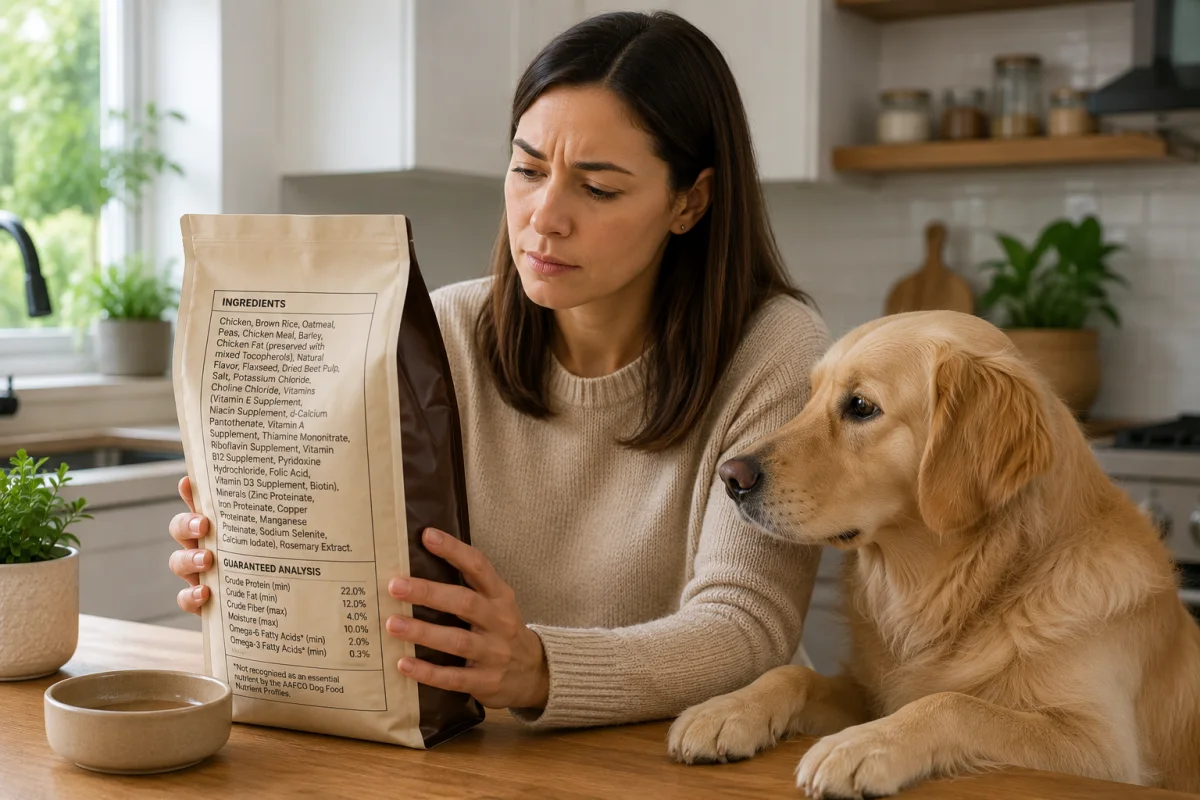
If you decide a probiotic is worth trying as part of that supportive care, PawBiotix is a dog-specific probiotic we've reviewed — shared here as one option to consider, not as a treatment for diarrhea or a substitute for veterinary care.
Affiliate Disclosure: We may earn a commission if you buy PawBiotix through links on this page, at no additional cost to you.
How to reduce the chance of repeat dog diarrhea
Most preventable diarrhea comes down to a few steady habits around food, scavenging and routine veterinary care. Knowing how to prevent diarrhea in dogs is really about removing the common triggers — you can't prevent every episode, but you can remove most of the avoidable ones:
- Transition foods gradually — over about seven to ten days, mixing in a little more of the new food each day, so the gut can adapt.
- Keep the diet consistent and treats modest; a dog doing well on a food doesn't need constant variety.
- Avoid rich foods and table scraps, which are a frequent cause of sudden loose stools.
- Limit scavenging — secure bins, watch what gets picked up on walks, and be firm about what your dog eats.
- Stay current with parasite control and vaccination as advised by your veterinarian.
- Identify recurring triggers — if diarrhea keeps returning after a particular food, treat, or event, note the pattern and raise it with your vet.
- Manage stress around known triggers such as travel or boarding, and keep routines steady.
If diarrhea keeps coming back despite these habits, that recurring pattern is itself a reason for a veterinary work-up rather than another round of home care — persistent or repeated diarrhea points toward a cause that needs a diagnosis. Diet is often part of the picture in these dogs, which is where our guide to choosing dog food for a sensitive stomach is more relevant than any supplement.
Dog diarrhea vs. colitis: what's the difference?
Diarrhea is a symptom — loose or watery stool — while colitis is inflammation of the colon (the large intestine) that produces a particular type of diarrhea. Put simply, diarrhea describes what the stool is doing; colitis describes where the problem is and why the stool behaves the way it does. Colitis is one common cause of diarrhea in dogs, but not all diarrhea is colitis.
The colitis pattern is large-bowel diarrhea: frequent, small-volume stools, often with visible mucus, straining and urgency, and sometimes a streak of fresh, bright-red blood. That is different from the larger-volume, less-strained loose stools that tend to come from the small intestine. If your dog's problem looks like repeated small dashes outside with mucus and straining, our dedicated guide to colitis in dogs goes deeper into that specific picture — its causes, diet and treatment. Either way, persistent, bloody or worsening diarrhea deserves a veterinary assessment rather than guesswork at home.
Frequently asked questions
How long does dog diarrhea usually last?
Many mild episodes in otherwise healthy adult dogs settle within one to two days with simple supportive care. Veterinary sources commonly advise contacting your vet if loose stools continue beyond about two days, or sooner if your dog seems unwell, cannot keep water down, or shows any warning signs. Chronic diarrhea that lasts or keeps returning over weeks is a separate problem that needs a diagnosis rather than home care.
What should I give a dog with diarrhea?
For a mild episode in an otherwise well adult dog, the usual starting point is fresh water at all times plus a small amount of plain, low-fat, easy-to-digest food such as boiled skinless chicken with plain white rice, fed in small, frequent portions. A little plain canned pumpkin adds soluble fibre that firms stools for some dogs. Avoid rich food, treats, table scraps and sudden diet changes while the gut settles. Do not give human anti-diarrhea medicines unless your veterinarian tells you to.
What is the best food for a dog with diarrhea?
There is no single best product. For a mild, short-lived case, a plain bland diet such as boiled chicken and white rice in small meals is the usual first step, with a gradual return to normal food as stools firm up. Commercial sensitive-stomach or gastrointestinal foods are built on the same principles: highly digestible, lower fat and a simple ingredient list. Puppies, small breeds, seniors and dogs with health conditions should be fed on veterinary advice, and anything beyond a mild case may need a prescription diet.
What can I give my dog to stop diarrhea fast?
There is no guaranteed way to stop dog diarrhea instantly, because diarrhea is a symptom and the right response depends on the cause. For a mild episode you can support recovery with fresh water, a plain low-fat diet in small meals, and rest from treats and rich food. Do not reach for human anti-diarrhea tablets, which can be unsuitable or unsafe for dogs. If the diarrhea is severe, bloody, lasts beyond about two days, or comes with vomiting or lethargy, that is a reason to call your veterinarian rather than trying to force a fast fix at home.
How can I help my dog with diarrhea at home?
Keep fresh water available and encourage small, frequent drinks, feed a plain low-fat diet in small portions rather than one large meal, and cut out treats, chews and table scraps for a few days. Keep things calm and low-stress, monitor the stool, appetite, energy and hydration, and avoid giving any human medication unless your vet has directed you to. If your dog is not improving within about two days or shows any warning signs, contact your veterinarian.
How do I know if my dog's diarrhea is serious?
Diarrhea is more likely to be serious when the whole dog is affected, not just the stool. Warning signs include blood in the stool, black tarry stools, repeated vomiting, an inability to keep water down, marked lethargy or collapse, a painful or swollen abdomen, signs of dehydration, or suspected poisoning. Diarrhea in a young puppy, a senior dog, a very small breed, or a dog with an existing health condition should always be treated more cautiously and checked sooner.
When should I take my dog to the vet for diarrhea?
Contact your veterinarian if diarrhea lasts more than about two days, or straight away if you see blood or black tarry stools, repeated vomiting, an inability to keep water down, lethargy or collapse, a painful or swollen belly, signs of dehydration, or suspected poisoning or a swallowed object. Use a lower threshold and call sooner for puppies, senior dogs, very small breeds, pregnant dogs, and any dog on medication or with a known health condition.
Can I give my dog human anti-diarrhea medicine?
Do not give human anti-diarrhea medicines or other human medications to a dog unless your veterinarian has specifically directed you to. Several common over-the-counter products are unsuitable or unsafe for dogs, some are dangerous for particular breeds, and dosing errors are easy to make. If you feel your dog needs medication, call your clinic for advice rather than using something from your own cabinet.
Why does my dog get diarrhea after changing food?
A sudden change of food gives the gut and its microbial population no time to adapt to a new recipe, which commonly causes loose stools and gas. Transitioning gradually over about seven to ten days, mixing in a little more of the new food each day, usually prevents it. If loose stools continue well after a careful transition, the new food may not suit your dog, and it is worth discussing a different diet with your veterinarian.
What causes diarrhea in dogs?
Common causes of diarrhea in dogs include dietary indiscretion such as scavenging or table scraps, a sudden change of food, stress and routine changes, intestinal parasites, bacterial or viral infections, reactions to medications such as antibiotics, food intolerance or allergy, and underlying diseases affecting the gut, pancreas, liver or other organs. Toxins and swallowed foreign objects are urgent causes. Because the list ranges from trivial to serious, the practical question is usually whether this particular dog needs a vet and when.
What should I feed a puppy with diarrhea?
Puppies have far less reserve than adult dogs and can dehydrate quickly, so diarrhea in a young puppy is usually a same-day veterinary question rather than something to manage with home feeding. Do not withhold food from a puppy, and never withhold water. Ask your veterinarian what and how to feed, because they may recommend a specific easily digestible diet alongside checking for parasites or infections such as parvovirus.
Why does my dog have diarrhea and won't eat?
A short-lived dip in appetite alongside a single bout of diarrhea can happen with a mild upset, but diarrhea combined with refusing food, low energy, or vomiting is more concerning because it points to a dog who feels genuinely unwell and is at greater risk of dehydration. If your dog will not eat and has diarrhea for more than about a day, or seems flat, is vomiting, or shows any warning sign, contact your veterinarian rather than waiting it out.
Can probiotics help dogs with diarrhea?
Probiotics may help modestly for some mild, acute cases of diarrhea as part of supportive care, and are sometimes used when antibiotics have disturbed the gut. The evidence is stronger for short-lived upsets than for chronic problems, and no supplement treats an underlying cause. They are optional rather than essential, and are not a substitute for veterinary care when warning signs, persistence, or risk factors are present.
Should I stop feeding my dog if they have diarrhea?
Current veterinary guidance generally advises against prolonged fasting for a dog with diarrhea, and puppies should not be fasted at all. For a mild episode in an otherwise well adult dog, offering small amounts of a plain, low-fat, easily digestible food is usually preferred to withholding food, with fresh water always available. If your dog will not eat for more than about a day, or seems unwell, contact your veterinarian rather than continuing to withhold food.
What foods should I avoid giving a dog with diarrhea?
While the gut is recovering, avoid rich or fatty foods, fried food, table scraps and leftovers, dairy if your dog tolerates it poorly, and any new or unfamiliar treats and chews. Avoid sudden changes of diet, and limit scavenging. Keeping meals plain, low-fat and consistent gives loose stools the best chance to settle.
What is the difference between dog diarrhea and colitis?
Diarrhea is a symptom — loose or watery stool — while colitis is inflammation of the colon that causes a characteristic type of diarrhea: frequent, small-volume stools, often with mucus, straining and sometimes fresh red blood. Colitis is one cause of diarrhea in dogs, but not all diarrhea is colitis. Persistent, bloody or worsening diarrhea should be assessed by a veterinarian whatever the pattern.
Related Articles
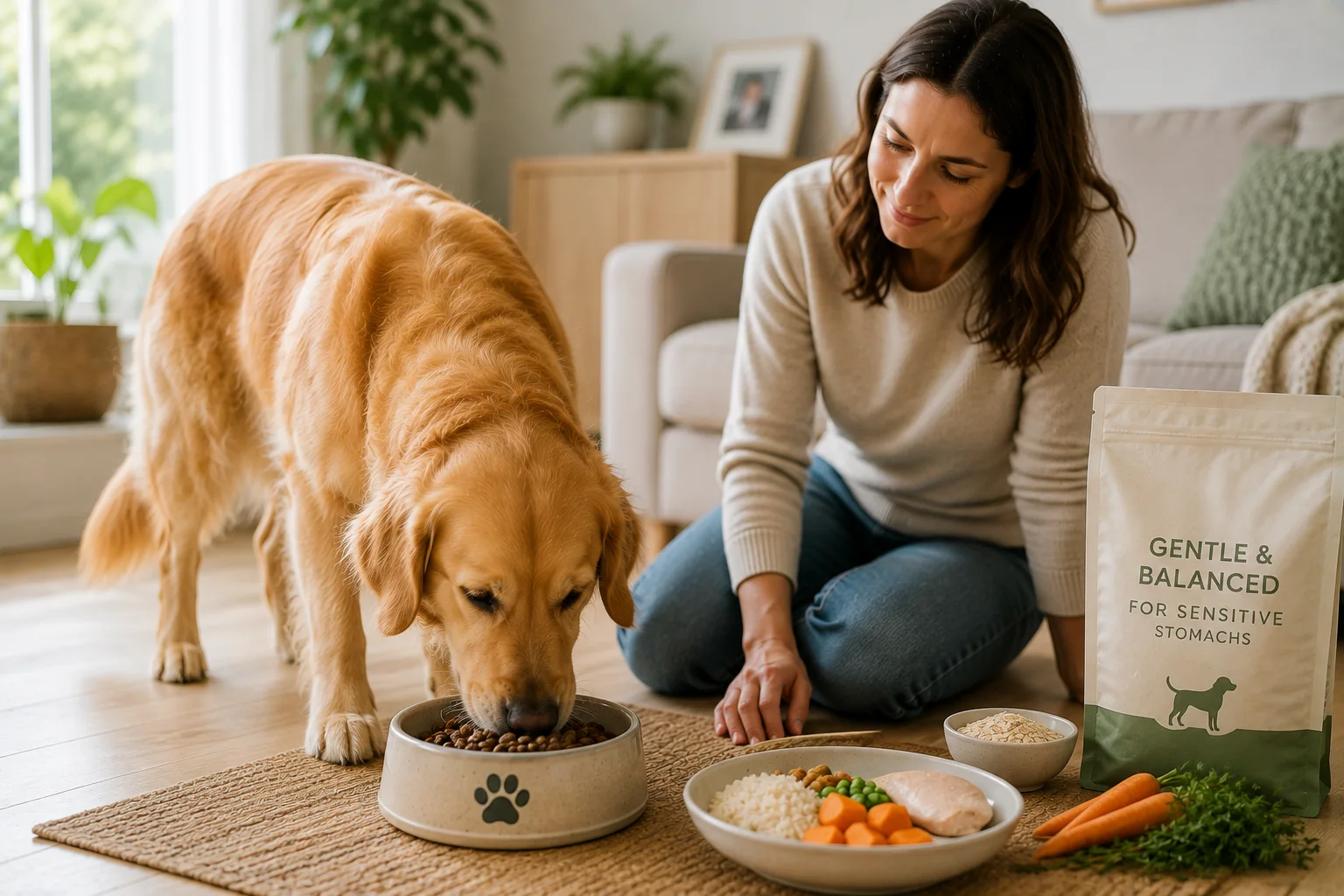 Best dog food for a sensitive stomach
How to choose a digestible, well-tolerated food for a dog prone to loose stools and upset.
Best dog food for a sensitive stomach
How to choose a digestible, well-tolerated food for a dog prone to loose stools and upset.
 Dog gut health: a practical guide for owners
How the canine gut works and the everyday habits that support steady digestion.
Dog gut health: a practical guide for owners
How the canine gut works and the everyday habits that support steady digestion.
 Do probiotics help dogs with diarrhea?
What the research shows about probiotics and loose stools, and where they fit.
Do probiotics help dogs with diarrhea?
What the research shows about probiotics and loose stools, and where they fit.
References
- Cornell University College of Veterinary Medicine, Riney Canine Health Center. "Diarrhea." vet.cornell.edu
- VCA Animal Hospitals. "Diarrhea in Dogs." vcahospitals.com
- PetMD (vet-reviewed). "Dog Diarrhea." petmd.com
- PetMD (vet-reviewed). "Chronic Diarrhea in Dogs." petmd.com
- PetMD (vet-reviewed). "What To Feed a Dog With Diarrhea." petmd.com
- American Kennel Club. "Dog Diarrhea: Signs, Symptoms, and Treatments." akc.org
Medical note: This article is general education for dog owners, not veterinary advice, diagnosis or treatment. Diarrhea can have serious causes, and only a veterinarian who can examine your dog can tell you what's going on. It does not promise a cure or a guaranteed outcome. When in doubt, call your clinic.