Dog Probiotics
Should Dogs Take Probiotics After Antibiotics?
Antibiotics can disrupt the normal balance of bacteria in a dog's gut, and this is one of the more plausible situations for a probiotic to help. The support is modest and the evidence is stronger in people than in dogs — so it's reasonable, but it's supportive care, not a treatment for whatever the antibiotics were prescribed to address.
The short version
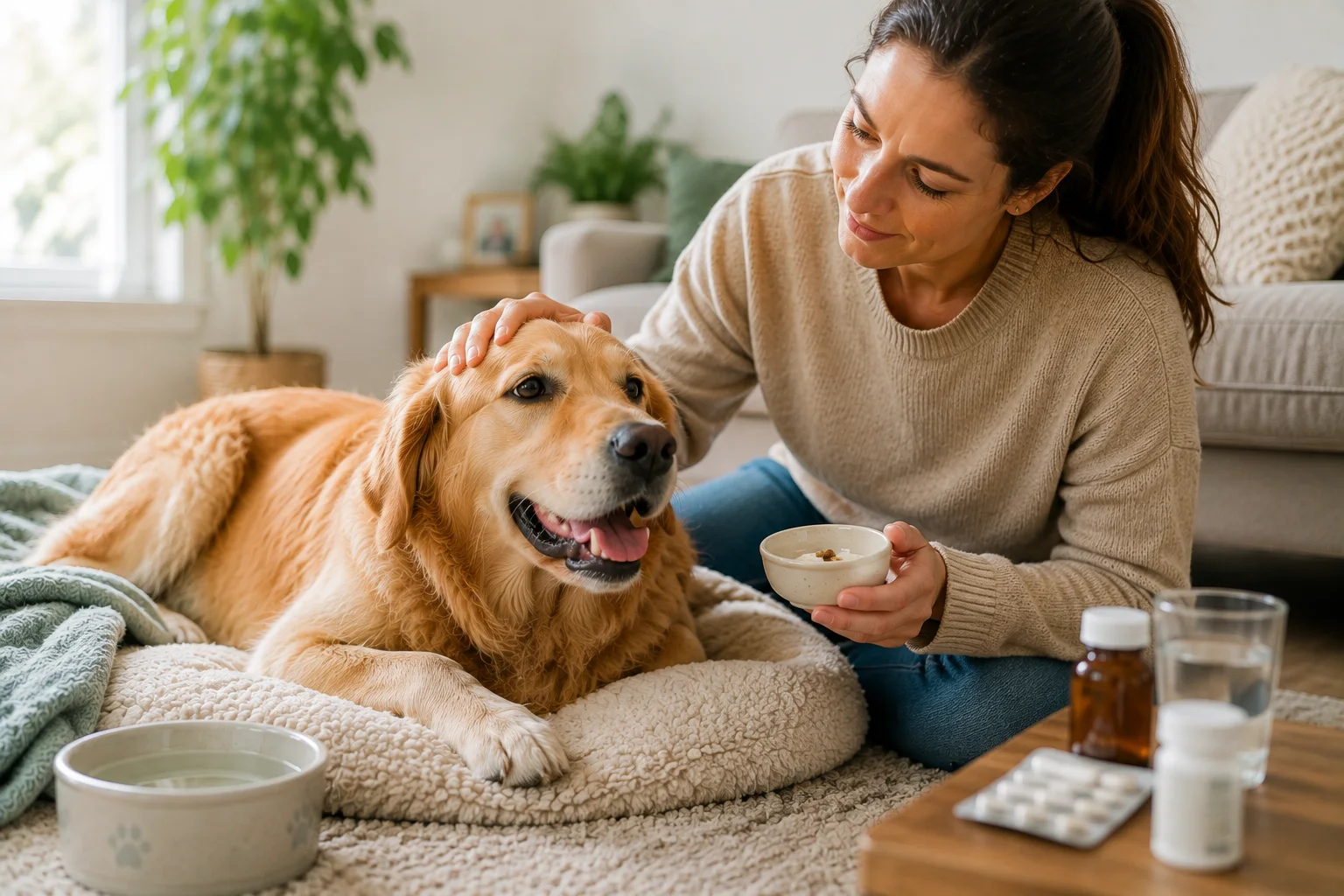
Antibiotics can unsettle the gut and cause loose stools. A probiotic may help it re-stabilise — one of probiotics' more plausible uses — but the benefit is modest and it's supportive care only. Ask your vet about timing, and get help if your dog is vomiting, very unwell, or diarrhea lasts beyond about 48 hours.
What antibiotics do to a dog's gut
Antibiotics kill bacteria indiscriminately. While they treat the target infection, they can also reduce the diversity of the normal gut community, and loose stools are a common result — often called antibiotic-associated diarrhea.
What the evidence actually shows
The picture is one of modest, plausible support with real limitations. A systematic review of probiotics in canine gastrointestinal disease found the clearest effects in acute diarrhea while judging the overall body of evidence small. A broader 2025 review of probiotic use in cats and dogs reaches similar conclusions: plausible mechanisms, variable outcomes.
Affiliate Disclosure: We may earn a commission if you buy PawBiotix through links on this page, at no additional cost to you.
During or after the course?
Both are used. Some owners give a probiotic during the course — typically spaced a couple of hours away from the antibiotic dose — and continue afterward; others begin once the course is complete. Because timing can depend on the specific medication, this is worth confirming with your veterinarian.
How long to continue
There's no fixed rule. Many continue for a few weeks while the gut settles, but the right length varies by dog and situation. If signs persist, that's a reason to check in with your vet rather than simply carrying on.
If your dog has diarrhea after antibiotics
For a mild case in an otherwise well adult dog, supportive care — fresh water, a gentle diet if your vet advises it, and possibly a probiotic once the dog is otherwise fine — is often reasonable. It remains supportive care, not a treatment for whatever is driving the signs. See our related guide on probiotics for dog diarrhea, or check the current PawBiotix offer (opens in a new tab).
When to call the vet
Seek veterinary care
Contact your veterinarian — promptly, and urgently where signs are severe — if your dog is also vomiting, lethargic, passing blood, showing belly pain, or has diarrhea lasting beyond about 48 hours. A dog that is unwell needs a vet, not just a supplement.
Frequently asked questions
Should you give probiotics during or after antibiotics?
Both are used. Some give it during the course (spaced from the antibiotic dose) and continue after; others start once the course is done. Ask your vet about timing for the specific medication.
How long should a dog take probiotics after antibiotics?
No fixed rule — often a few weeks while the gut re-stabilises, but it depends on the dog. Ask your vet if signs persist.
Do probiotics help dogs after antibiotics?
They may help mild antibiotic-associated diarrhea — one of the more plausible uses — though evidence is stronger in people. They're supportive care, not a treatment for the underlying problem.
Related Articles
References
- Systematic review, canine gastrointestinal disease. PMC. ncbi.nlm.nih.gov
- "Application of Probiotics in Cats and Dogs." Veterinary Sciences, MDPI (2025). mdpi.com
Medical note: General education, not veterinary advice. Follow your veterinarian's guidance about your dog's medication and recovery.