Dog Food
Dog Food for Gassy Dogs: What to Feed to Help Reduce Gas
If your dog clears the room a little too often, food is one of the first things worth looking at — but it isn't the whole story. Choosing the right dog food for gassy dogs means understanding why diet can contribute to excess gas, how to judge whether a food is a good fit for a gassy dog, which ingredients and feeding habits are worth weighing, how to switch foods without making things worse, and the warning signs that mean the answer is a veterinarian rather than a different bag of kibble. Below we explain what to look for, then compare ten specific options so you can match the best food for your gassy dog to your individual pet.

The short answer
For a healthy adult dog with ordinary, everyday wind, the best dog food for gassy dogs is usually a complete and balanced food that is highly digestible, built on a short and clearly labelled ingredient list, and kept consistent — then fed in measured portions and introduced gradually. There is no single "best" product, and no food is guaranteed to stop gas, because flatulence isn't always about diet. That said, when you shop for dog food for gas relief, several established digestible, sensitive-stomach and limited-ingredient formulas are worth comparing — for example Hill's Science Diet Sensitive Stomach & Skin, Purina Pro Plan Sensitive Skin & Stomach, and limited-ingredient diets such as Blue Buffalo Basics or Natural Balance L.I.D. Further down, this guide compares 10 actual dog foods for gassy dogs, with the reasoning behind each, so you can match one to your individual dog. Severe, persistent, or sudden gas alongside vomiting, diarrhea, a bloated or painful belly, poor appetite, or weight loss calls for a vet — not a food swap.
When gas is not just gas — signs to take seriously
Treat a swollen, hard, or painful belly with unproductive retching, restlessness, or drooling as a possible emergency and seek veterinary care immediately — this can be a sign of bloat/GDV, which is life-threatening and time-critical. Book a (non-emergency) veterinary appointment if gas is persistent or getting worse despite dietary care, or if it comes with vomiting, diarrhea, weight loss, a reduced appetite, or obvious discomfort.
Use a lower threshold — call sooner for puppies, senior dogs, and any dog with an existing health condition or on medication. Flatulence is common and usually harmless, but it is a symptom, and a change of food is not the right response when these signs are present.
Why Dogs Get Gas
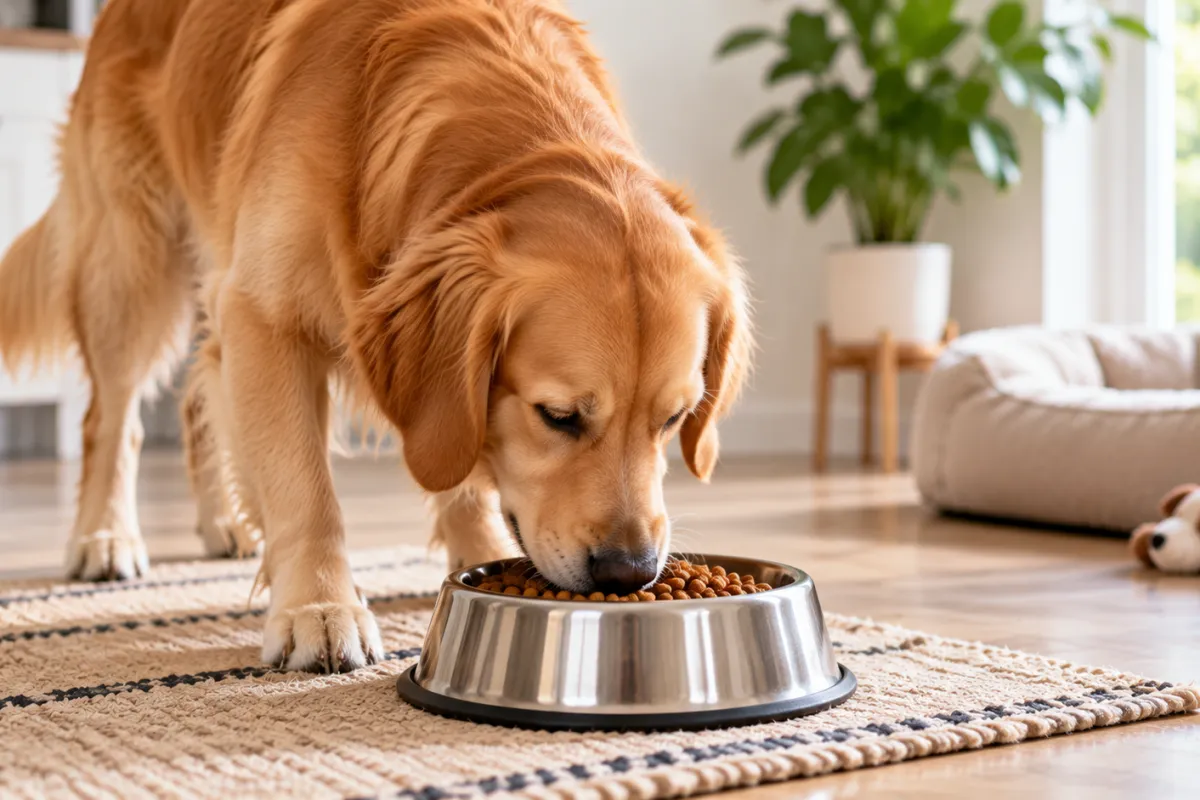
Some gas is completely normal. It forms in two main ways: air a dog swallows while eating or drinking, and gases produced when bacteria in the large intestine ferment food that wasn't fully digested higher up the gut. A little of both is part of healthy digestion. Flatulence becomes a "problem" mostly when it's frequent, strong-smelling, or a change from your dog's normal — which is usually a clue that something in the diet or the way it's eaten has shifted. If you have found yourself wondering why is my dog so gassy, why does my dog fart so much, or why the smell has suddenly got worse, that shift in frequency or odour is exactly the signal worth paying attention to.
The common, benign contributors are worth knowing because most are fixable: eating too quickly and gulping air, sudden diet changes, table scraps and rich treats, scavenging, and foods an individual dog simply doesn't digest well. Breed and build play a role too — flat-faced (brachycephalic) dogs such as Bulldogs and Pugs swallow more air because of how they breathe and eat, so they tend to be gassier by nature. None of that means the gas has to be endured; it means the fix is usually about how and what a dog eats rather than a single miracle product.
How Dog Food Can Affect Gas in Dogs
When gas is diet-related, it usually traces back to fermentation: the more food that reaches the large intestine undigested, the more raw material gut bacteria have to work with, and the more gas is produced. That's why digestibility — how completely a food is broken down and absorbed — matters more than any single "magic" ingredient. Two foods with similar labels can behave very differently in the gut.
A few dietary patterns tend to show up in gassy dogs. Very rich or high-fat meals can be harder to process. Abrupt switches don't give the gut bacteria time to adjust. Highly fermentable ingredients produce more gas in some dogs than others. And a dog that reacts poorly to a particular ingredient may be mildly, chronically unsettled by a food that looks perfectly reasonable on paper. The practical takeaway: for a gassy dog, a gentle, consistent, well-digested diet often does more good than an elaborate or frequently-changed one. This is also why the right dog food for gassy dogs is really a choice about digestibility, and why changing dog food can reduce gas for some dogs while doing little for others. Our guide to dog gut health covers the digestion side in more depth.
What to Look for in Dog Food for Gassy Dogs
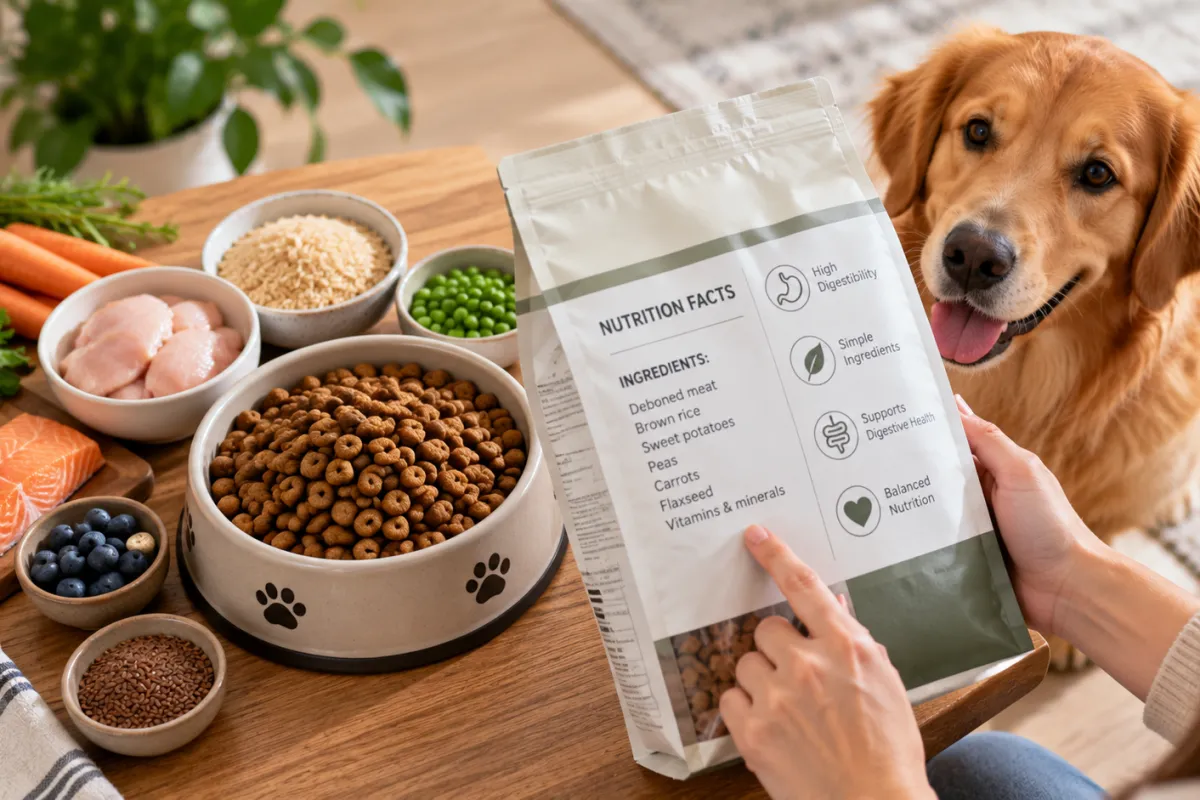
Rather than chasing a brand, judge any candidate dog food for gassy dogs against a short checklist. These are the same broad principles reputable veterinary-nutrition sources use for choosing food generally — applied with a gassy dog in mind. Whether you think of it as dog food for smelly farts, dog food for stinky farts, or simply dog food for flatulence, the qualities that matter are the same.
- Complete and balanced for the life stage. Look for an AAFCO nutritional-adequacy statement for your dog's life stage (puppy, adult, senior/all life stages). This is non-negotiable, whatever the digestion goal.
- Highly digestible. Foods described as easily digestible, gentle, or made for sensitive digestion aim to leave less undigested residue to ferment. Digestibility is the single most relevant property for a gassy dog.
- A short, clear ingredient list. Fewer, recognisable ingredients make it easier to spot what agrees with your dog — and easier to avoid repeating something that doesn't.
- Consistency. A formula that stays the same bag to bag, from a company that answers questions about sourcing and testing, is easier on a sensitive gut than a diet you keep changing.
- Appropriate, not excessive, fat. Very high-fat foods can be harder to digest for some dogs; a moderate, quality fat level is usually gentler.
- Made by a company that does its homework. Prefer makers who employ qualified nutritionists, run feeding trials or robust quality control, and are transparent — the "who made this" question matters as much as the label.
If your dog's gut is easily upset more broadly, the overlapping criteria in our best dog food for a sensitive stomach guide are worth reading alongside this one — a food that suits a sensitive stomach is often a sensible starting point for a gassy dog too.
Best Dry Dog Food for Gassy Dogs
Most of the sensitive-stomach and limited-ingredient formulas owners reach for are dry, so if you're specifically after the best dry dog food for gassy dogs, the checklist above still does the work: prioritise digestibility, a short ingredient list, and a consistent recipe over marketing on the front of the bag. Dry food also makes measured, repeatable portions easy, which matters because overfeeding is its own common cause of gas. There is no dry food that helps with gas in every dog — but a gentle, highly digestible kibble, fed in the right amount and transitioned slowly, is the most dependable place to start.
Limited-Ingredient Dog Food for Gassy Dogs
A limited-ingredient dog food for gassy dogs strips the recipe back to a single named protein and a short list of digestible carbohydrates, which does two useful things: it gives a sensitive gut fewer things to react to, and it makes any future trigger easier to spot. That makes a limited-ingredient diet a good dog food for gassy dogs when you suspect an ingredient sensitivity but haven't yet pinned down the culprit. It is not automatically better for every dog — a limited list is only helpful if the food is still complete and balanced and built on a protein your dog tolerates.
Best Ingredients to Consider in Dog Food for Gassy Dogs
Once you know what to look for overall, it helps to get specific about ingredients. When owners ask what the best ingredients in dog food for gassy dogs are — and which ones may make gas worse — the honest answer is that it's tempting to look for a single villain ingredient, but dogs are individuals: what unsettles one is perfectly fine for another. It's more useful to think in terms of tendencies than rules.
Characteristics that tend to help a gassy dog:
- A single, named animal protein (for example "chicken" or "salmon" rather than vague "meat"), which makes the diet simpler to assess.
- Gentle, digestible carbohydrates such as rice, which many dogs handle comfortably.
- Modest, well-chosen fibre. The right amount and type of fibre can support a steadier gut; too much of a highly fermentable fibre can do the opposite.
- A limited-ingredient formulation when you're trying to narrow down what agrees with your dog.
Things some dogs tolerate less well (careful language matters here — none of these "always" causes gas):
- Very high-fat or very rich foods, which can be harder to digest for some dogs.
- Dairy. Many adult dogs are relatively lactose-intolerant, so milk, cheese, and creamy treats can produce gas in those individuals.
- Large amounts of highly fermentable ingredients — some legumes and certain vegetables can be more gas-forming in sensitive dogs when fed in quantity.
- Frequent diet or treat changes, which repeatedly disrupt the gut's balance.
Because reactions are individual, the most reliable method is observation: change one thing at a time, keep a simple note of what your dog eats and how the gas responds, and give each change a fair trial before drawing conclusions.
Affiliate Disclosure: Some links in the sections below go to product categories and to specific, named dog foods on Amazon. As an Amazon Associate I earn from qualifying purchases, and we may earn a commission if you buy PawBiotix through our link — at no additional cost to you. These are contextual suggestions to save you searching, not medical recommendations — the guidance here stands on its own without them, and no product is claimed to treat, cure, or be guaranteed to stop gas.
How We Think About Choosing a Food — and Where to Start Looking
We don't name a single "winner," because the right food depends on your individual dog, and gas has more than one cause. Instead we point you to the categories that most often suit a gassy dog, so you can apply the checklist above and compare real options. Whatever you pick, the same rules apply: confirm it's complete and balanced for the life stage, introduce it slowly, and give it a fair trial.
Best Dog Food for Gassy Dogs: What Makes a Good Choice?
If you're deciding what to feed a dog with gas, the best food for gassy dogs is less about a specific brand and more about a good fit: a complete and balanced recipe that your dog digests well, tolerates consistently, and actually eats. Rather than hunt for a guaranteed "best dog food to prevent gas" — which doesn't exist, because tolerance is individual — start with the category most likely to suit your dog, then judge the result over a few weeks. The same logic applies whether you want a dog food that helps with gas, the best dog food for flatulence, or simply some food to help with dog gas: the label on the front matters far less than the fit. The three starting points below are where most owners looking for food for gassy dogs should begin.
- Highly digestible / sensitive-digestion dog food. Formulas built around digestibility are the most logical starting point for diet-linked gas, since better-digested food leaves less to ferment. You can browse highly digestible, sensitive-stomach dog foods on Amazon (opens in a new tab) and weigh each against the checklist above.
- Limited-ingredient dog food. A shorter ingredient list makes it easier to identify what agrees with your dog and to avoid repeating something that doesn't — useful when you're still working out a trigger. Compare limited-ingredient dog foods on Amazon (opens in a new tab), checking that each is still complete and balanced.
- A slow-feeder bowl for fast eaters. This isn't a food, but it addresses one of the biggest non-dietary causes of gas. If your dog inhales meals, a slow-feeder dog bowl on Amazon (opens in a new tab) forces smaller mouthfuls, cuts down swallowed air, and often helps more than any recipe change.
One important distinction: therapeutic or "prescription" gastrointestinal diets are a separate category. They're formulated for diagnosed conditions and are obtained through your veterinarian, not chosen off a shelf. If your dog's gas is part of a bigger digestive picture, that conversation is worth more than any retail formula.
Below, we put those categories to work on ten specific, widely available foods — so you have concrete options to compare rather than a shelf of unknowns.
10 Dog Foods for Gassy Dogs to Consider
The categories above are the map; here are ten specific, widely available foods that fit them, with the reasoning behind each. We included these because of their digestive or limited-ingredient positioning, their reasonably transparent ingredient lists, and their established availability — not because of any ranking or laboratory test. This is an editorial shortlist, not a leaderboard and not a promise: no food can be guaranteed to reduce a particular dog's gas, individual tolerance varies, and every option here should be introduced slowly and given a fair trial. Together they cover the main styles of dog food for gassy dogs — mainstream sensitive-stomach formulas, digestive-care diets, and limited-ingredient recipes — so you can compare like with like. Whatever you choose, confirm it is complete and balanced for your dog's life stage first. Where a link is included, it points to that product on Amazon (see the disclosure above).
| Food | Best suited for | Primary protein | Food type / formulation | Key consideration |
|---|---|---|---|---|
| Hill's Science Diet Adult Sensitive Stomach & Skin (Chicken & Barley) | An easy-to-find everyday food from an established brand | Chicken | Dry · sensitive-stomach, with prebiotic fibre | Contains chicken and grains |
| Purina Pro Plan Sensitive Skin & Stomach (Salmon & Rice) | Dogs that tolerate fish; owners who want built-in probiotics | Salmon | Dry · sensitive-stomach, guaranteed live probiotics | Higher-protein; contains rice |
| Royal Canin Digestive Care (Adult Dry) | Owners wanting a food engineered around digestion and stool quality | Digestion-focused blend | Dry · digestive-care (retail, non-prescription) | Separate from vet-only gastrointestinal diets |
| Blue Buffalo Basics Skin & Stomach Care (Turkey & Potato) | Narrowing down a possible ingredient sensitivity | Turkey | Dry · limited-ingredient | Confirm it is complete and balanced for the life stage |
| Wellness Simple Limited Ingredient Diet (Salmon & Potato) | Dogs that do better on fish than poultry; want a grain-free short list | Salmon | Dry · grain-free limited-ingredient | Grain-free is a preference, not a rule for most dogs |
| Natural Balance L.I.D. (Sweet Potato & Fish) | Owners exploring a long-standing fish-based limited-ingredient line | Fish | Dry · grain-free limited-ingredient | Grain-free and fish-based |
| Purina ONE +Plus Sensitive Skin & Stomach | Cost-conscious owners wanting a straightforward sensitive-stomach food | Salmon | Dry · sensitive-stomach (budget-friendlier) | Contains grains and fish |
| Diamond CARE Sensitive Stomach Formula (Adult) | Owners wanting an affordable option or a different protein base to trial | Egg (egg & potato base) | Dry · limited-ingredient, added probiotics | Distinctive egg-and-potato base |
| Nutro Limited Ingredient Diet Adult (Lamb & Sweet Potato) | Dogs that do better on red meat than poultry; want a short grain-free list | Lamb | Dry · grain-free limited-ingredient | Match the protein to your individual dog |
| Merrick Limited Ingredient Diet Grain Free (Salmon & Sweet Potato) | Owners wanting a fish-first, slightly more premium limited-ingredient recipe | Salmon (deboned) | Dry · grain-free limited-ingredient | Grain-free and fish-based |
On a phone? Scroll the table sideways to see every column. Whichever you pick, confirm it is complete and balanced for your dog's life stage and introduce it gradually.

Hill's Science Diet Adult Sensitive Stomach & Skin (Chicken & Barley Recipe)
Why consider it. A widely stocked, complete-and-balanced dry food built around easy digestion, with a prebiotic fibre blend and added vitamin E and omega-6s. Because it comes from a large maker with in-house nutritionists and consistent production, the bag-to-bag reliability that matters for a sensitive gut is one of its stronger points.
Best suited for. Owners who want an easy-to-find everyday adult food from an established brand, whose dog does fine with chicken and grains.
What to check. It contains chicken and grains, so it is not the right pick for a dog you suspect reacts to poultry or that you want to keep grain-free.

Purina Pro Plan Sensitive Skin & Stomach (Salmon & Rice Formula)
Why consider it. Uses salmon as the main protein with rice and oat meal as gentle carbohydrates, and is fortified with guaranteed live probiotics plus prebiotic fibre aimed at digestive support. The single fish protein can be a useful change for a dog that seems less settled on chicken- or beef-based foods.
Best suited for. Dogs that tolerate fish well, and owners who like the idea of a food with built-in probiotic and prebiotic support.
What to check. It is a higher-protein formula and does contain rice, so confirm it fits your dog's life stage and that grains are not a concern for your individual dog.

Royal Canin Digestive Care (Adult Dry)
Why consider it. A retail (non-prescription) formula centred on highly digestible protein and a blend of prebiotics and fibres intended to support steady digestion and firmer stools. Its whole design goal is digestibility — the property most relevant to diet-linked gas — and size-specific versions are offered.
Best suited for. Owners who want a food explicitly engineered around digestion and stool quality rather than a general "sensitive" label.
What to check. This retail Digestive Care line is separate from Royal Canin's vet-only gastrointestinal diets; if your dog has a diagnosed condition, the prescription line is a decision for your veterinarian.

Blue Buffalo Basics Skin & Stomach Care (Turkey & Potato Recipe)
Why consider it. A limited-ingredient diet that starts with a single animal protein (turkey) and leaves out common triggers such as chicken, corn, wheat, soy, dairy and eggs, with potato and pumpkin as digestible carbohydrates. The short, transparent recipe makes it easier to work out what agrees with your dog.
Best suited for. Dogs you are trying to narrow down for a possible ingredient sensitivity, and owners who want a simple label to read.
What to check. "Limited ingredient" is not automatically complete-and-balanced — confirm the AAFCO statement for your dog's life stage, and pick the protein your dog tolerates.

Wellness Simple Limited Ingredient Diet (Salmon & Potato Formula)
Why consider it. A grain-free, limited-ingredient recipe with salmon as the sole animal protein and potato for carbohydrate, made without meat by-products, wheat, corn, dairy or eggs. The pared-back formulation gives a sensitive dog fewer variables to react to.
Best suited for. Dogs that do better on fish than on poultry, and owners who specifically want grain-free with a short ingredient list.
What to check. Grain-free is a preference, not a requirement for most dogs — choose it because it suits your dog, and confirm the recipe is complete and balanced.

Natural Balance L.I.D. Limited Ingredient Diets (Sweet Potato & Fish Formula)
Why consider it. One of the more established limited-ingredient ranges, pairing fish with sweet potato in a grain-free recipe designed to keep the ingredient list short. Sweet potato is a digestible carbohydrate many dogs handle comfortably.
Best suited for. Owners already exploring fish-based, limited-ingredient foods who want a widely available, long-standing option.
What to check. It is grain-free and fish-based, so make sure that matches what your dog tolerates, and introduce it as slowly as any other new food.

Purina ONE +Plus Sensitive Skin & Stomach
Why consider it. A real-salmon-first, highly digestible everyday formula from a mainstream brand, usually at a friendlier price point than the Pro Plan tier. It is an accessible option for owners who want a sensitive-stomach positioning without a premium recipe.
Best suited for. Cost-conscious owners whose dog does well on a straightforward, widely stocked sensitive-stomach food.
What to check. It contains grains and fish, so confirm the life-stage adequacy statement and watch how your individual dog responds.

Diamond CARE Sensitive Stomach Formula for Adult Dogs
Why consider it. A limited-ingredient formula that uses potato and egg as its protein and carbohydrate base, adds a fibre blend including psyllium, and includes guaranteed levels of probiotics. The egg-and-potato base is a genuinely different route for a dog that has not settled on meat-based recipes.
Best suited for. Owners wanting an affordable, single-purpose sensitive-stomach food, or a different protein base to trial.
What to check. The egg-and-potato approach is distinctive — useful for variety, but confirm your dog likes it and that it meets its life-stage needs.

Nutro Limited Ingredient Diet Adult (Lamb & Sweet Potato Recipe)
Why consider it. A grain-free, limited-ingredient food built on lamb as the first ingredient with sweet potato, made to a "10 key ingredients or less" design and without chicken, corn, wheat or soy. Lamb is a less-common protein that can suit a dog that seems unsettled on chicken.
Best suited for. Dogs that do better on red meat than poultry, and owners who want a short, grain-free ingredient list.
What to check. Lamb is only "novel" if your dog has not eaten it before; the value here is the short list and single protein, so match the protein to your dog.

Merrick Limited Ingredient Diet Grain Free (Real Salmon & Sweet Potato Recipe)
Why consider it. A grain-free, limited-ingredient dry food led by deboned salmon with sweet potato, made without corn, wheat, soy or artificial additives, with added omega fatty acids and joint-support nutrients. It rounds out the fish-based, short-list options with a slightly more premium recipe.
Best suited for. Owners who want a fish-first limited-ingredient food and don't mind paying a little more for the recipe.
What to check. It is grain-free and fish-based, so confirm that fits your dog and transition gradually to judge tolerance fairly.
A closing reality check: this list is a starting point for comparison, not a ranking, and switching foods is only one lever. If a careful, well-transitioned change to a digestible or limited-ingredient food doesn't help within a few weeks — or if other signs appear — the next step is your veterinarian, not another bag. The transition advice below matters as much as the food you pick.
How to Switch Dog Food Without Making Gas Worse
An abrupt food change is itself a classic cause of gas and loose stools, so the transition matters as much as the food you choose. Go slowly and let the gut bacteria adjust.
- Transition over about 7–10 days. Start with roughly a quarter new food to three-quarters old, then shift the balance every couple of days until you're fully on the new food.
- Go slower for sensitive dogs. If your dog is prone to gas or upset, extend the switch to two weeks and move in smaller steps.
- Change one thing at a time. Don't introduce a new food, a new treat, and a new supplement together, or you won't know what helped or hurt.
- Watch and note. Track stool quality and gas as you go. If things worsen, drop back to the previous ratio for a few days before trying again.
Give the finished switch a fair trial — often several weeks — before deciding whether a food suits your dog. Judging a new diet after two days rarely gives a true picture.
A diet change asks the gut — and the bacteria living in it — to adapt to a new recipe, which is exactly why a slow transition helps. Some owners like to add a daily dog-specific probiotic for general digestive support while they make the switch. It's optional supportive care rather than a way to stop gas, so treat it as a complement to a gentle, well-transitioned diet, not a replacement for one.
How Much and How Often to Feed

How a dog eats can matter as much as what it eats. A few adjustments to portions and pace often reduce gas on their own.
- Measure meals and avoid overfeeding. Follow the feeding guide on the food as a starting point, adjust to keep your dog at a healthy weight, and use a proper measuring cup or scale rather than guessing.
- Split the daily amount into two or more meals. Smaller, more frequent meals are gentler on digestion than one large bowl.
- Slow down fast eaters. A slow-feeder bowl, a puzzle feeder, or simply spreading kibble on a flat tray reduces the air a gulping dog swallows.
- Feed in a calm spot. Competition with other pets encourages faster eating and more swallowed air; a quiet, separate space helps anxious or greedy dogs slow down.
- Keep treats modest and consistent. Treats and scraps are a common hidden source of gas; count them toward the daily total and keep them simple.
When Food Isn't the Whole Story
Changing food is a reasonable first step for everyday, diet-linked gas — but it won't fix everything, and it's important to be honest about that. Gas that persists despite a sensible, digestible diet, or that shows up with other symptoms, usually points beyond the food bowl.
Dog Food for Dogs With Gas: When a Different Formula May Help
A change of food does the most good when the gas is genuinely diet-linked — a rich or hard-to-digest recipe, a poorly tolerated ingredient, or a diet that was switched too quickly. In those cases a more digestible or limited-ingredient dog food for dogs with gas can make a real difference over a few weeks. Where a different formula tends not to help is when the real driver is fast eating, an underlying medical issue, or simple breed anatomy. That's the honest limit of even the best dog food for dogs with gas: it addresses the dietary share of the problem, not everything else.
Non-dietary contributors include eating habits (gulping air), breed and anatomy, and a range of medical issues — intestinal parasites, infections, food allergies or intolerances, and chronic conditions such as inflammatory bowel disease or exocrine pancreatic insufficiency can all cause excess gas. If gas comes and goes with loose stools, our guide to dog diarrhea covers the causes and the red flags worth knowing. The key principle: if a careful diet change doesn't help within a few weeks, or if other signs appear, the next step is a diagnosis from your veterinarian, not another bag of food.
Where Probiotics and Gut Support Fit
Because gas is largely about what happens in the gut, some owners ask whether probiotics or added fibre help. They can be a reasonable, supportive part of the picture for some dogs — a balanced gut microbiome and steady digestion are what you're aiming for — but they are supportive care, not a treatment for an underlying cause, and results vary between dogs. They work best alongside a suitable, digestible diet, not as a substitute for one. If you want to understand the evidence and how to choose one sensibly, see our criteria-based guide to choosing a dog probiotic. If your dog's gas comes and goes alongside loose stools, our look at probiotics for dog diarrhea explains where this kind of supportive care may — and may not — fit. Beyond probiotics, some owners also compare other supplement types; our UltraK9 Pro review looks at one whole-food liquid option, a different category that is likewise not a remedy for gas. As with food, introduce anything new slowly, one change at a time, and let your veterinarian steer if gas is severe or persistent.
If you do decide to try one, PawBiotix is a dog-specific probiotic supplement we've reviewed — offered here as one option to consider, not as a remedy for gas.
Dog Food for Gassy Dogs: Frequently Asked Questions
What is the best dog food for a gassy dog?
There is no single best product, because gas has different causes in different dogs. The most useful approach is a complete and balanced food that is highly digestible, built on a short, clearly labelled ingredient list, and kept consistent from bag to bag, then fed in measured portions. Many gassy dogs do better on a gentle, digestible or limited-ingredient formula than on a rich, high-variety diet. This guide compares 10 actual dog foods for gassy dogs — from mainstream sensitive-stomach formulas like Hill's Science Diet and Purina Pro Plan to limited-ingredient diets such as Blue Buffalo Basics and Natural Balance — so you can match one to your individual dog and introduce it gradually.
What dog food can help reduce gas?
Foods that are easy to digest tend to help most, because less undigested food reaches the large intestine to ferment into gas. In practice that means a highly digestible or sensitive-stomach formula, or a limited-ingredient diet with a single, clearly named protein. Established examples worth comparing include Purina Pro Plan Sensitive Skin and Stomach, Royal Canin Digestive Care, Wellness Simple and Diamond CARE Sensitive Stomach. No food can be guaranteed to reduce a given dog's gas, so introduce any new diet slowly and give it a few weeks before you judge it.
What ingredients should I look for in dog food for a gassy dog?
Look for a single, named animal protein rather than a vague "meat", gentle and digestible carbohydrates such as rice or sweet potato, a modest and appropriate fat level, and a short, recognisable ingredient list. A sensible amount of fibre can support steadier digestion. Things that unsettle some dogs include very high-fat or very rich recipes, dairy, and large amounts of highly fermentable ingredients such as certain legumes. Because tolerance is individual, change one thing at a time and keep a simple note of how your dog responds.
Should I switch my dog's food if they have a lot of gas?
If your dog is otherwise well and the gas seems diet-linked, trying a more digestible or limited-ingredient food is a reasonable step — but do it gradually, over seven to ten days, and change only one thing at a time so you can tell what helped. If the gas is severe or persistent, or comes with vomiting, diarrhea, a bloated or painful belly, poor appetite or weight loss, see a veterinarian before experimenting with food, because those signs point beyond diet.
Can changing dog food make gas worse at first?
Yes. An abrupt switch is itself a common cause of gas and loose stools, because the gut bacteria need time to adjust to a new recipe. That is why a new food should be introduced slowly, mixing in a little more of it every couple of days over about a week to ten days, and longer for a sensitive dog. A short-lived increase in wind during a careful transition is common; gas that keeps worsening or does not settle is a reason to slow down further or speak to your vet.
Why is my dog so gassy all of a sudden?
A sudden increase in gas is often linked to a recent change: new food or treats, a raided bin or scavenged snack, table scraps, or eating faster than usual. It can also follow a mild digestive upset. If the gas is severe, persistent, or comes with vomiting, diarrhea, a bloated or painful belly, poor appetite, or weight loss, it should be checked by a veterinarian rather than managed with food alone.
Can changing my dog's food reduce gas?
For dogs whose gas is driven by a diet that is hard for them to digest or that they tolerate poorly, moving to a more digestible, simpler food can reduce flatulence over a few weeks. It is not guaranteed, because gas is not always about food — how fast a dog eats, its breed and build, and underlying health all play a part. Change food gradually over seven to ten days and give any new diet a fair trial before judging it.
Does eating too fast make a dog gassy?
Yes. Dogs that gulp their food swallow air along with it, and that swallowed air is a common, under-appreciated source of flatulence and burping. Slowing a fast eater down — with a slow-feeder bowl or puzzle feeder, smaller and more frequent meals, or a calmer feeding spot away from other pets — can make a noticeable difference regardless of which food you choose.
What is the best dry dog food for gassy dogs?
There is no universal winner, but the best dry dog food for gassy dogs tends to share the same traits: it is highly digestible, built on a short and clearly labelled ingredient list, complete and balanced for your dog's life stage, and kept consistent from bag to bag. Most sensitive-stomach and limited-ingredient dry formulas fit that description. Dry food also makes measured portions easy, which helps because overfeeding is its own common cause of gas. Pick the recipe and protein your dog tolerates, introduce it slowly, and give it a few weeks before judging it.
Is wet or dry food better for a gassy dog?
Neither is universally better for gas — what matters most is that the food is highly digestible, complete and balanced, and genuinely suits your individual dog. Dry food makes measured portions and consistent feeding easy, which helps because overfeeding is a common cause of gas. Wet food adds moisture and can suit fussy eaters or dogs that need more water, though it is easy to over-serve. Some dogs do well on a mix of the two. Choose the format your dog digests and eats well, keep portions measured, and introduce any change gradually.
What should I feed a dog with gas?
For everyday, diet-linked gas, feed a complete and balanced food that is highly digestible and built on a short ingredient list, in measured portions and on a consistent schedule. A gentle sensitive-stomach or limited-ingredient recipe is a sensible starting point, and slowing a fast eater down often helps as much as the food itself. Avoid rich table scraps and frequent treat changes while you assess things, change one thing at a time, and give any new diet seven to ten days to settle. If the gas is severe or persistent, or comes with other symptoms, speak to your veterinarian rather than continuing to experiment with food.
Can sensitive-stomach food help with a gassy dog?
Often, yes. Sensitive-stomach and digestive-care formulas are designed to be easy to digest, and better-digested food leaves less undigested residue to ferment into gas in the large intestine. That makes them a logical first choice for diet-linked flatulence. They are not a cure, results vary between dogs, and they work best fed in the right amount and introduced gradually. If a well-chosen sensitive-stomach food does not help within a few weeks, the cause may not be dietary.
Why does my dog fart so much?
Frequent farting usually comes down to how and what a dog eats: gulping air while eating quickly, a rich or hard-to-digest diet, a sudden food change, table scraps, or an ingredient the individual dog tolerates poorly. Breed and build matter too, as flat-faced dogs swallow more air. Most everyday cases improve with a gentler, more digestible diet, slower feeding, and fewer rich extras. If the gas is severe or persistent, or comes with vomiting, diarrhea, a bloated or painful belly, poor appetite, or weight loss, have your dog checked by a veterinarian.
When should I see a vet about my dog's gas?
Occasional wind is normal. See a veterinarian if gas is persistent or worsening despite dietary care, or if it comes with vomiting, diarrhea, weight loss, a poor appetite, or obvious discomfort. Treat a distended, hard, or painful abdomen with unproductive retching as a potential emergency and seek care immediately, as this can signal bloat. Puppies, seniors, and dogs with existing health conditions warrant a lower threshold for calling the vet.
Related Articles
 Dog gut health: a practical guide
How canine digestion works and the everyday habits that keep it steady.
Dog gut health: a practical guide
How canine digestion works and the everyday habits that keep it steady.
 Best dog food for a sensitive stomach
Choosing a digestible everyday food for a dog whose gut is easily upset.
Best dog food for a sensitive stomach
Choosing a digestible everyday food for a dog whose gut is easily upset.
 Dog diarrhea: causes and when to see a vet
What loose stools can mean and the red flags that need a vet.
Dog diarrhea: causes and when to see a vet
What loose stools can mean and the red flags that need a vet.
References
- American Kennel Club (AKC). "Why Is My Dog So Gassy? Causes and Remedies for Dog Flatulence." akc.org
- PetMD (vet-reviewed). "Flatulence in Dogs." petmd.com
- Cummings School of Veterinary Medicine at Tufts University, Petfoodology. "Finding the Best Food for Your Pet." sites.tufts.edu
Affiliate note: this page contains Amazon affiliate links — to general product categories (such as digestible or limited-ingredient dog foods and slow-feeder bowls) and to searches for the specific, named dog foods we discuss. As an Amazon Associate we earn from qualifying purchases, at no extra cost to you. We don't display prices, and we don't claim any product treats, cures, or is guaranteed to stop gas.
Medical note: General education for dog owners, not veterinary advice, diagnosis, or treatment. Excess gas can occasionally signal a more serious problem — always consult your veterinarian for persistent, severe, or sudden symptoms, and for puppies, seniors, and unwell dogs.