Dog Probiotics
What Are Probiotics for Dogs?
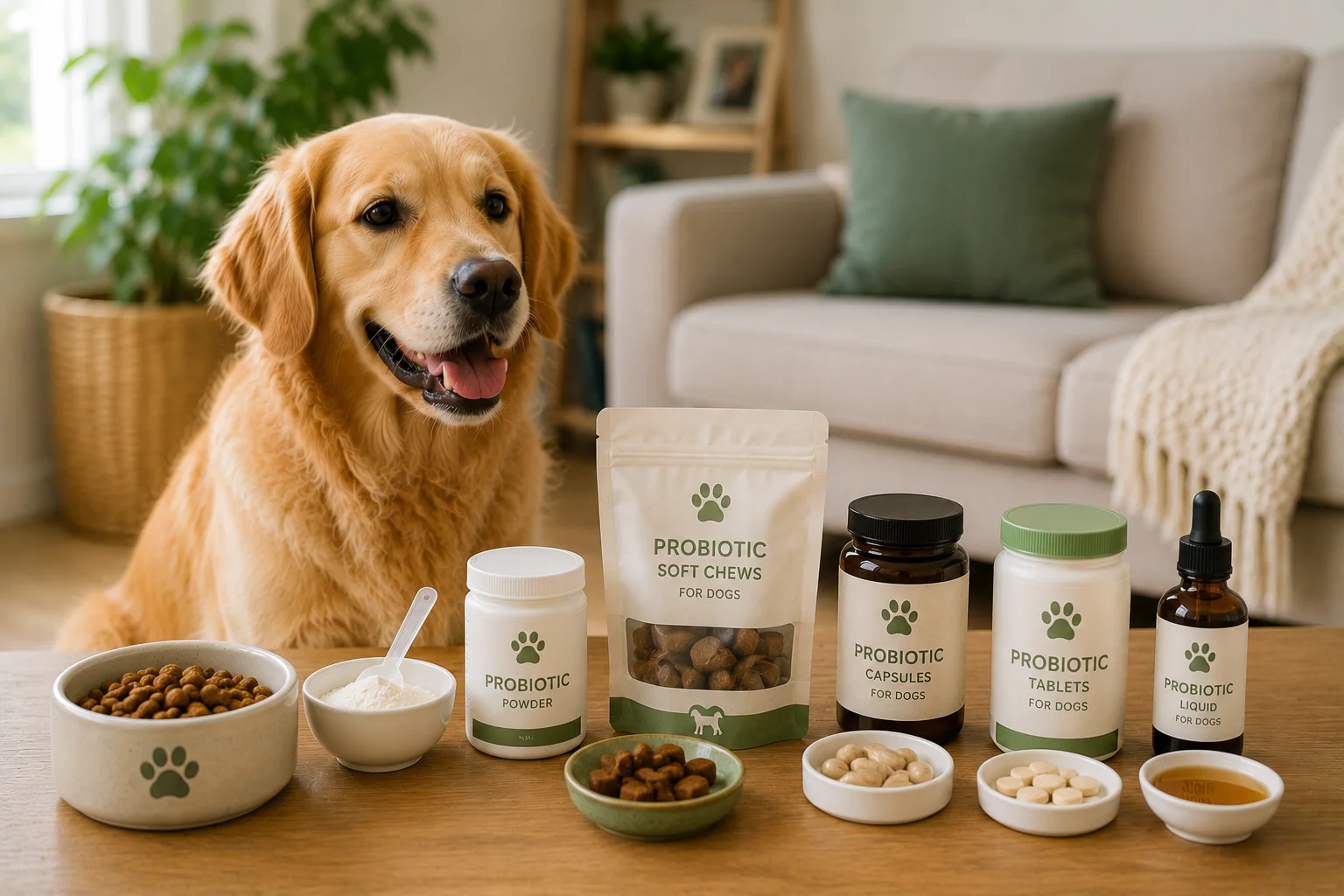
Dog probiotics are supplements containing live, beneficial bacteria meant to support a dog's gut. Given regularly, they're intended to help maintain a balanced microbiome and steady digestion. They're supportive care — not a medicine — and work best as part of a good overall routine.

The definition, and why it matters
A probiotic is a preparation of live microorganisms that, in adequate amounts, is intended to confer a health benefit. In dogs, that usually means supporting the community of microbes in the gut. The key word is live: quality and handling matter, because the organisms need to survive to do anything useful.
How probiotics work in a dog's gut
There's no single mechanism. The most plausible routes are that beneficial bacteria help ferment fiber, support the gut lining, and compete with less helpful bacteria for space and resources. As the microbiome stays balanced, many owners look for firmer stools and less gas — though responses vary from dog to dog.
Which organisms are used in canine probiotics?
Canine products commonly use bacteria from groups such as Lactobacillus, Bifidobacterium, Enterococcus, and spore-forming Bacillus species. Effects can be strain-specific, so the exact organisms and amounts on the label matter more than the general category — as does the right probiotic dose for your dog, which the product label sets by weight rather than a universal figure. If a product doesn't name its strains, that's worth noting.
Probiotics, prebiotics and synbiotics
Probiotics are the live bacteria. Prebiotics are fibers (like inulin) that feed them. A synbiotic combines both in one product. Pairing the two is a common approach because the bacteria have something to feed on once they arrive. All of these are distinct from other supplement categories, too: a whole-food liquid supplement such as the one in our UltraK9 Pro review is not a probiotic at all.
What the evidence supports — and what it doesn't
Research in dogs is encouraging for certain situations, particularly short-term digestive upset, but the overall body of evidence is still limited and varies in quality. Probiotics are best understood as supportive care that may help in the right context — not a proven treatment for disease, and not a replacement for veterinary care when a dog is unwell.
Does every dog need one?
Many healthy dogs don't need a daily probiotic. They're most often considered around diet changes, stress, travel, or after a course of antibiotics. Whether one makes sense for your dog — and which one — is a good conversation to have with your veterinarian.
Frequently asked questions
What's the difference between probiotics and prebiotics?
Probiotics are live, beneficial bacteria that add to your dog's gut population. Prebiotics are plant fibers, such as inulin, that feed those bacteria. Many formulas pair both.
Can I give my dog human probiotics?
Human products use strains and doses matched to people, not dogs. A canine-specific probiotic is generally preferred, and it's best to check with your veterinarian first.
Does every dog need a probiotic?
No. Many healthy dogs do fine without one. They're most often used during diet changes, stress, or after antibiotics — ask your veterinarian whether it fits your dog.
Related Articles


References
- American Kennel Club (AKC). "Dog Probiotics." akc.org
- PetMD (vet-reviewed). "Probiotics for Dogs." petmd.com
- Systematic review, canine gastrointestinal disease. PMC. ncbi.nlm.nih.gov
Medical note: General education, not veterinary advice. Talk to your veterinarian before starting a supplement, especially if your dog is unwell or on medication.