Dog Food
Best Dog Food for Allergies: 7 Options for Skin & Food Sensitivities
An itchy dog is one of the most frustrating things to shop for, partly because "allergy" gets used for several different problems that need different answers. This guide compares seven widely sold foods for skin and food sensitivities — a fish-based limited-ingredient diet, a true novel protein, a clean single-protein food, a novel red meat, a grain-inclusive option, a mainstream pick from a large manufacturer and a chicken-free everyday choice — then explains how food allergies are actually diagnosed, why a food change won't fix every itch, and when the real answer is a vet visit.

The short answer
If you think food is behind your dog's itching, the most useful choice is a diet built around a protein your dog has rarely or never eaten — a limited-ingredient or novel-protein food such as salmon, kangaroo, venison or duck — fed strictly for eight to twelve weeks with nothing else in the bowl. That's an elimination trial, and it's how you actually test for a food allergy. No over-the-counter food can diagnose or cure an allergy, and the most common triggers are animal proteins rather than grains, so "grain-free" is not the fix it's often assumed to be. If your dog's skin is infected, smells yeasty, or the itch is seasonal, see your veterinarian, because that points to problems a new bag of food can't reach.
- 1Natural Balance L.I.D. Salmon & Sweet PotatoBest fish-based limited-ingredient diet
- 2Zignature Kangaroo Limited IngredientBest true novel protein
- 3Instinct Limited Ingredient Diet Real LambBest clean single-protein food
- 4Natural Balance L.I.D. Reserve Venison & Sweet PotatoBest novel red meat
- 5Wellness Simple Duck & OatmealBest grain-inclusive option
- 6Purina Pro Plan Sensitive Skin & Stomach Lamb & Oat MealBest mainstream pick
- 7Blue Buffalo Basics Salmon & PotatoBest chicken-free everyday food
How we approach recommendations: our guidance is criteria-based and independent. We didn't run feeding trials or lab-test these foods, and we hold no veterinary credential. The seven products below were selected by applying the checklist further down this page to each manufacturer's own materials and current retail listings, then positioning each one by the need it genuinely fits. This page contains affiliate links: the Amazon links point to each product's search results so you can check the current recipe and details yourself. As an Amazon Associate we earn from qualifying purchases, and we may earn a commission if you buy through our links — at no extra cost to you. We don't display prices or customer ratings for these foods, because prices change and we have no approved data source for those figures; check each listing for current price, availability and label details. Affiliate relationships never change our conclusions. See our disclaimer.
Best Dog Food for Allergies: Quick Comparison
Here are the seven foods in this guide, lined up on what matters when a dog has skin or food sensitivities: who each one suits, its main protein, whether it's a genuine limited-ingredient or novel-protein diet, its grain status, and the one caveat to keep in mind. It's a map, not a scoreboard, and the full write-ups follow in the seven foods in detail. Every food here is sold in more than one recipe and size, so always confirm the exact variant on the label before you buy.
| Food | Best for | Primary protein | Limited ingredient? | Novel protein? | Grain | Key caveat |
|---|---|---|---|---|---|---|
| Natural Balance L.I.D. Salmon & Sweet Potato | Fish-based limited-ingredient diet | Salmon | Yes | No | Grain-free | Fish diet; recently reformulated, so check the panel |
| Zignature Kangaroo Limited Ingredient | A true novel protein for a food trial | Kangaroo | Yes | Yes | Grain-free | Contains peas and chickpeas; added DHA of unstated source |
| Instinct Limited Ingredient Diet Real Lamb | The cleanest single-protein label | Lamb | Yes | Mild | Grain-free | Adult only; raw-coated; contains peas |
| Natural Balance L.I.D. Reserve Venison & Sweet Potato | A novel red meat for rotation | Venison | Yes | Yes | Grain-free | Contains salmon oil, so not completely fish-free |
| Wellness Simple Duck & Oatmeal | Owners who want to stay grain-inclusive | Duck | Yes | Poultry alternative | Grain-inclusive | Not grain-free; adult; don't confuse with the grain-free duck & potato recipe |
| Purina Pro Plan Sensitive Skin & Stomach Lamb & Oat Meal | A mainstream, large-manufacturer option | Lamb (plus fish meal & egg) | No | No | Grain-inclusive | Contains fish meal and dried egg; not an elimination diet |
| Blue Buffalo Basics Salmon & Potato | A chicken-free everyday food | Salmon | Yes | No | Grain-free | Confirm the grain-free bag, not the Wholesome Grains version |
About this comparison: we don't display prices or customer-review figures — check each product's listing for the current price and the exact recipe, both of which change. Protein, ingredient and grain details are manufacturer or label information, not a BestPetCareTips test result, and a food's presence here is not a promise it will suit your individual dog.
Affiliate Disclosure: The Amazon links in the next section go to each product's search results so you can check the current recipe, size and price yourself. As an Amazon Associate I earn from qualifying purchases, at no additional cost to you. These are contextual suggestions to help you compare foods for dogs with allergies, not medical recommendations, and no food here is a treatment for any condition.
How We Chose These Foods
This isn't a lab test, and it isn't a feeding trial. We didn't measure anything, and we don't treat customer reviews as evidence. What we did was read each manufacturer's current ingredient panels and nutritional adequacy statements, then choose seven foods that give a dog owner genuinely different tools for a suspected food or skin allergy — not seven versions of the same salmon recipe.
Three things shaped the list. First, protein strategy: the whole point of feeding for allergies is controlling which proteins reach the dog, so the picks deliberately span fish, a true novel protein, a clean single meat, a novel red meat, a poultry alternative and a mainstream lamb diet. Second, label honesty: we checked what's actually in each bag rather than trusting the front-of-pack wording, which is how we caught the fish oil in a "venison" recipe and the fish meal and egg in a food many people assume is limited-ingredient. Third, availability: every food here is widely stocked in the United States, because a food you can't reliably buy is a food you can't stay on for a two-month trial.
Where "best" appears by category below, it means best suited to a particular job — a first food trial, a chicken-free everyday diet, a grain-inclusive option — never an objective champion. And a point we'll keep making: choosing a food is not the same as diagnosing an allergy. If your dog is genuinely uncomfortable, the first step is your veterinarian.
The 7 Best Dog Foods for Allergies, Reviewed
Full write-ups of all seven foods follow, in the same order as the table above. Match each option to your dog's history — especially which proteins it has already eaten — confirm the current recipe on the label, and introduce any new food gradually. For a real food trial, plan it with your vet and feed the chosen diet strictly, with no other treats or table scraps, for eight to twelve weeks.
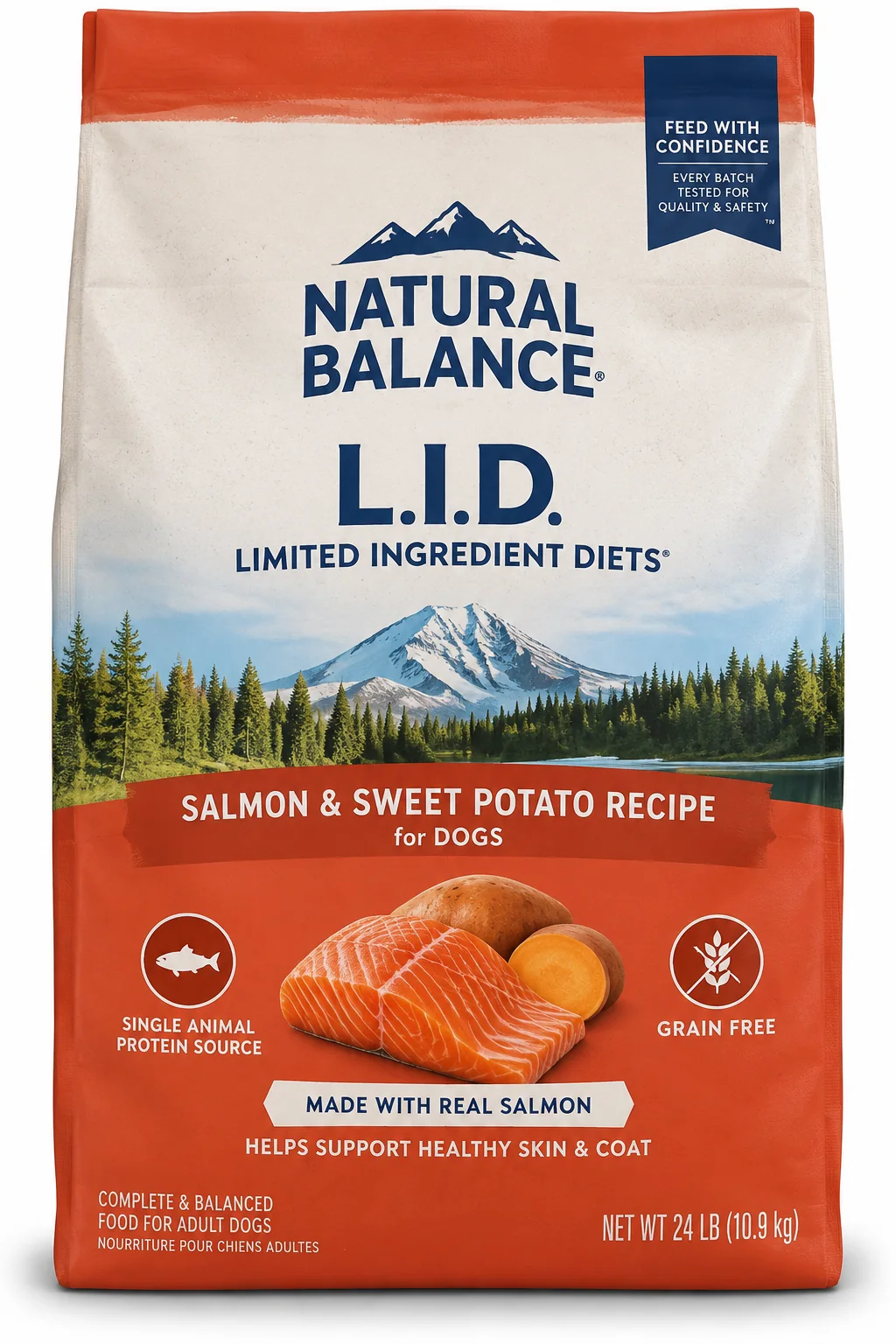
Natural Balance L.I.D. Grain-Free Salmon & Sweet Potato
A clean, widely stocked limited-ingredient diet built on a single animal-protein group — fish — and a good first step for a dog whose itching you suspect is tied to a common meat like beef or chicken.
- Protein: Salmon (with menhaden fish meal)
- Type: Limited-ingredient, grain-free dry
- Life stage: Adult
Why we picked it
Natural Balance's Limited Ingredient Diets line does one thing well: it keeps the recipe short and the animal protein to a single source. This one leads with salmon, backed by menhaden fish meal, over sweet potato and cassava, and it leaves out corn, wheat, soy and poultry. It also skips peas, pea protein and lentils, which is worth noting given the questions around legume-heavy grain-free foods covered further down. Balanced omega-3 and omega-6 fatty acids give it a reasonable skin-and-coat angle alongside the ingredient simplicity.
What to consider. This is a fish diet, so it's the wrong choice for a dog that reacts to fish, and it isn't "hypoallergenic" in any guaranteed sense — limited-ingredient simply means fewer things to react to. Natural Balance has reformulated this recipe, so ingredient order can vary between bags; check the current panel before you commit to a trial.
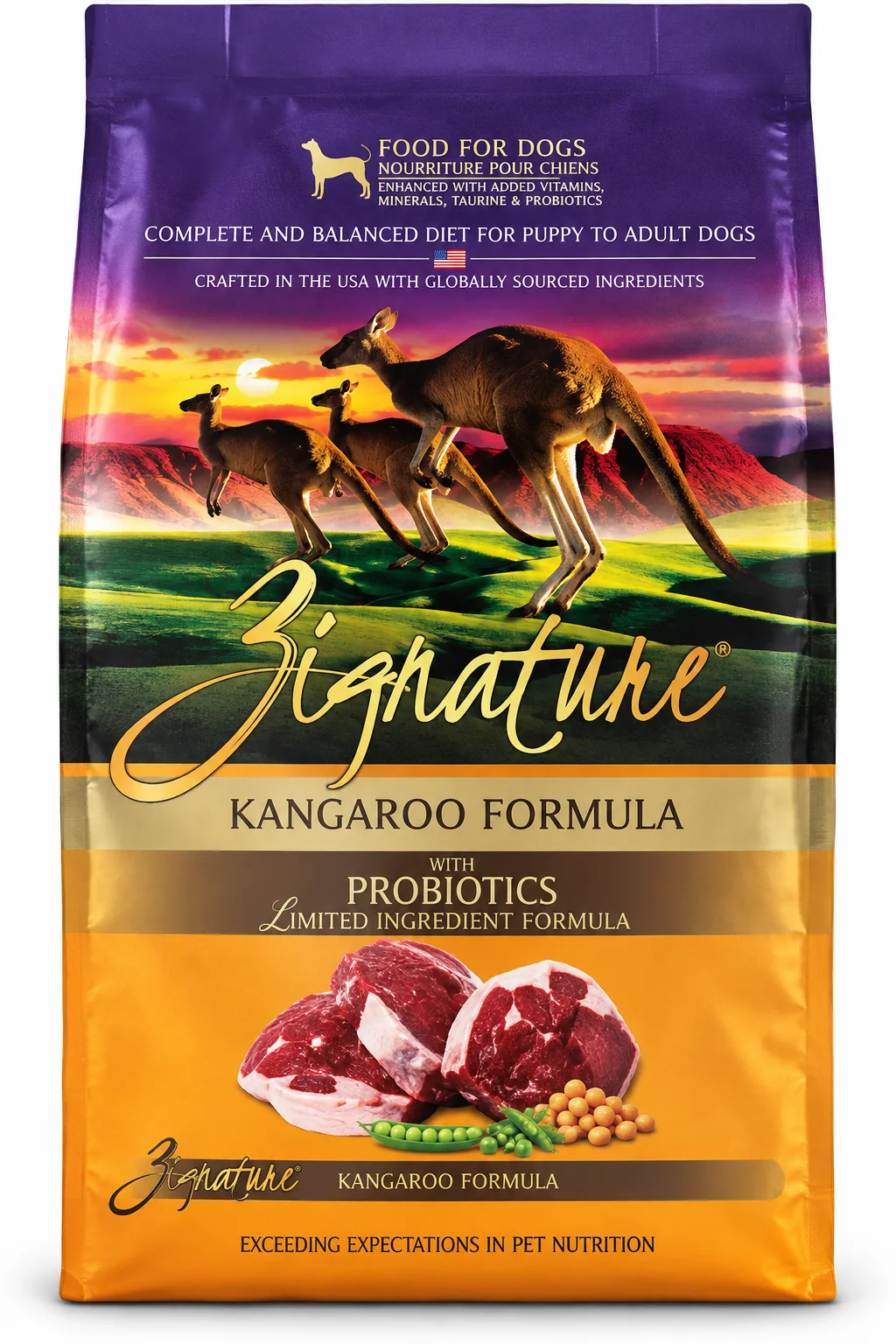
Zignature Kangaroo Limited Ingredient Formula
Kangaroo is a protein most dogs have simply never eaten, which is exactly what you want for a food trial — the immune system can't react to something it has never met.
- Protein: Kangaroo (single animal source)
- Type: Limited-ingredient, grain-free dry
- Life stage: All life stages
Why we picked it
Of the retail foods here, this is the closest fit to a classic novel-protein diet. Kangaroo and kangaroo meal are the only animal proteins, and Zignature builds the rest on chickpeas, peas, sunflower oil and flaxseed while leaving out chicken, corn, wheat, soy and potato. It's formulated for all life stages and now carries added probiotics. For a dog that has already cycled through chicken, beef and fish, a genuinely unfamiliar protein like kangaroo is a logical next test to run with your vet.
What to consider. Zignature markets its recipes as hypoallergenic; treat that as positioning, not a medical guarantee, because any protein can eventually trigger a reaction. The recipe includes peas and chickpeas, relevant to the grain-free discussion below, and it lists added DHA without naming the source, so we don't describe it as strictly fish-free — if that matters for your dog, confirm with Zignature before starting a trial.
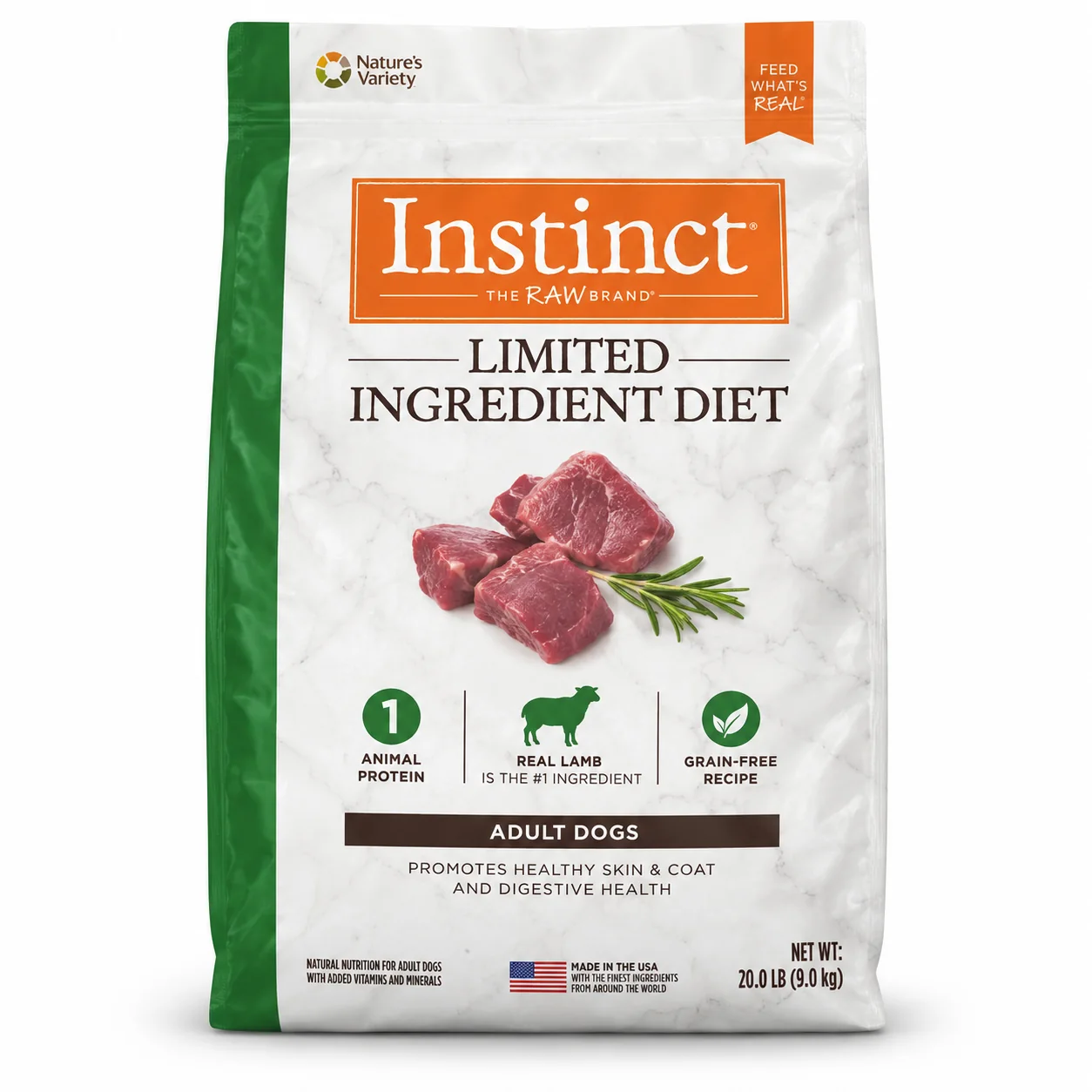
Instinct Limited Ingredient Diet Real Lamb
The shortest, cleanest label in this lineup — one animal protein and one main vegetable — which makes it easy to interpret if your dog improves on it.
- Protein: Lamb (single source, plus lamb organs)
- Type: Limited-ingredient, grain-free dry (raw-coated)
- Life stage: Adult maintenance
Why we picked it
Instinct keeps this recipe unusually tight: lamb, lamb meal and freeze-dried lamb organs are the only animal proteins, with tapioca and peas as the carbohydrate base and a raw-coated kibble on top. It's made without grain, dairy, eggs, chicken, beef and fish, which is precisely the profile that makes a food trial readable — fewer variables means that if the itching settles, you've genuinely narrowed the field. For a lamb-based elimination attempt, this is the cleanest option on the list.
What to consider. It's formulated for adult maintenance, so it isn't for puppies or pregnant and nursing dogs. It uses peas and pea protein, relevant to the grain-free discussion below, and lamb only counts as "novel" if your dog hasn't eaten it before — a dog already fed lamb needs a different protein.
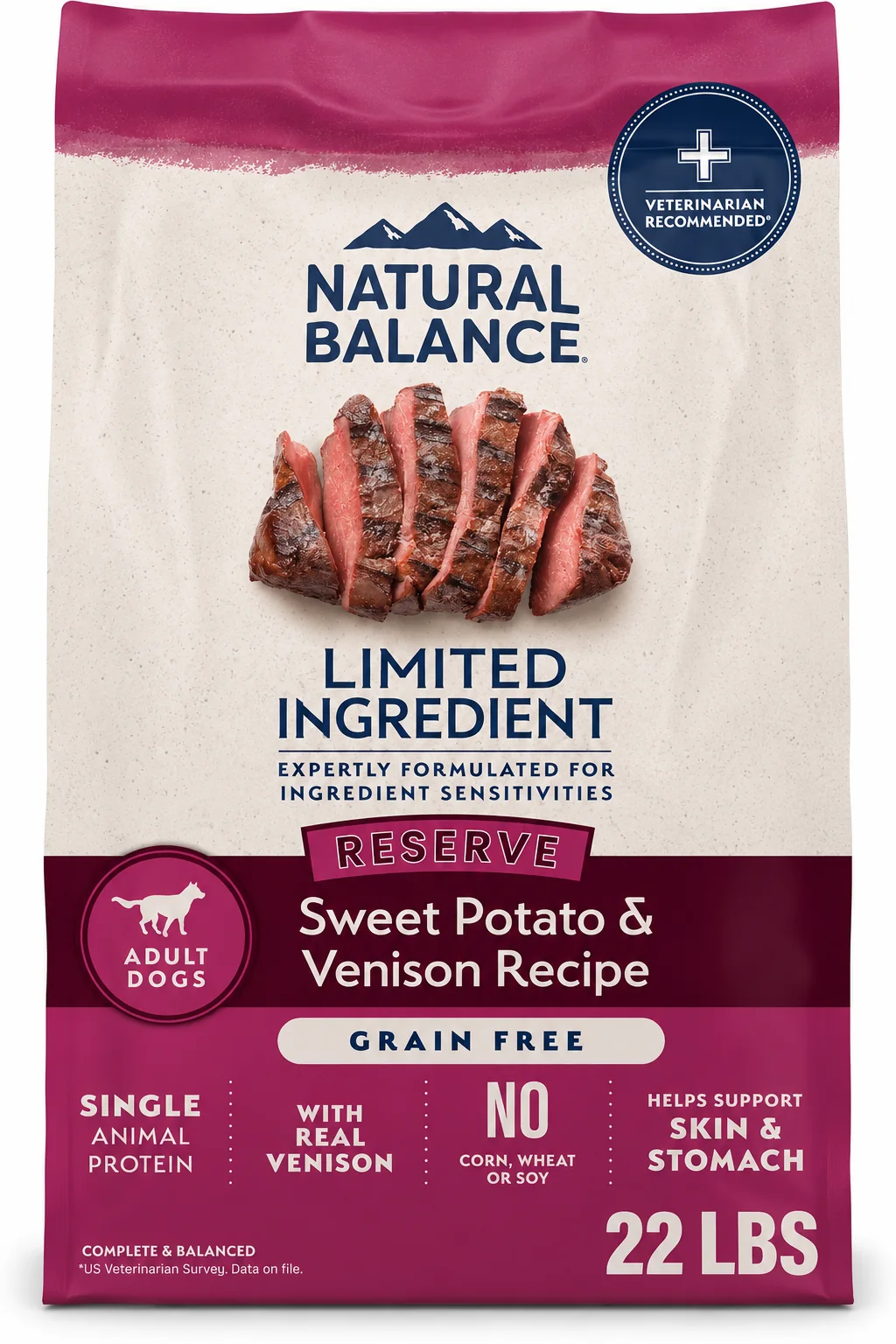
Natural Balance L.I.D. Reserve Grain-Free Venison & Sweet Potato
A novel red-meat option for a dog that has already worked through fish and poultry — venison is uncommon enough in mainstream foods to be worth a trial.
- Protein: Venison (single animal protein)
- Type: Limited-ingredient, grain-free dry
- Life stage: Adult
Why we picked it
Venison gives you a red-meat protein that most dogs haven't been exposed to, which is useful when the usual suspects — beef, chicken, fish — are already off the table. Natural Balance builds this Reserve recipe on sweet potato and potato with venison as the single animal protein, and keeps out poultry, corn, wheat and soy. It rounds out the same brand's fish and (elsewhere) other single-protein diets, so it fits neatly into a rotation planned with your vet.
What to consider. Venison is the only animal protein, but the recipe includes salmon oil as a fat source, so it is not completely fish-free — if your dog needs to avoid fish entirely, this isn't the one. It's an adult formula, and like the other grain-free picks it uses potato and pea protein.
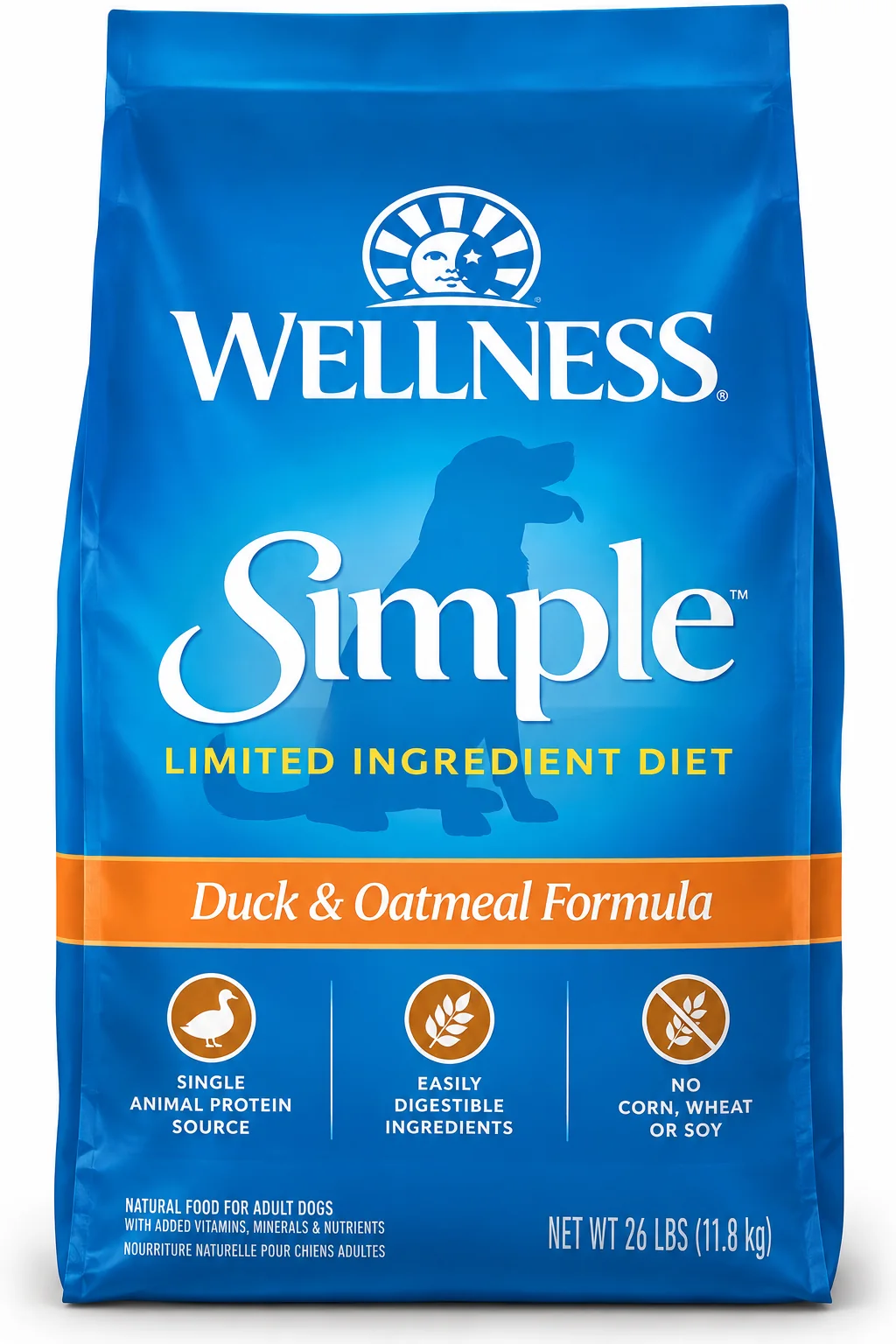
Wellness Simple Limited Ingredient Duck & Oatmeal
A single-protein limited-ingredient diet for owners who would rather keep grains in the bowl — duck paired with digestible oats and rice.
- Protein: Duck (single animal source)
- Type: Limited-ingredient, grain-inclusive dry
- Life stage: Adult
Why we picked it
Not everyone wants to go grain-free, and there's no allergy reason they have to. This Wellness Simple recipe keeps the animal protein to duck alone — a poultry that isn't chicken — over oatmeal and ground brown rice, with added probiotics and no chicken, fish, eggs or by-product meals. That combination is hard to find: a genuinely limited-ingredient, single-protein food that is also grain-inclusive, which suits owners who read the grain-free section below and decide grains are fine for their dog.
What to consider. Wellness sells more than one duck recipe — make sure you're getting the grain-inclusive Duck & Oatmeal formula and not a grain-free duck-and-potato variant, since the whole reason to choose this one is the grains. Duck only helps as a novel protein if your dog hasn't eaten it before.
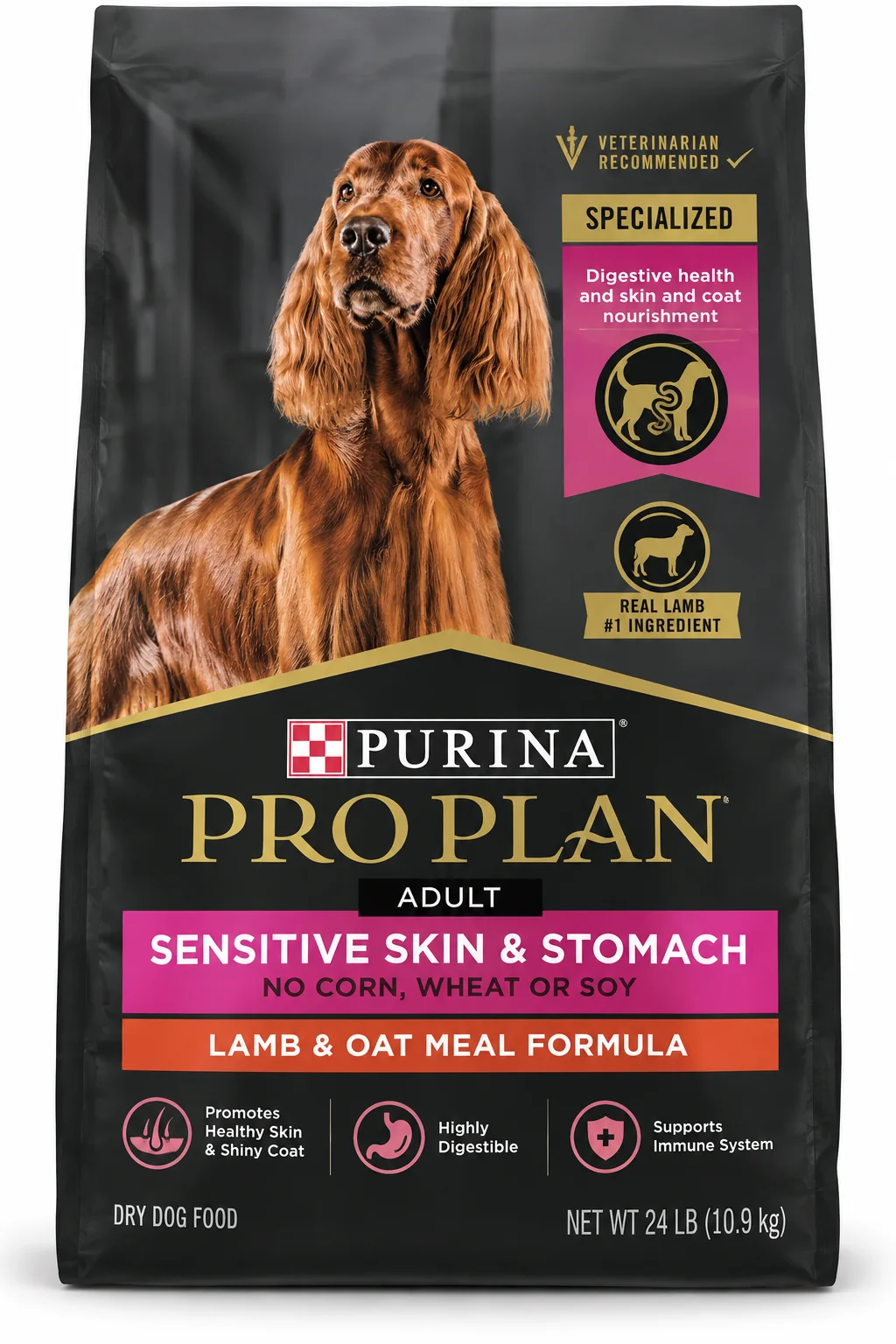
Purina Pro Plan Sensitive Skin & Stomach (Lamb & Oat Meal)
The widely available, large-manufacturer choice for skin-and-coat support — the food to reach for when you want a big brand that runs feeding trials rather than a boutique recipe.
- Protein: Lamb (plus fish meal & dried egg)
- Type: Grain-inclusive dry (not limited-ingredient)
- Life stage: Adult
Why we picked it
This is the pragmatic pick for a dog with mild, itchy, flaky skin whose owner wants something mainstream, affordable and easy to find. Purina leads it with real lamb over oat meal, barley and rice, adds omega-6 and vitamin A for skin and coat, includes a probiotic in current bags, and leaves out corn, wheat, soy and poultry by-product. As a large manufacturer that conducts feeding trials, Purina is exactly the kind of company veterinary nutritionists point to, which also matters for the grain-inclusive discussion below. We've chosen the Lamb & Oat Meal recipe on purpose, to keep it distinct from the salmon version featured in our sensitive-stomach guide.
What to consider. This is not a limited-ingredient or elimination diet: it contains fish meal and dried egg alongside lamb, so it's unsuitable for a dog with a fish or egg allergy and can't be used to test for a food allergy. Think of it as everyday skin-and-coat support from a reliable maker, not a diagnostic tool.
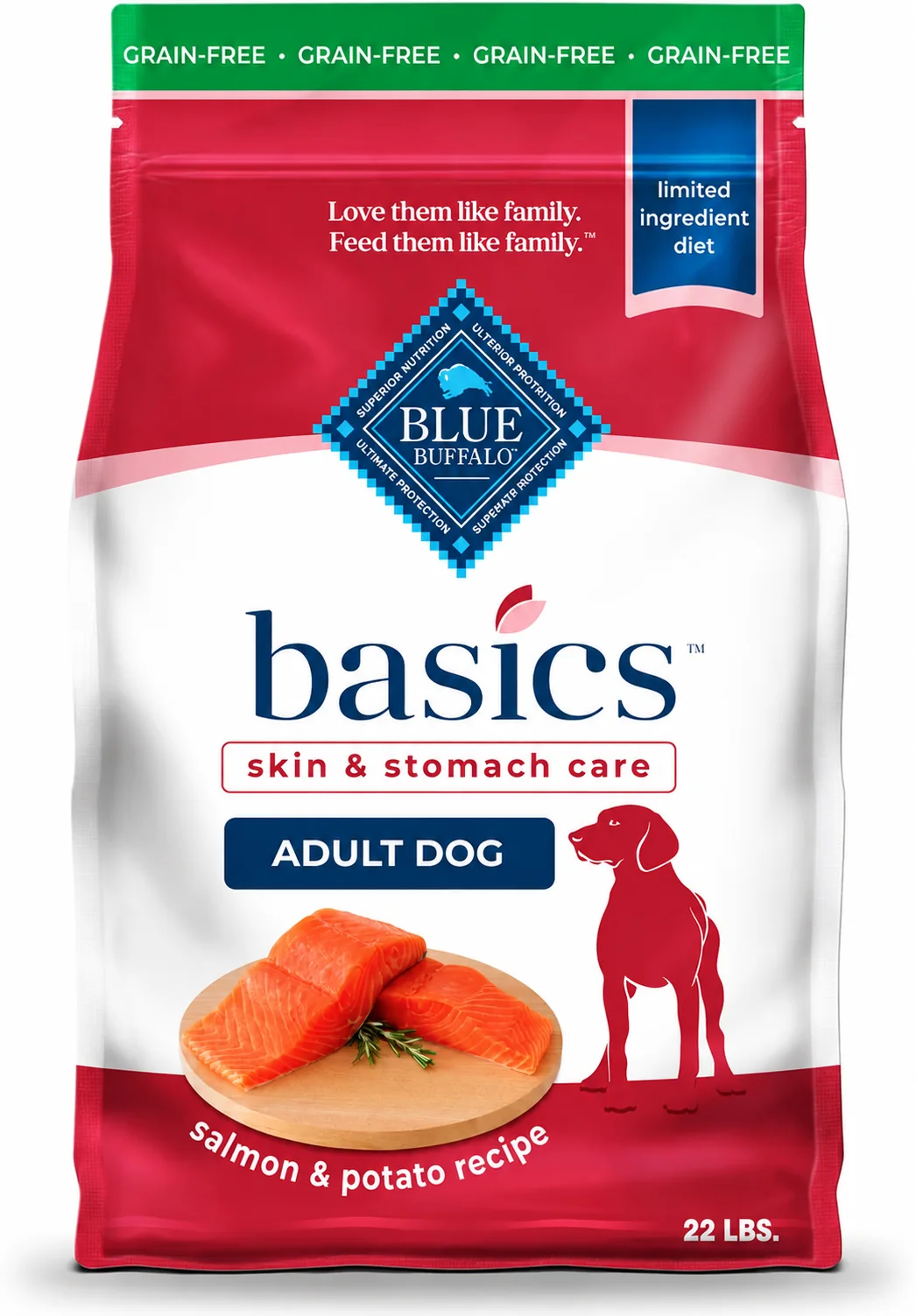
Blue Buffalo Basics Skin & Stomach Care (Salmon & Potato)
A broadly stocked limited-ingredient salmon diet with no chicken, beef, egg or dairy — a practical everyday choice, and a sensible default for chicken-allergy searches.
- Protein: Salmon (single animal source)
- Type: Limited-ingredient, grain-free dry
- Life stage: Adult (12 months–7 years)
Why we picked it
Blue Buffalo Basics is easy to find and easy to read: deboned salmon and salmon meal as the single animal protein over potatoes and peas, with no chicken or poultry by-product, and no beef, corn, wheat, soy, dairy or eggs. That makes it a genuine chicken-free everyday option for a dog you're keeping off poultry, with omega-3 and omega-6 for the skin and coat. Of the salmon picks here it's the most widely available at big-box and grocery retailers.
What to consider. Blue Buffalo also sells a grain-inclusive "Wholesome Grains" salmon and brown rice recipe under a similar name, so confirm you're buying the grain-free Basics bag if that's what you want. As a fish diet, it's not for fish-sensitive dogs, and like the others it's limited-ingredient, not guaranteed hypoallergenic.
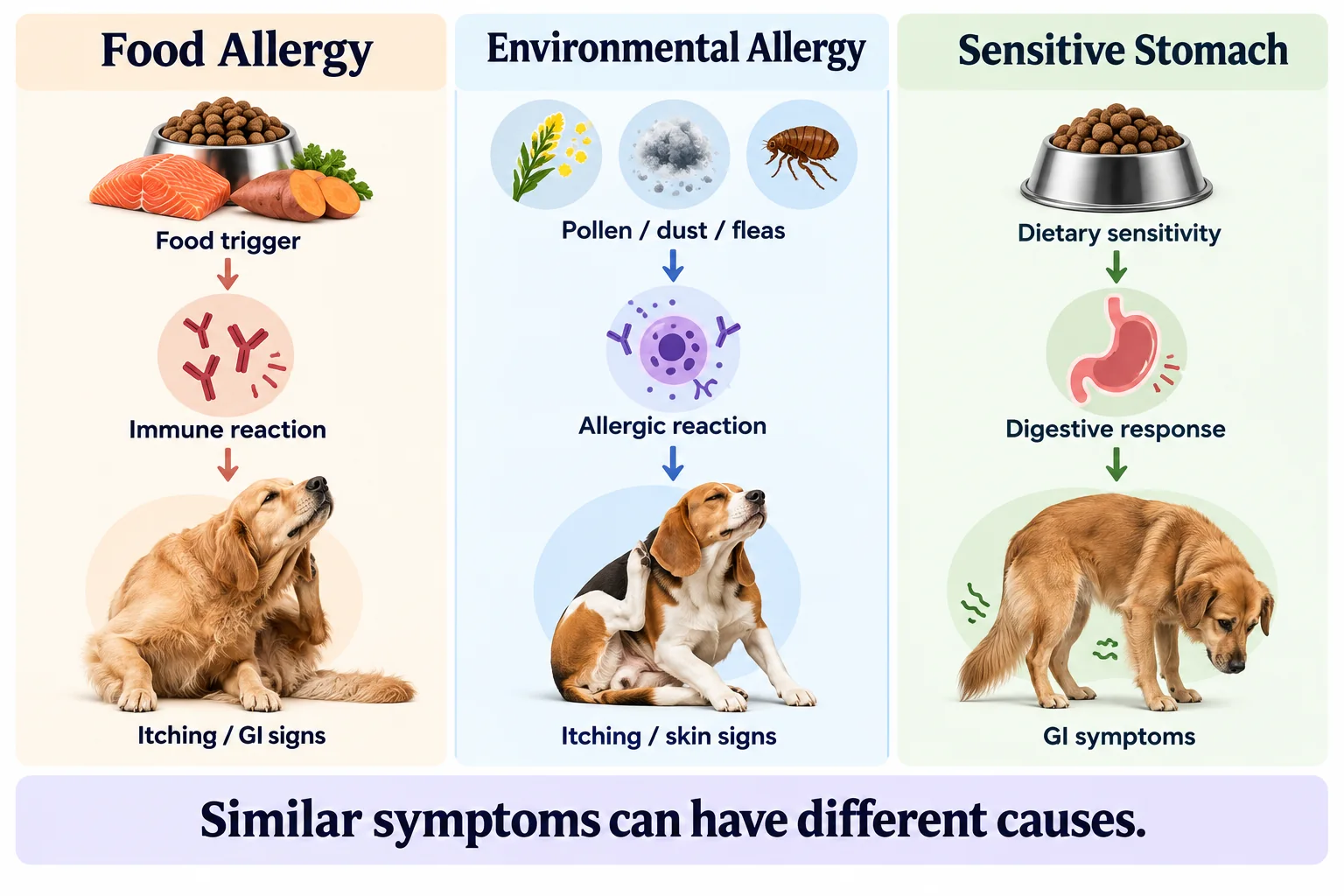
Food Allergies vs. Skin Allergies vs. Sensitive Stomach
Three different problems get shopped for under the same search terms, and telling them apart changes what you should buy. A food allergy is an immune reaction, almost always to a protein, and it often shows up in the skin and ears as much as the gut. An environmental (atopic) allergy is a reaction to things like pollen, dust mites or mold; it's a leading cause of itching, and no change of food will fix it. A sensitive stomach is usually a non-immune problem — the digestive system just doesn't handle a food well, often the fat level — and it's a different job from an allergy, which is why we cover it in a separate best dog food for sensitive stomach guide.
An immune reaction to a protein
- Usually a specific protein the dog has eaten before.
- Often involves itchy skin, paws and recurrent ear infections, not just the gut.
- Diagnosed with a strict elimination diet, not a blood or saliva test.
- What tends to help: a novel-protein or hydrolyzed diet fed for weeks.
A reaction to the surroundings
- Triggered by pollen, dust mites, mold and similar allergens.
- Frequently seasonal, and a very common cause of itching.
- Food changes don't resolve it, though skin-support nutrition may help a little.
- What tends to help: veterinary treatment aimed at the itch and any infection.
Because these overlap — a dog can have both a food and an environmental allergy, plus a secondary skin infection — the most reliable way to sort them out is with your vet, who can decide whether a food trial is even the right test. If the gut is the main problem rather than the skin, our dog gut health guide is the better starting point.
What Are the Most Common Food Allergens in Dogs?
This is where a lot of shopping goes wrong. Owners reach for grain-free foods assuming grain is the enemy, but the evidence points squarely at animal proteins. A widely cited systematic review of confirmed canine food-allergy cases (Mueller, Olivry & Prélaud, 2016) ranked the reported offenders like this:
- Beef — about 34% of cases. The single most frequently reported food allergen in dogs.
- Dairy — about 17%. The second most common trigger.
- Chicken — about 15%. Still common, though not the top offender many assume.
- Wheat — about 13%. The most common grain, but well behind the top proteins.
- Lamb — about 5%. Less common, and now widely used, so no longer as "novel" as it once was.
Two things follow from that list. First, the leading triggers are proteins the dog has eaten a lot of — beef, dairy and chicken are staples, so dogs are simply exposed to them the most, which is thought to be part of why they top the chart. Second, a food allergy is not the same as a food intolerance: an allergy is an immune reaction, while an intolerance is the gut mishandling something, and many more dogs are intolerant than are truly allergic. The practical takeaway for choosing a food is to focus on the protein your dog hasn't reacted to yet, rather than on whether a bag says grain-free.
Limited-Ingredient and Novel-Protein Dog Foods Explained
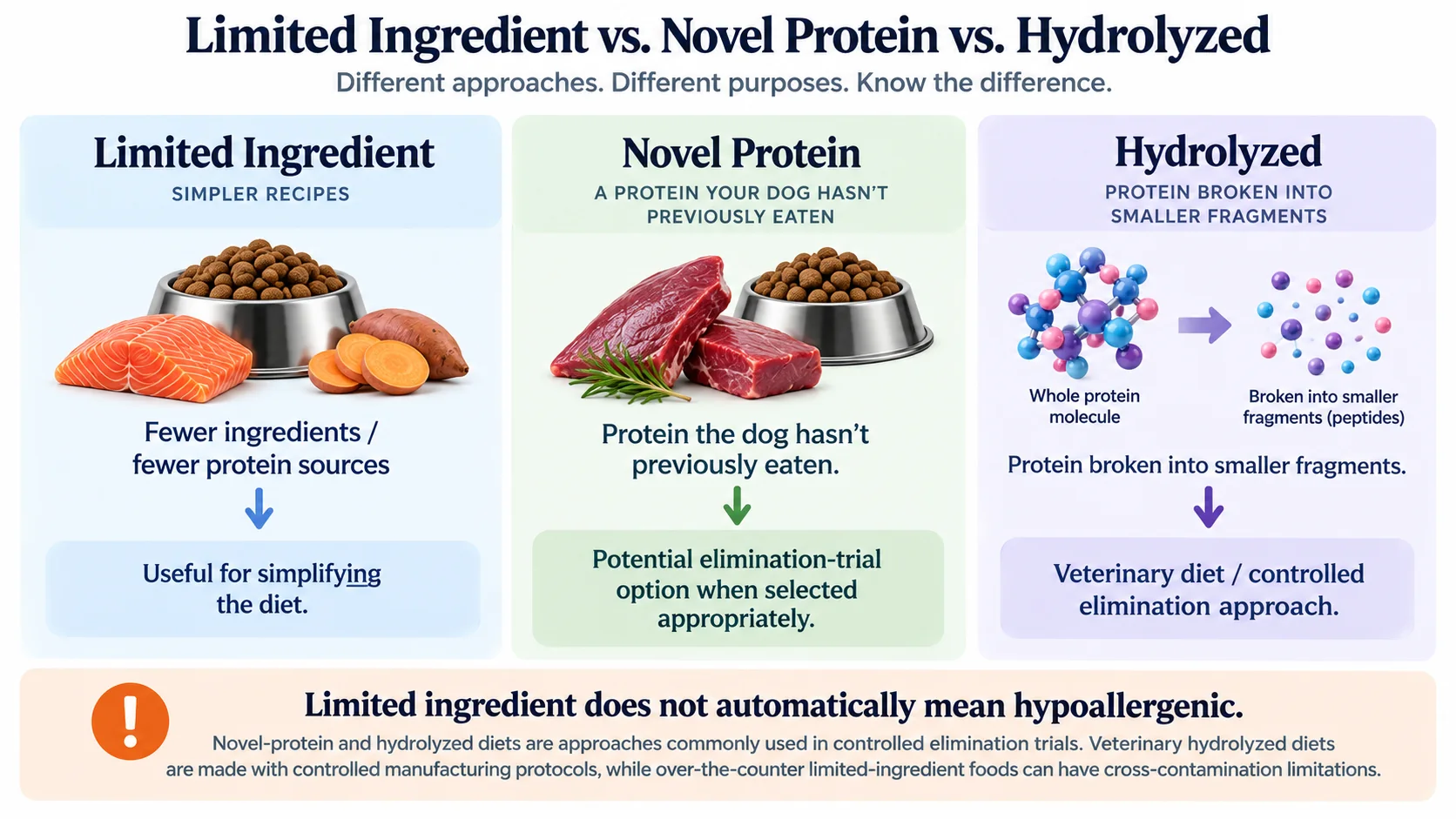
These two terms do most of the heavy lifting in this category, and they don't mean the same thing. A limited-ingredient diet keeps the recipe short — ideally a single animal protein and a small number of other ingredients — so there are fewer things to react to and fewer variables when you're trying to work out what's wrong. A novel protein is one your dog has never eaten, such as kangaroo, venison or duck; the logic is simple, in that the immune system can't be allergic to a protein it has never encountered.
The mistake to avoid is treating "limited ingredient" as a synonym for "hypoallergenic." A limited-ingredient salmon food is still a problem for a dog allergic to fish, and any protein — however exotic — can eventually trigger a reaction once the dog has eaten it enough. Novel proteins also lose their value once they become mainstream, which is exactly what happened to lamb. And because proteins can cross-react, a good elimination diet avoids not just the suspect protein but its relatives — more on that in the chicken section.
For a genuine food trial, the cleanest tools on this page are the kangaroo, lamb and venison recipes, chosen to match a protein your dog hasn't had. Fed strictly for eight to twelve weeks, with nothing else in the bowl, they let you see whether food is really the problem — but plan the trial with your vet, because an over-the-counter food alone can't confirm the diagnosis.
Dog Food for Chicken Allergies
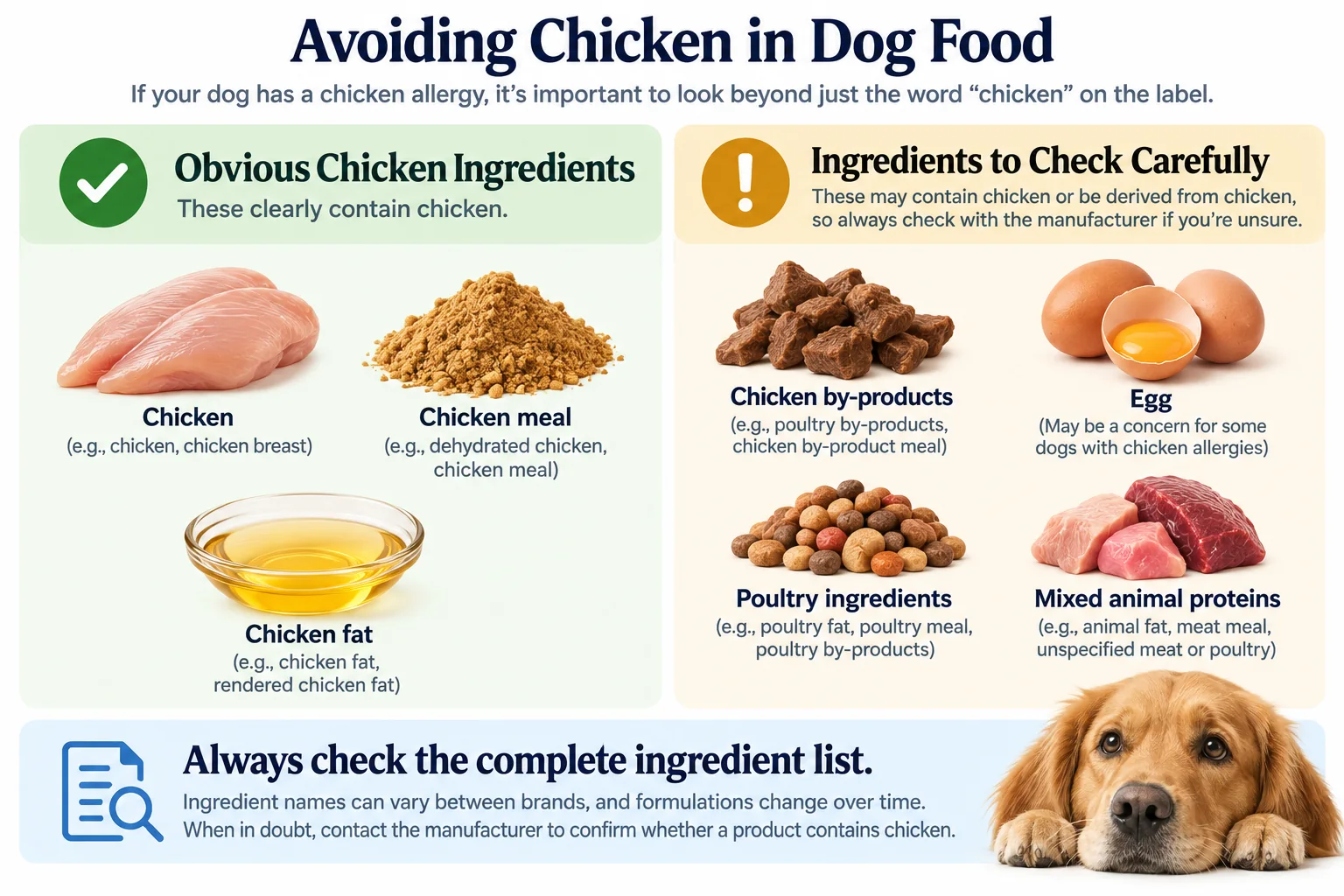
Chicken is one of the more common protein allergens, and it's also the hardest to avoid, because it turns up everywhere — not just as chicken meat but as chicken meal, chicken fat, chicken broth and generic "poultry" ingredients, plus most everyday treats and dental chews. Avoiding it properly means reading past the front of the pack and checking the full ingredient panel, and it means auditing the treats too; our guide to dog treats for sensitive stomachs covers keeping rewards simple during a trial.
One nuance trips people up: a dog allergic to chicken may also react to turkey, duck and other poultry, because related proteins can cross-react. That's why a true novel protein — or a fish or red-meat diet — is often a cleaner test than swapping one bird for another. Among the picks here, the salmon, venison, lamb and chicken-free salmon options all avoid chicken; the duck recipe is poultry but not chicken, which suits some dogs and not others. If you're unsure how broadly your dog reacts to poultry, that's a good question for your vet before you buy.
Is Salmon Good for Dogs With Allergies?
Salmon earns its popularity here for two reasons. For most dogs it's a protein they haven't eaten heavily, so it works as a limited-ingredient base, and it's naturally rich in omega-3 fatty acids, which support the skin barrier and can help a dull, flaky coat. That combination is why fish-based foods like the Natural Balance salmon and Blue Buffalo Basics salmon recipes show up so often in allergy shortlists.
Two honest caveats, though. Salmon is not a cure — the omega-3s support skin health, but they don't switch off an allergy, and a dog that's actually allergic to fish will do worse on it, not better. And salmon isn't automatically superior to a red meat like lamb; the "better" protein is simply the one your dog isn't reacting to. If your dog has already eaten a lot of fish, salmon is no longer novel, and a red meat or a true novel protein is the more useful test.
Dog Food for Allergies and Yeast Infections
"Best dog food for allergies and yeast infections" is a hugely common search, and the honest answer is that there's no such thing as an anti-yeast dog food. Yeast (usually Malassezia) lives normally on healthy dog skin; it only becomes a problem when it overgrows, and that overgrowth is almost always secondary to something else — most often an allergy or atopic skin disease that has inflamed the skin and given the yeast an opening. Treat the underlying allergy and the yeast usually settles; ignore it and no food will keep the infection away.
You'll see a lot of confident advice to "cut carbs to starve the yeast." It's more complicated than that: Malassezia lives on the skin and feeds largely on skin oils rather than dietary sugar, so cutting carbohydrates only tends to help when the dog is specifically allergic to a carbohydrate it's eating. The more reliable move is to identify the real trigger. A dog with a recurrent yeasty smell, dark or greasy patches of skin, or constant ear trouble should see a vet, who can treat the infection directly — often with medicated shampoos or ear products — and look for the allergy behind it. If you want to support the skin and gut alongside proper treatment, our best dog probiotics guide explains where a probiotic fits and, just as importantly, where it doesn't.
Is Grain-Free Dog Food Better for Allergies?
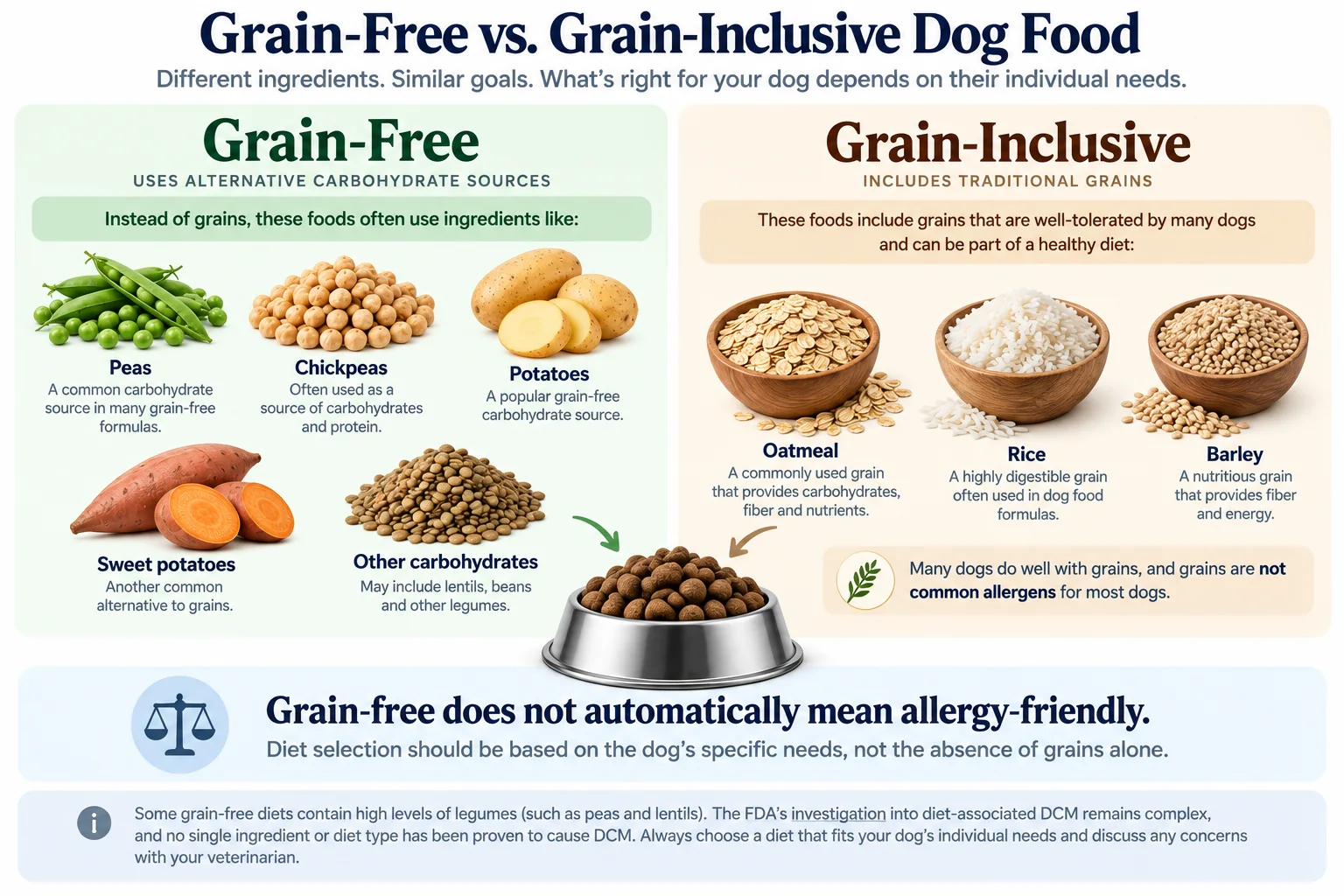
Usually not. Grain allergies are uncommon in dogs, and as the allergen data shows, the frequent triggers are animal proteins, with wheat well down the list and other grains rarer still. For most itchy dogs, dropping grain changes the wrong variable while leaving the protein — the likely culprit — untouched. Grains are also a digestible energy source for the majority of dogs.
There's also a heart-health angle worth stating plainly and without alarm. In 2018 the U.S. Food and Drug Administration began investigating reports of a form of heart disease, dilated cardiomyopathy (DCM), in dogs eating some "grain-free" diets that were high in peas, lentils, other legumes and potatoes. The FDA has said it has not established that these diets cause DCM, and describes it as a complex issue that may involve several factors; in December 2022 it stated it would not issue further updates without meaningful new evidence, and no products were recalled. The practical position most veterinarians take is measured: there's no allergy reason to choose grain-free by default, and if your dog does well on a grain-inclusive food from an established manufacturer, there's no need to switch away from it. That's part of why we included grain-inclusive options in the Wellness Simple duck and Purina lamb recipes, and it's a good subject to raise with your vet if you own an at-risk breed.
Dry vs. Wet Dog Food for Allergies
Format matters far less than the ingredient list. What decides whether a food suits an allergic dog is the protein and how short and clean the recipe is — not whether it comes from a bag or a can. Dry food is convenient and economical and makes it easy to feed one recipe consistently through a trial. Wet food carries more moisture and is often more palatable, which helps a fussy or older dog eat, and several of the brands here sell canned versions of the same recipes.
The one rule that carries over to a food trial regardless of format is strictness: whichever you feed, feed only that, with no flavored toppers, table scraps or chicken-laced treats sneaking in, or you won't be able to trust the result. Pick the format your dog will eat reliably for two months, then judge it on the protein and ingredient list rather than on texture.
When OTC Food Isn't Enough: Hydrolyzed and Prescription Diets
Over-the-counter limited-ingredient foods are a reasonable first step, but they have a real limit: studies have found that many retail diets are cross-contaminated with proteins not listed on the label, which is enough to derail a food trial. That's why, when a food allergy is strongly suspected, veterinarians often reach for a prescription diet instead — either a hydrolyzed diet, in which the protein is broken into fragments too small for the immune system to recognize, or a strictly controlled novel-protein veterinary diet.
Common examples your vet may discuss include Royal Canin Hydrolyzed Protein and Ultamino, Hill's Prescription Diet z/d, and Purina Pro Plan Veterinary Diets HA Hydrolyzed, plus novel-protein options such as Royal Canin Selected Protein. These are prescription products chosen and monitored with your veterinarian, which is why we don't link them for purchase here — they aren't shelf items, and no diet is guaranteed allergen-free for every dog. The elimination trial itself is the same whichever diet you use: feed it strictly for eight to twelve weeks, then, if the signs clear, reintroduce the old food to see if they return, which is what confirms a food allergy. In studies of dogs on a proper trial, roughly 85% improve by five weeks and more than 95% by eight weeks, with skin and ear signs generally slower to settle than digestive ones.
When to See a Veterinarian
Choosing a food is the easy part; knowing when food isn't the answer is what protects your dog. Because itching has so many causes — environmental allergies, skin and ear infections, parasites, hormonal disease — a food change is the wrong first move when the signs point beyond a simple food reaction.
See your veterinarian rather than just switching food if your dog has
Intense or worsening itching · recurrent ear infections · skin that is red, raw, darkened, greasy or smells yeasty · hair loss or sores from scratching and licking · itching that's clearly seasonal · digestive signs alongside the skin trouble · or no improvement after a proper eight-to-twelve-week food trial. These need a diagnosis, not another bag of food.
A vet can confirm whether an allergy is even the problem, treat the secondary infections that keep an itchy dog miserable, and set up a proper elimination trial — including a prescription diet if that's the right call. If your dog's signs are more about the gut than the skin, our guide to dog food for diarrhea covers what to feed once a vet has ruled out anything serious. Food is a tool that works best alongside a diagnosis, not instead of one.
Best Dog Food for Allergies: Frequently Asked Questions
What is the best dog food for skin allergies?
There is no single best food, because "skin allergies" can be driven by food, by the environment, or by both. If food is the suspect, a limited-ingredient or novel-protein diet the dog has never eaten is a sensible starting point, fed strictly for eight to twelve weeks. If itching flares seasonally or the skin keeps getting infected, an environmental allergy is likely and food alone won't fix it, so ask your veterinarian.
What are the top 3 dog food allergies?
In a systematic review of confirmed canine cases (Mueller, Olivry & Prélaud, 2016), the most commonly reported food allergens were beef (about 34% of cases), dairy (about 17%) and chicken (about 15%), followed by wheat and lamb. The important pattern is that the leading triggers are animal proteins, not grains.
What is the number one food allergy in dogs?
Beef is the single most frequently reported food allergen in dogs, appearing in roughly a third of confirmed cases in the published review data. Because beef, dairy and chicken are staples in so many everyday foods, dogs are simply exposed to them the most, which is thought to be part of why they top the list.
What foods stop dogs from itching?
No food reliably stops itching on its own. If the itch is caused by a food allergy, removing the offending protein with a strict elimination diet can reduce it over several weeks, and omega-3 fatty acids from fish can support the skin barrier. But much itching is environmental or tied to secondary skin and ear infections, which need veterinary treatment rather than a new bag of food.
What should I feed my dog with food allergies?
Feed a diet built around a protein your dog has not eaten before — a single novel protein such as kangaroo, venison or duck — or a veterinary hydrolyzed diet, and feed nothing else for eight to twelve weeks. This is an elimination trial, and it works best when planned with your veterinarian, because over-the-counter foods can be cross-contaminated and cannot, by themselves, confirm a diagnosis.
What should I feed my dog if it is allergic to chicken?
Choose a food with no chicken and no chicken by-products, chicken fat or chicken flavor, and check treats and chews too, since chicken hides in many of them. Fish, novel proteins and some red meats work well. Be aware that a dog allergic to chicken may also react to turkey and other poultry, so a true novel protein is often the safer test.
Is grain-free dog food better for allergies?
Not usually. Grain allergies are uncommon in dogs, and the most frequent food allergens are animal proteins, so removing grain rarely solves an allergy. The FDA has also investigated a possible association between some grain-free diets high in legumes and a form of heart disease, without establishing that these diets cause it. If your dog does well on a grain-inclusive food, there's no allergy reason to switch.
What is the best dog food for allergies and yeast infections?
There is no anti-yeast dog food. Yeast (Malassezia) overgrowth on the skin is almost always secondary to an underlying problem, most often an allergy, so the goal is to identify and manage that allergy rather than to buy a food marketed against yeast. A recurrent yeasty smell, dark or greasy skin and head-shaking are reasons to see a vet, who can treat the infection and look for its cause.
Is hydrolyzed dog food good for dogs with allergies?
Hydrolyzed diets break protein into fragments small enough that the immune system usually doesn't recognize them, which makes them a mainstay for diagnosing and managing food allergies. They are veterinary prescription diets, so they're chosen with your vet, not off a shelf, and no diet is guaranteed allergen-free for every dog.
How long does it take for allergy food to work?
Plan on a strict eight-to-twelve-week trial. In studies of dogs on a proper elimination diet, about 85% improve by five weeks and more than 95% by eight weeks. Digestive signs often settle first, while skin and ear signs can take the full eight weeks or longer, so give it time and keep everything else out of the bowl.
Keep reading
References
- Mueller RS, Olivry T, Prélaud P. "Critically appraised topic on adverse food reactions of companion animals (2): common food allergen sources in dogs and cats." BMC Veterinary Research 2016;12:9. bmcvetres.biomedcentral.com
- VCA Animal Hospitals. "Food Allergies in Dogs." vcahospitals.com
- PetMD. "Food Allergies and Intolerances in Dogs." petmd.com
- American Kennel Club. "Everything You Need to Know About Food Allergies in Dogs." akc.org
- American Kennel Club. "Yeast Dermatitis (Malassezia) in Dogs." akc.org
- U.S. Food & Drug Administration. "FDA Investigation into Potential Link between Certain Diets and Canine Dilated Cardiomyopathy." fda.gov
- American Veterinary Medical Association. "Diet-associated dilated cardiomyopathy." avma.org
- Cummings School of Veterinary Medicine at Tufts University, Petfoodology. "Diet-associated DCM updates." sites.tufts.edu
- WSAVA Global Nutrition Committee. "Global Nutrition Guidelines" (selecting pet foods and questions to ask manufacturers). wsava.org
- Natural Balance. "Limited Ingredient Diets" product information. naturalbalanceinc.com
- Zignature. "Kangaroo Formula" product information. zignature.com
- Instinct. "Limited Ingredient Diet Real Lamb" product information. instinctpetfood.com
- Wellness Pet Food. "Wellness Simple Duck & Oatmeal" product information. wellnesspetfood.com
- Purina Pro Plan. "Sensitive Skin & Stomach Lamb & Oat Meal" product information. purina.com
- Blue Buffalo. "BLUE Basics Grain-Free Salmon & Potato" product information. bluebuffalo.com
Affiliate note: this page contains affiliate links — the Amazon product links go to each food's search results. As an Amazon Associate we earn from qualifying purchases, and we may earn a commission if you buy through these links, at no extra cost to you. We don't display prices or customer ratings for these foods, prescription diets are referenced for education only with no affiliate link, and affiliate relationships never change our conclusions.
Medical note: General education, not veterinary advice. Allergies are a clinical problem — a food change cannot diagnose or cure one, and an itchy or infected dog should be seen by a veterinarian before you rely on diet alone.