Dog Health
4 Best Dog Toothpaste: Vet-Recommended Picks, Safety & How to Choose
Choosing the best dog toothpaste is not just about finding something that makes your dog's breath smell better. The right dog toothpaste should be made specifically for dogs, safe if swallowed, easy to use, and suited to the way you plan to maintain your dog's teeth.
The biggest mistake is reaching for regular human toothpaste. Dogs cannot reliably spit toothpaste out, and human formulas can contain ingredients that are not appropriate for swallowing, including fluoride, high levels of sodium, and in some products, xylitol. Veterinary guidance recommends using toothpaste specifically formulated for dogs instead (VCA Animal Hospitals). Good dental habits are one part of your dog's overall health and wellness, and toothpaste is where most owners start.
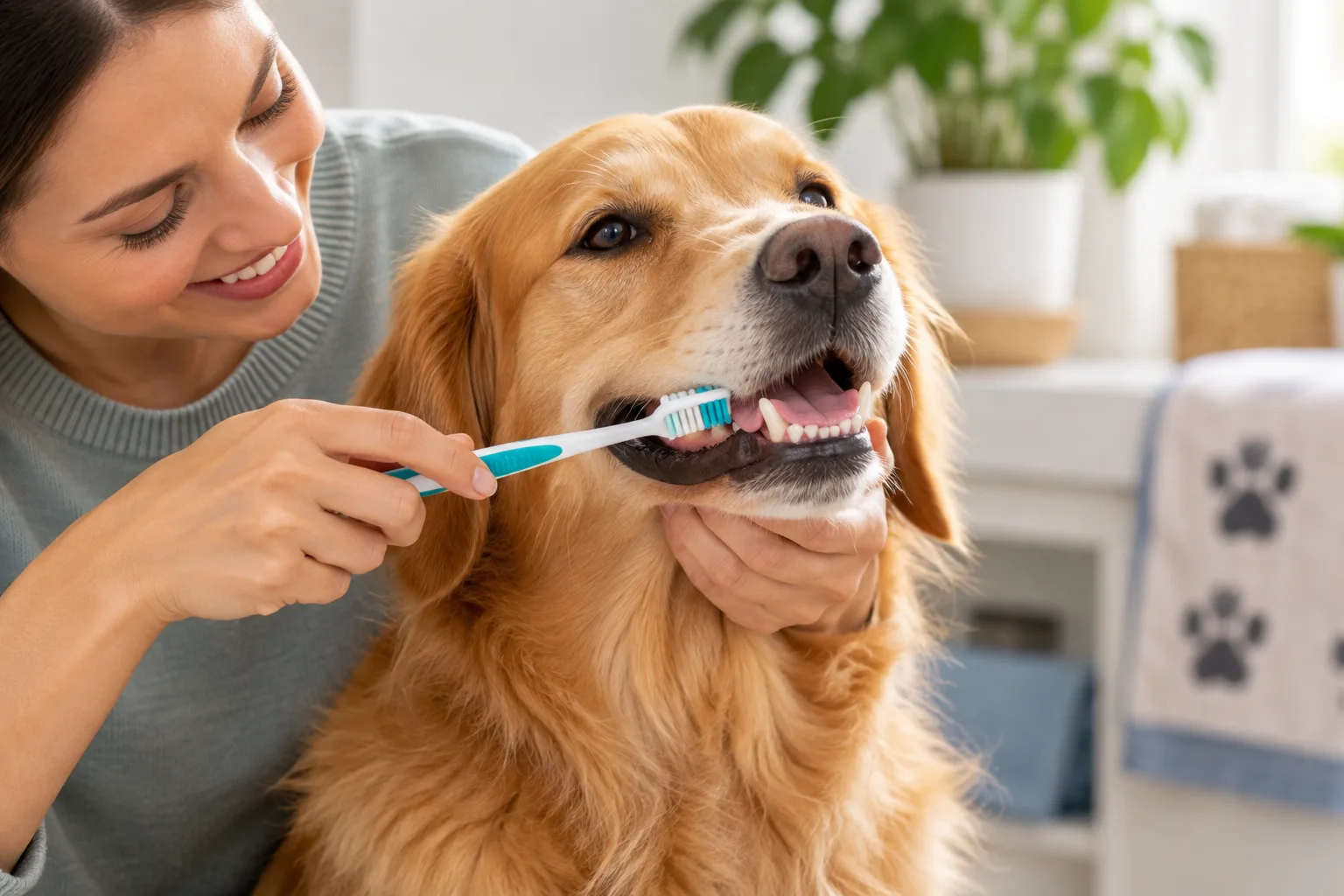
For most owners, an enzymatic dog toothpaste is a practical place to start because these formulas combine brushing with ingredients designed to help control plaque. Below, we'll look at what makes a good dog toothpaste, which ingredients matter, how to choose between different formulas, and four products worth considering.
What Makes a Good Dog Toothpaste?
A good dog toothpaste needs to do two things well: be appropriate for your dog's mouth and make regular brushing easier to maintain.
Unlike human toothpaste, dog-specific toothpaste is designed around the fact that dogs swallow what you put in their mouths. Veterinary guidance recommends using non-foaming toothpaste formulated for pets rather than human toothpaste (VCA Animal Hospitals).
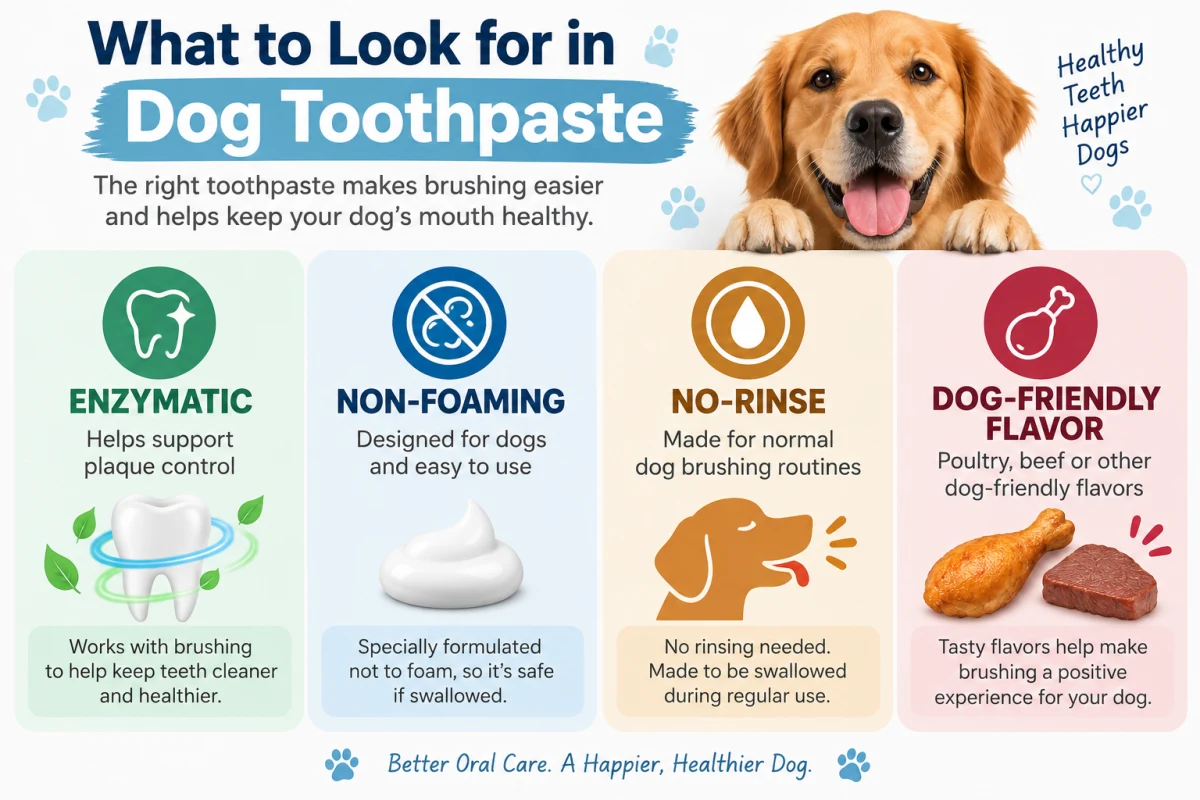
When comparing products, look for these characteristics:
- Made specifically for dogs
- Non-foaming formulation
- Designed to be swallowed
- Enzymatic ingredients when appropriate
- A flavor your dog accepts
- Clear directions for regular use
- Ingredients intended for canine dental care
- A formula that works with a dog toothbrush or finger brush
An enzymatic dog toothpaste can be particularly useful because some formulas contain enzymes intended to help reduce bacteria and plaque formation alongside the mechanical action of brushing (VCA Animal Hospitals).
Our Featured Dog Toothpaste
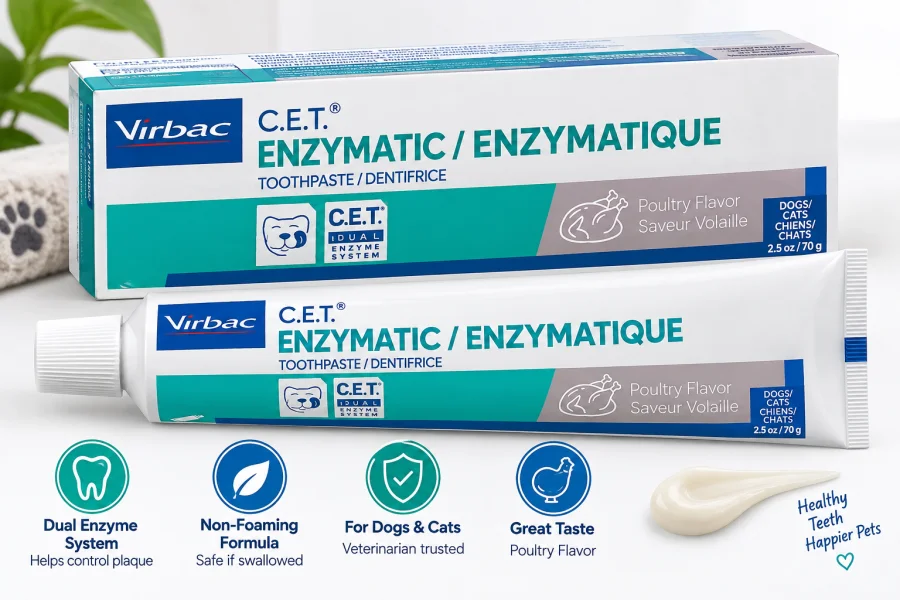
Virbac C.E.T. Enzymatic Toothpaste. Virbac's C.E.T. formula uses a dual-enzyme system and is specifically formulated for dogs. The manufacturer states that it is non-foaming, does not require rinsing, and is available in several flavors including poultry, beef, seafood, malt, and vanilla-mint (Virbac).
Best suited for: Owners looking for an established enzymatic formula for regular brushing.
Affiliate disclosure: Some links on this page are Amazon affiliate links. As an Amazon Associate I earn from qualifying purchases, at no additional cost to you. This does not change the veterinary guidance above or the products we discuss, and we link to Amazon search results rather than making price, availability, or rating claims.
Check Virbac C.E.T. on Amazon (opens in a new tab)
Sponsored affiliate link. As an Amazon Associate I earn from qualifying purchases.
What Ingredients Should You Look for in Dog Toothpaste?
The ingredient list is worth checking before buying any toothpaste for dogs. There isn't one ingredient that automatically makes a product the safest toothpaste for dogs. The complete formulation matters, as does whether the product is specifically intended for canine use.
Enzymes
Many enzymatic dog toothpaste formulas use enzymes such as glucose oxidase. The purpose is to support plaque control alongside the physical action of brushing. Virbac, for example, describes its C.E.T. toothpaste as using a dual-enzyme system designed to inhibit plaque-forming bacteria (Virbac).
Non-Foaming Formulas
A non-foaming formula is important because your dog isn't going to rinse and spit like a person. Veterinary guidance specifically recommends pet toothpaste that can be swallowed rather than human toothpaste containing ingredients that aren't intended for ingestion (VCA Animal Hospitals).
Dog-Friendly Flavors
Flavor matters more than many owners expect. Poultry, beef and other dog-friendly flavors can make brushing easier because the toothpaste itself becomes something your dog is willing to accept. Virbac offers several flavors, while veterinary guidance also notes that choosing a flavor your dog likes can make the brushing experience easier (Virbac).
What About Natural Dog Toothpaste?
You may see products marketed as natural dog toothpaste, but natural does not automatically mean better or safer. Instead of judging a formula only by whether it contains plant-based ingredients, check whether it is actually formulated for dogs and whether the ingredients and directions are appropriate for regular dental use. For example, Vet's Best uses ingredients including aloe, neem oil, grapefruit seed extract, baking soda and glucose oxidase in its enzymatic dog toothpaste (Vet's Best).
Can Dogs Use Human Toothpaste?
No. Human toothpaste should not be used as dog toothpaste. This is one of the most important safety points in canine dental care.
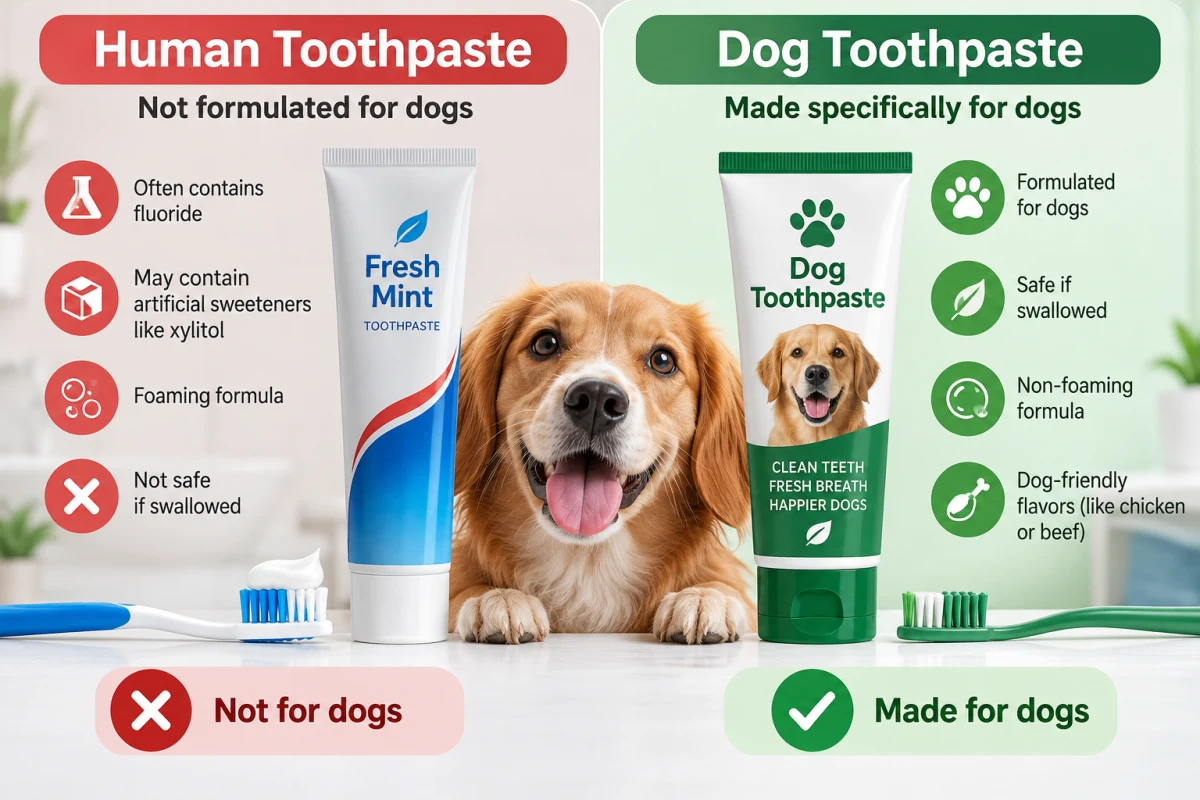
People generally brush, rinse and spit toothpaste out. Dogs don't. That means ingredients intended for a human toothpaste formula can be swallowed by your dog. Veterinary sources specifically advise against using human toothpaste because some formulas contain fluoride, high levels of sodium or xylitol. Xylitol is particularly dangerous to dogs (VCA Animal Hospitals).
So if you're wondering: Can you use toothpaste on dogs? Yes, but it should be toothpaste formulated specifically for dogs. If you're asking: Can you use regular toothpaste on a dog? No. Use a canine dental formula instead.
Why Plaque and Tartar Control Matter
Brushing isn't only about fresh breath. Plaque is a major contributor to periodontal disease in dogs, which is why controlling plaque accumulation is an important part of at-home dental care. Veterinary guidance recommends regular home dental care and professional dental treatment when necessary (VCA Animal Hospitals).
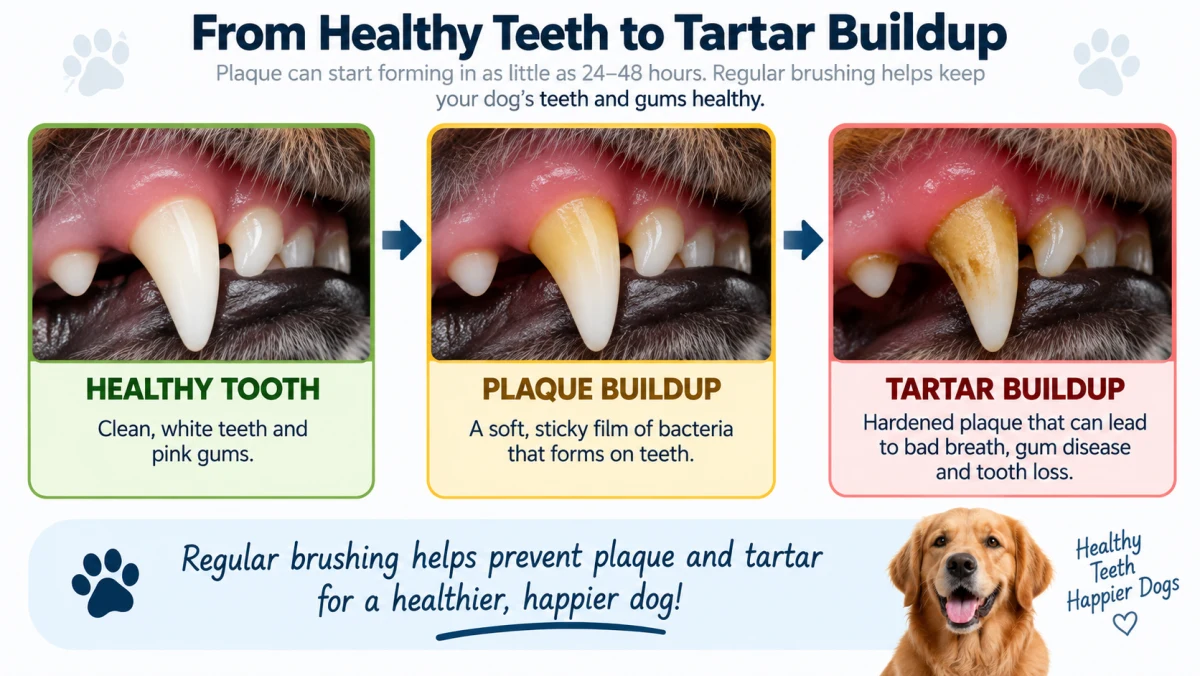
This is where choosing the best dog toothpaste for plaque becomes relevant. Toothpaste alone isn't a substitute for brushing. The toothbrush provides the mechanical cleaning action, while toothpaste can make brushing easier and, depending on its formulation, provide additional plaque-control benefits.
Best Dog Toothpaste for Tartar Removal
It's important to separate plaque from established tartar. A dog toothpaste for tartar removal can help with ongoing dental hygiene, but brushing is primarily a preventive maintenance tool. Hardened calculus may require professional dental treatment rather than simply adding more toothpaste.
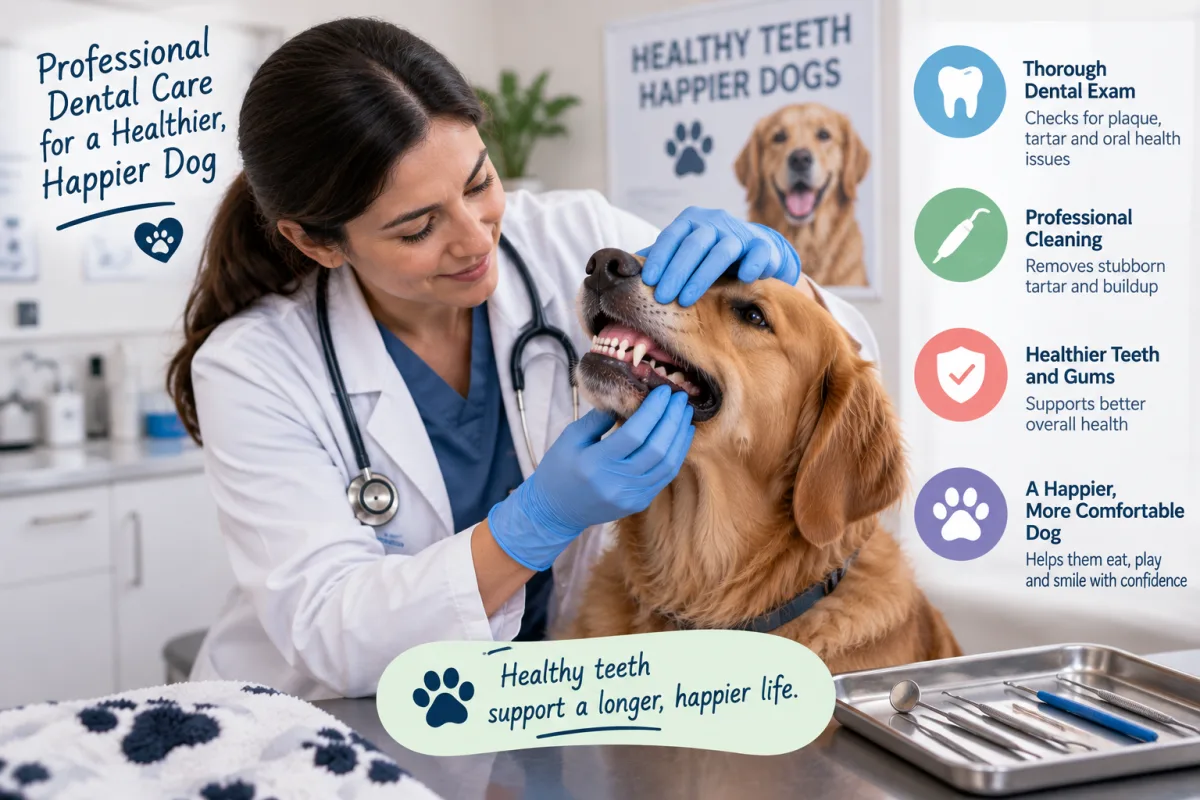
A veterinarian can determine whether your dog's teeth need professional cleaning. The goal of regular brushing is to stay ahead of plaque accumulation rather than wait until significant tartar has developed (VCA Animal Hospitals).
Best Dog Toothpaste Options to Consider
There are several formulas worth considering depending on what you're looking for in your dog's dental routine. Our selected products are:
- Virbac C.E.T. Enzymatic Toothpaste
- Sentry Petrodex Enzymatic Toothpaste
- Arm & Hammer Advanced Care Tartar Control Dental Gel
- Vet's Best Dog Toothpaste & Toothbrush Dental Care Kit
The products aren't identical, so the right choice depends on your dog's preferences and your brushing routine.
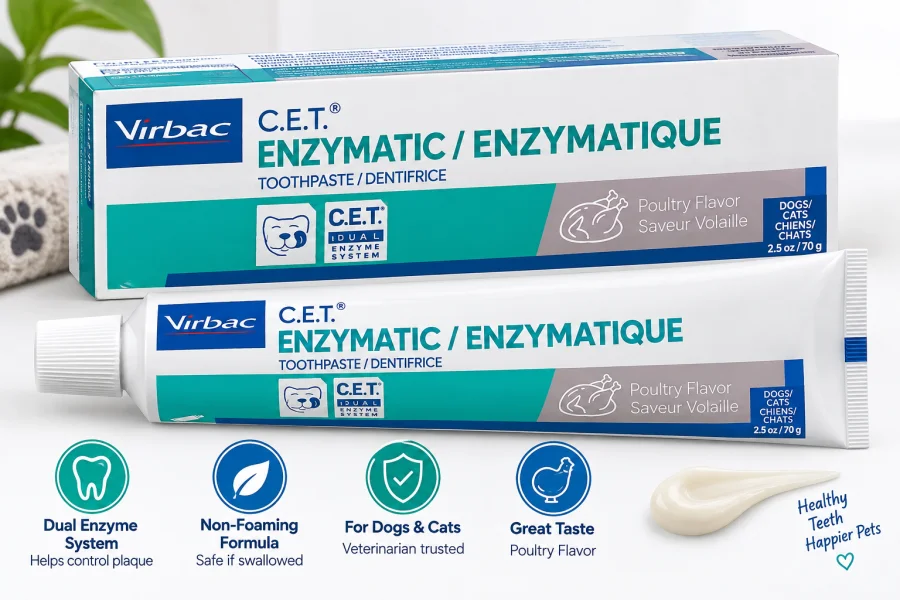
Virbac C.E.T. Enzymatic Toothpaste
Amazon rating: 4.6/5 from 17,379 ratingsRating and rating count shown on Amazon for Virbac C.E.T. Enzymatic Toothpaste for Dogs and Cats (Poultry, 2.5 oz) at the time this article was updated.
Virbac C.E.T. is an established enzymatic dog toothpaste designed specifically for canine dental care. The manufacturer describes its formula as non-foaming and suitable for swallowing without rinsing. It uses a dual-enzyme system and comes in multiple flavors, including poultry, beef, seafood, malt and vanilla-mint (Virbac).
Why consider it?
- Enzymatic formulation
- Non-foaming
- No rinsing required
- Multiple flavor options
- Designed specifically for dogs
- Can be used with a toothbrush or on its own
Best for: Owners looking for a dedicated enzymatic toothpaste with several flavor choices.
Check Virbac C.E.T. on Amazon (opens in a new tab)
Sponsored affiliate link. As an Amazon Associate I earn from qualifying purchases.
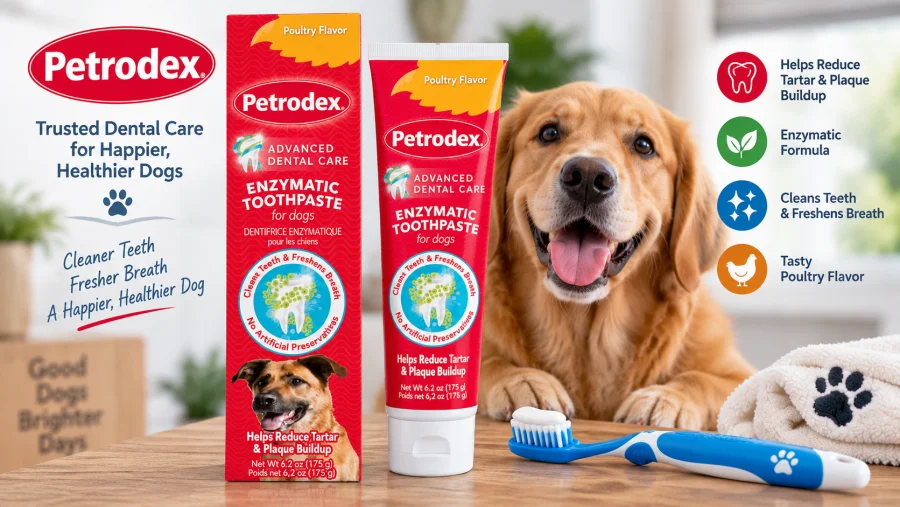
Sentry Petrodex Enzymatic Toothpaste
Amazon rating: 4.5/5 from 27,580 ratingsRating and rating count shown on Amazon for Petrodex Enzymatic Dog Toothpaste (Poultry Flavor) at the time this article was updated.
Sentry Petrodex is another option if you're specifically looking for petrodex dog toothpaste with an enzymatic formulation. The product is designed for canine dental care and is commonly used as part of a regular brushing routine.
A veterinarian answering a Petco product question specifically advised using dog-only toothpaste and noted that daily brushing is the preferred routine for dental maintenance (Petco veterinary Q&A).
- Enzymatic formula
- Designed specifically for dogs
- Intended for routine dental care
- Dog-friendly flavor options
- Works with a regular dog toothbrush
Best for: Owners looking for a straightforward enzymatic dog dental paste.
Check Sentry Petrodex on Amazon (opens in a new tab)
Sponsored affiliate link. As an Amazon Associate I earn from qualifying purchases.
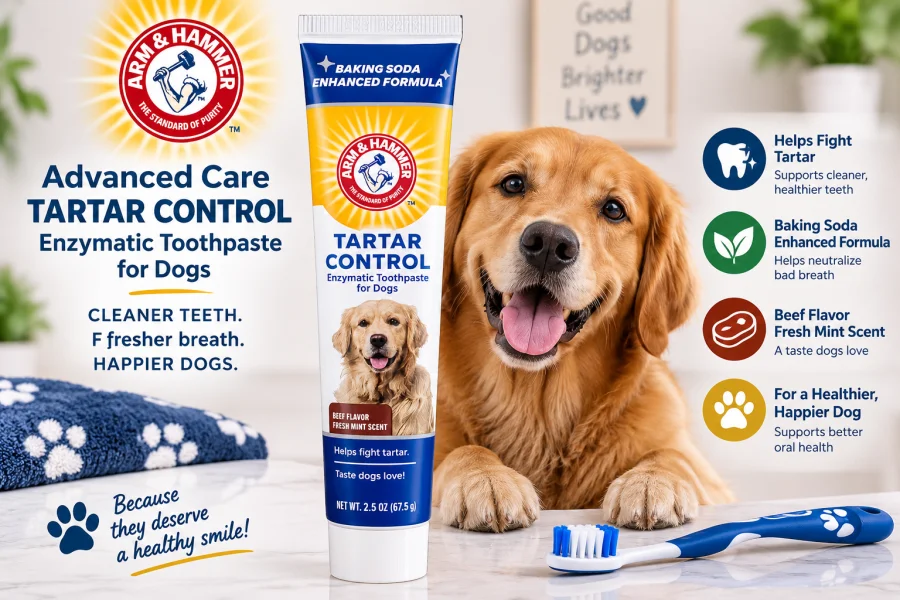
Arm & Hammer Advanced Care Tartar Control Dental Gel
Amazon rating: 4.4/5 from 4,761 ratingsRating and rating count shown on Amazon for Arm & Hammer for Pets Tartar Control Enzymatic Toothpaste for Dogs (Beef Flavor) at the time this article was updated.
Arm & Hammer's Advanced Care line includes a tartar-control dental gel specifically formulated for dogs. The manufacturer lists the product as Advanced Care Tartar Control Dental Gel for Dogs, Mint Flavor (Arm & Hammer). Arm & Hammer also sells dog dental products using baking soda-based formulations, including enzymatic dog toothpaste (Arm & Hammer for Pets).
- Specifically formulated for dogs
- Tartar-control positioning
- Gel format
- Mint flavor
- Part of a broader canine dental-care range
Best for: Owners specifically interested in a tartar-focused dog dental gel.
Check Arm & Hammer Dog Toothpaste on Amazon (opens in a new tab)
Sponsored affiliate link. As an Amazon Associate I earn from qualifying purchases.
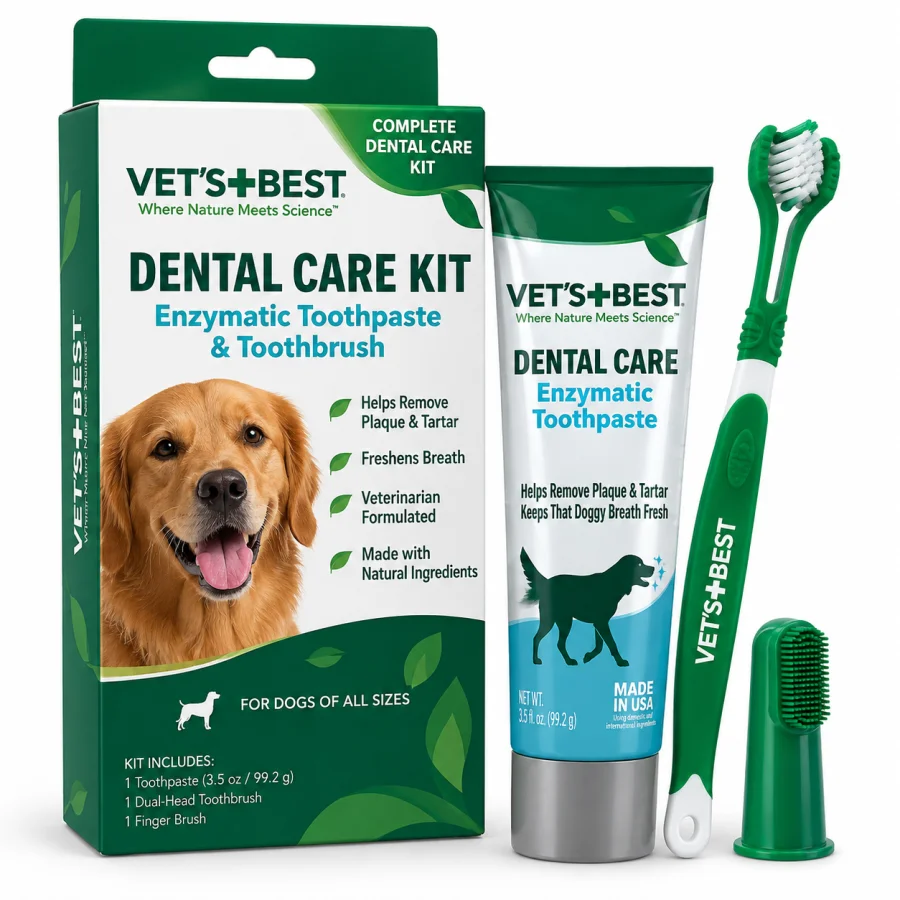
Vet's Best Dog Toothpaste & Toothbrush Dental Care Kit
Amazon rating: 4.4/5 from 49,896 ratingsRating and rating count shown on Amazon for Vet's Best Dog Toothpaste & Toothbrush Dental Care Kit, With Brush 3.5 oz (ASIN B06XKJNFXX) at the time this article was updated.
This dental care kit pairs Vet's Best enzymatic dog toothpaste with a dog toothbrush, so you have both parts of a brushing routine in one package. The toothpaste combines enzymes with ingredients including aloe, neem oil, grapefruit seed extract and baking soda. The manufacturer describes it as a veterinarian-formulated dental product intended to help clean plaque and tartar while freshening breath, and its directions recommend applying it with a brush or finger 2–3 times per week (Vet's Best).
Why consider it?
- Enzymatic formulation
- Aloe and neem oil
- Glucose oxidase
- Dog-friendly flavoring
- Can be applied with a toothbrush or finger
- Designed for routine dental hygiene
Best for: Owners who want a toothpaste-and-toothbrush kit combining enzymes with plant-based ingredients.
Check Vet's Best Dental Care Kit on Amazon (opens in a new tab)
Sponsored affiliate link. As an Amazon Associate I earn from qualifying purchases.
Dog Toothpaste Comparison
| Product | Formula | Notable feature | Good fit for |
|---|---|---|---|
| Virbac C.E.T. Enzymatic | Enzymatic | Dual-enzyme system, multiple flavors | Regular brushing |
| Sentry Petrodex | Enzymatic | Straightforward dental formula | Routine dental care |
| Arm & Hammer Advanced Care | Dental gel | Tartar-control positioning | Tartar-focused care |
| Vet's Best Dental Care Kit | Enzymatic | Toothpaste + toothbrush kit, plant-based ingredients | Owners seeking a broader ingredient blend |
How to Choose the Best Dog Toothpaste for Your Dog
The best dog toothpaste is ultimately the one your dog will tolerate consistently and that is appropriate for canine use. Here's a simple way to narrow it down.
If Your Priority Is Plaque Control
Look for an enzymatic dog toothpaste and use it consistently with a toothbrush. The brushing action remains important. Toothpaste doesn't replace mechanical cleaning.
If Your Dog Has Bad Breath
Look for a product designed for routine dental hygiene and consider the best dog toothpaste for bad breath based on whether your dog will accept the flavor. Bad breath can sometimes be a sign of an underlying dental problem, so persistent or worsening odor shouldn't simply be covered up with a breath-freshening product.
If Your Priority Is Tartar
A tartar-focused formula can be part of your routine, but established tartar may require professional dental care. The objective of home brushing is primarily to control plaque before it progresses.
If Your Dog Is Difficult to Brush
Flavor becomes especially important. Try allowing your dog to taste a tiny amount of the toothpaste before attempting a full brushing session. VCA recommends introducing the toothbrush gradually and allowing the dog to sniff and lick it before progressing (VCA Animal Hospitals).
If You Have a Puppy
Choose a puppy toothpaste specifically designed for young dogs and introduce brushing gradually. Veterinary guidance recommends starting early and building the habit rather than waiting until dental problems develop. VCA describes daily brushing as the gold standard for young dogs, with brushing at least three times per week as a minimum target for plaque and tartar prevention (VCA Animal Hospitals).
Explore the recommended dog toothpaste options above to match one of these priorities to a formula.
How to Brush Your Dog's Teeth With Toothpaste
Having the right dog toothpaste and toothbrush is only half the process. Your technique matters too.
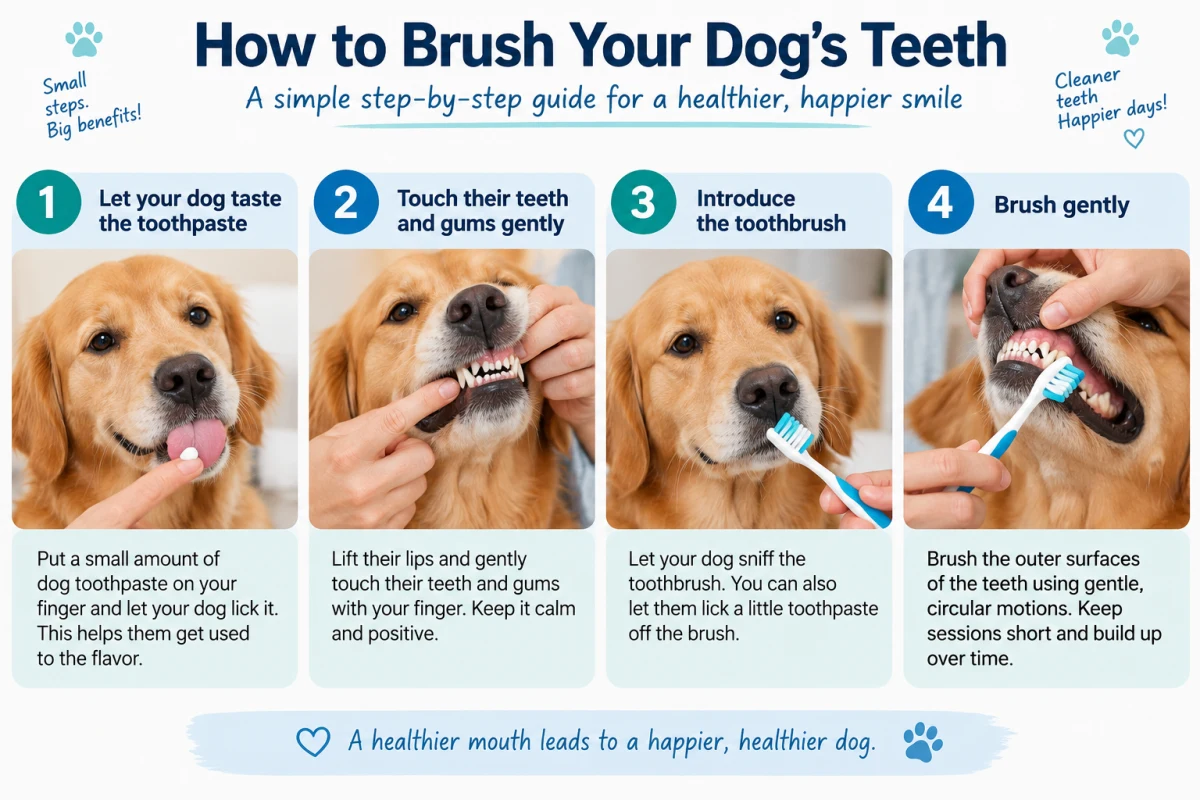
Step 1: Let Your Dog Taste the Toothpaste
Start with a tiny amount on your finger. Allow your dog to lick it and become familiar with the flavor.
Step 2: Introduce the Toothbrush
Let your dog sniff the brush before putting it in the mouth. A finger brush can be easier for some owners when starting, while a standard soft pet toothbrush may provide better access once the dog is comfortable. VCA notes that brush selection can depend on the dog's size and the owner's dexterity (VCA Animal Hospitals).
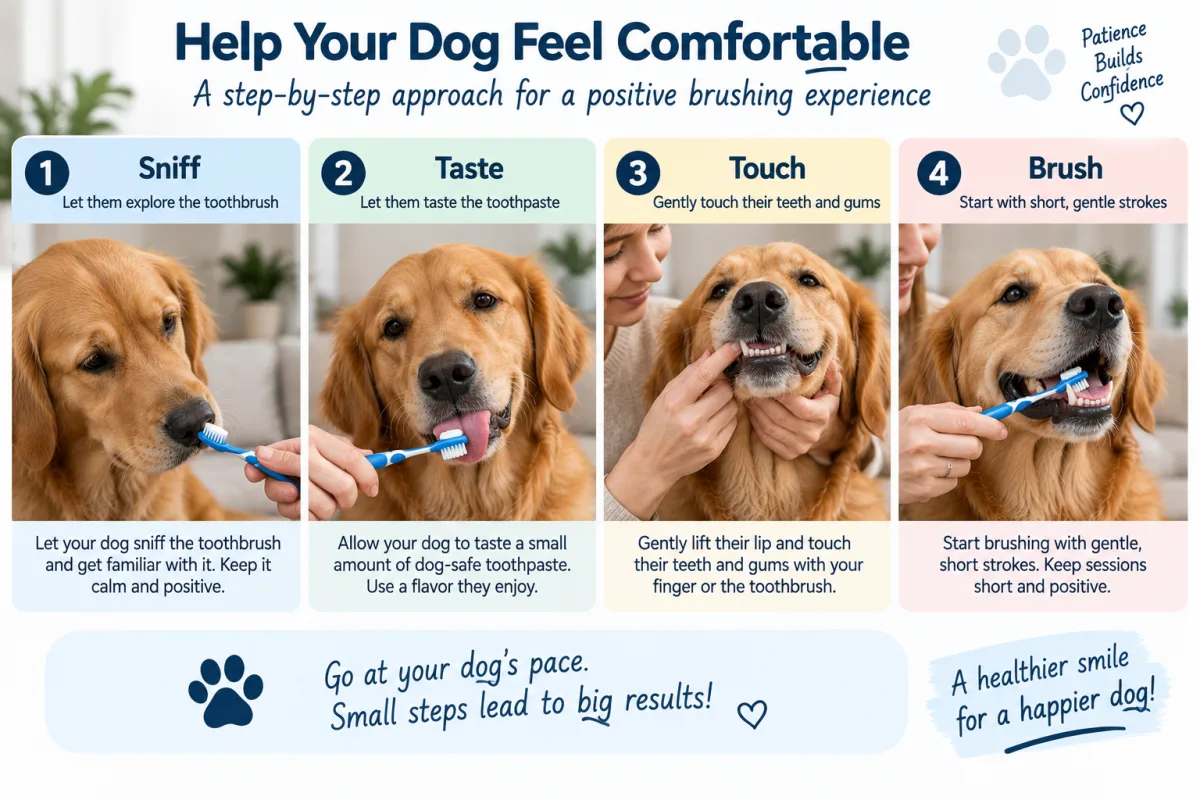
Step 3: Lift the Lips Gently
You don't need to force the mouth open. Start by gently lifting the lips and touching the outside surfaces of the teeth.
Step 4: Brush Slowly
Focus initially on the outer surfaces of the teeth, particularly where the teeth meet the gums. Keep the session short.
Step 5: Build Consistency
Daily brushing is the ideal target, although veterinary guidance recognizes that brushing several times per week can still provide meaningful preventive care (VCA Animal Hospitals). The key is creating a routine your dog will actually tolerate.
What Can You Use Instead of Dog Toothpaste?
If your dog refuses brushing, there are other dental-care products that can complement an oral-health routine. The Veterinary Oral Health Council maintains a list of accepted products for dogs covering categories such as dental diets, edible dental chews, water additives, oral gels, toothpaste, toothbrushes and wipes (VOHC).
However, alternatives should not automatically be treated as replacements for brushing. For example, the VOHC explains that its Seal of Acceptance is awarded after reviewing submitted evidence against its standards for plaque or tartar control (VOHC).
So when comparing alternatives, look at the specific product, its intended claim and the evidence behind that claim rather than assuming every dental product works the same way.
Frequently Asked Questions About Dog Toothpaste
Can you use human toothpaste on dogs?
No. Human toothpaste should not be used on dogs. Some formulas contain fluoride, high levels of sodium or xylitol, and dogs are unable to spit toothpaste out like people do. Use a toothpaste specifically formulated for dogs instead (VCA Animal Hospitals).
Can dogs have toothpaste?
Yes, dogs can use toothpaste, but it should be dog-specific toothpaste designed to be swallowed. Pet toothpastes are generally non-foaming and formulated specifically for animals that cannot rinse and spit (VCA Animal Hospitals).
Can I use regular toothpaste on a dog?
No. Regular human toothpaste is not an appropriate substitute for toothpaste for dogs. Choose a canine dental formula instead (VCA Animal Hospitals).
What is the best toothpaste for dogs?
There isn't one universally best formula for every dog. Look for a dog-specific, non-foaming formula your dog accepts and consider an enzymatic dog toothpaste for routine plaque-control support. Consistent brushing matters just as much as the toothpaste itself.
Is toothpaste harmful to dogs?
Human toothpaste can be harmful if swallowed because some formulas contain ingredients dogs should not ingest. Xylitol is particularly dangerous to dogs. If a dog consumes a product containing xylitol, contact a veterinarian or animal poison service promptly (VCA Animal Hospitals).
What is the best dog toothpaste for bad breath?
A dog-specific dental toothpaste can help support oral hygiene and freshen breath, but persistent bad breath should not simply be masked. Dental disease can contribute to unpleasant breath, so a veterinary examination may be appropriate if the problem persists.
What is the best dog toothpaste for plaque?
An enzymatic dog toothpaste used consistently with brushing is a practical option for plaque-control routines. The Veterinary Oral Health Council also maintains a list of products accepted for plaque and/or tartar control (VOHC).
Does dog toothpaste help remove tartar?
It can help with ongoing dental maintenance and plaque control, but established hardened tartar generally cannot be treated as if it were ordinary plaque. Professional dental evaluation and cleaning may be necessary when significant calculus has already developed.
What toothpaste should I use for a puppy?
Choose a puppy toothpaste or dog toothpaste specifically appropriate for young dogs. Start slowly, use a flavor your puppy accepts and build the brushing habit gradually. VCA recommends beginning early and working toward regular brushing (VCA Animal Hospitals).
Does dog toothpaste expire?
Yes, check the expiration or best-before information on the specific product packaging. Storage instructions can also vary, so follow the manufacturer's directions rather than assuming all dog toothpaste has the same shelf life.
The Bottom Line
The best dog toothpaste isn't necessarily the one with the longest ingredient list or the strongest marketing claims. Start with the basics:
- Choose dog-specific toothpaste
- Avoid human toothpaste
- Look for a non-foaming formula designed to be swallowed
- Consider an enzymatic dog toothpaste
- Pick a flavor your dog accepts
- Use a suitable dog toothbrush
- Brush consistently
- Don't expect toothpaste to remove established tartar
- Seek veterinary care when there are signs of significant dental disease
Among the products covered here, the four options to compare are Virbac C.E.T. Enzymatic Toothpaste, Sentry Petrodex Enzymatic Toothpaste, Arm & Hammer Advanced Care Dental Gel, and the Vet's Best Dog Toothpaste & Toothbrush Dental Care Kit. The most important part isn't finding a tube that sounds impressive. It's choosing an appropriate formula and turning dental care into a routine your dog will actually tolerate — a small habit that supports your dog's everyday health over the long term.
Related Dog Health Guides
 Dog health tips
The everyday-care basics — nutrition, dental care, weight, and when to call the vet.
Dog health tips
The everyday-care basics — nutrition, dental care, weight, and when to call the vet.
 Dog gut health
How the canine gut works and the everyday habits that support digestive balance.
Dog gut health
How the canine gut works and the everyday habits that support digestive balance.
 Should I let my dog eat grass?
When grazing is worth monitoring, when to redirect your dog, and when to call the vet.
Should I let my dog eat grass?
When grazing is worth monitoring, when to redirect your dog, and when to call the vet.
 Dog diarrhea
Common causes, what owners can monitor at home, and when it warrants a vet.
Dog diarrhea
Common causes, what owners can monitor at home, and when it warrants a vet.
Sources & editorial references
- VCA Animal Hospitals. "Dental Cleaning in Dogs," "Nutrition and Periodontal Disease in Dogs," "Brushing Teeth in Dogs," "Xylitol Toxicity in Dogs," and related pet-care resources. vcahospitals.com
- Veterinary Oral Health Council (VOHC). Accepted products for plaque and tartar control in dogs. vohc.org
- Virbac. C.E.T. Enzymatic Toothpaste product information. virbac.com
- Vet's Best. Enzymatic Dog Toothpaste product information. vetsbest.com
- Arm & Hammer. Advanced Care Tartar Control Dental Gel for Dogs and dog dental-care range. armandhammer.com
- Petco. Veterinary Q&A on Sentry Petrodex Enzymatic Toothpaste dog safety. petco.com
Affiliate note: this page contains Amazon affiliate links to product search results for the items discussed. As an Amazon Associate I earn from qualifying purchases, at no additional cost to you. We link to search results rather than making price, availability or rating claims, and no product is presented as a treatment for any medical condition.
Medical note: This article is general education for dog owners, not veterinary advice, diagnosis, or treatment. Significant dental disease, persistent bad breath, or heavy tartar should be assessed by a veterinarian, who can advise whether a professional dental cleaning is needed.