Dog Health
How to Brush Your Dog's Teeth: A Step-by-Step Guide
Brushing a dog's teeth sounds simple until your dog sees the toothbrush. For many owners, the hardest part isn't the brushing itself. It's getting the dog comfortable with someone handling its mouth.
The goal isn't to force a perfect brushing session on day one. It's to build a routine your dog can tolerate. Learning how to brush dog teeth at home becomes much easier when you break the process into small steps. Brushing is one part of your dog's overall health and wellness.
Quick Answer
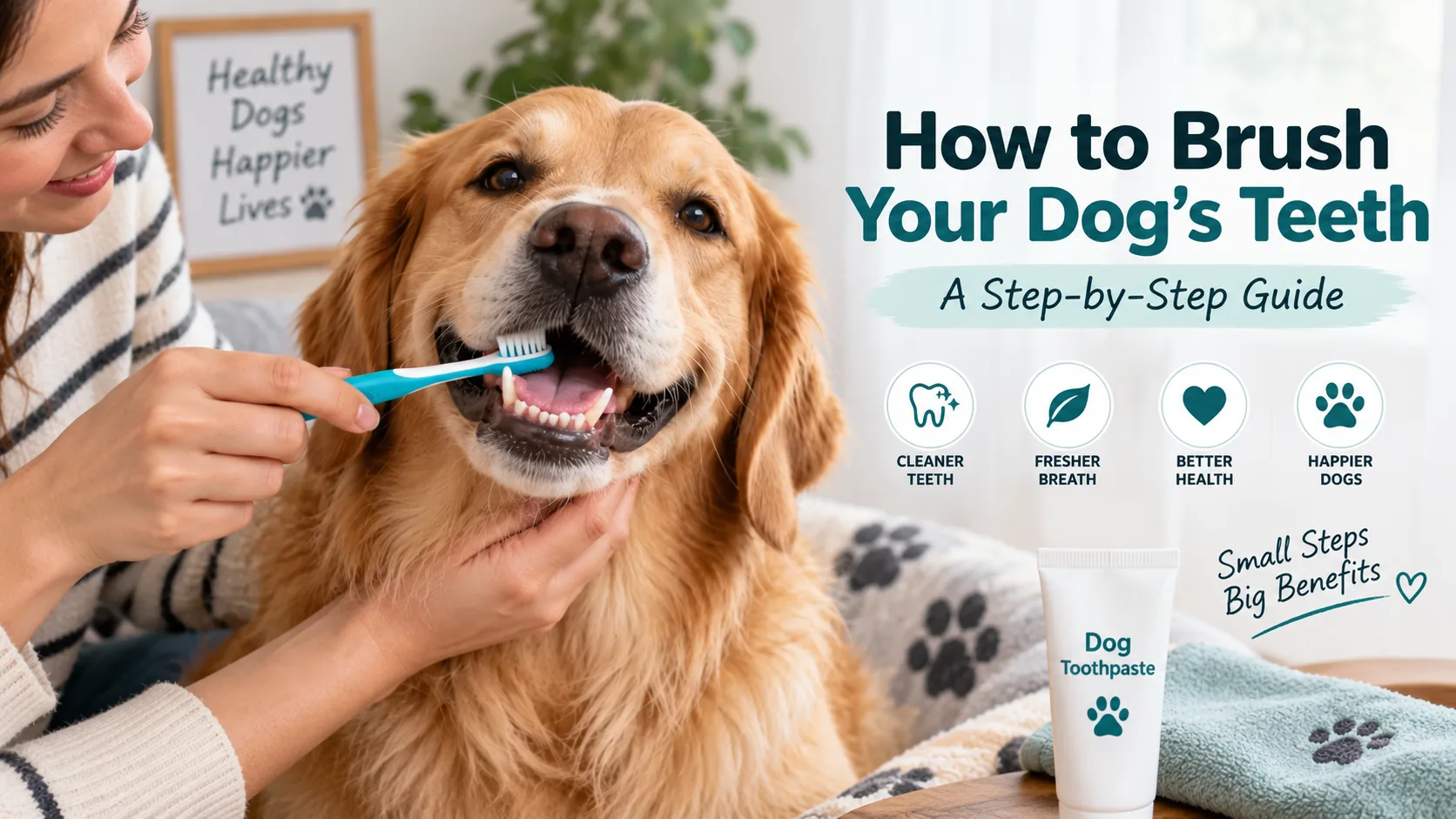
To brush your dog's teeth, start by getting your dog comfortable with having its lips and gums touched. Introduce dog-safe toothpaste before bringing in the toothbrush, then gradually brush the outer surfaces of the teeth using gentle movements. Start with short sessions and reward your dog afterward. Build a consistent routine that your dog tolerates, and follow your veterinarian's guidance for your dog's dental needs.
Why Brushing Your Dog's Teeth Matters
Regular home brushing helps manage plaque and supports your dog's oral hygiene between veterinary dental examinations. It can also help keep the mouth cleaner and make it easier to notice changes such as persistent bad breath, abnormal gums, or damaged teeth.
Brushing is home dental care. It isn't a substitute for veterinary dental treatment when a dog already has significant dental disease or hardened calculus. Veterinary Oral Health Council guidance notes that daily brushing is the standard goal, while recognizing that some dogs will not tolerate a full daily routine.
What You'll Need to Brush Your Dog's Teeth
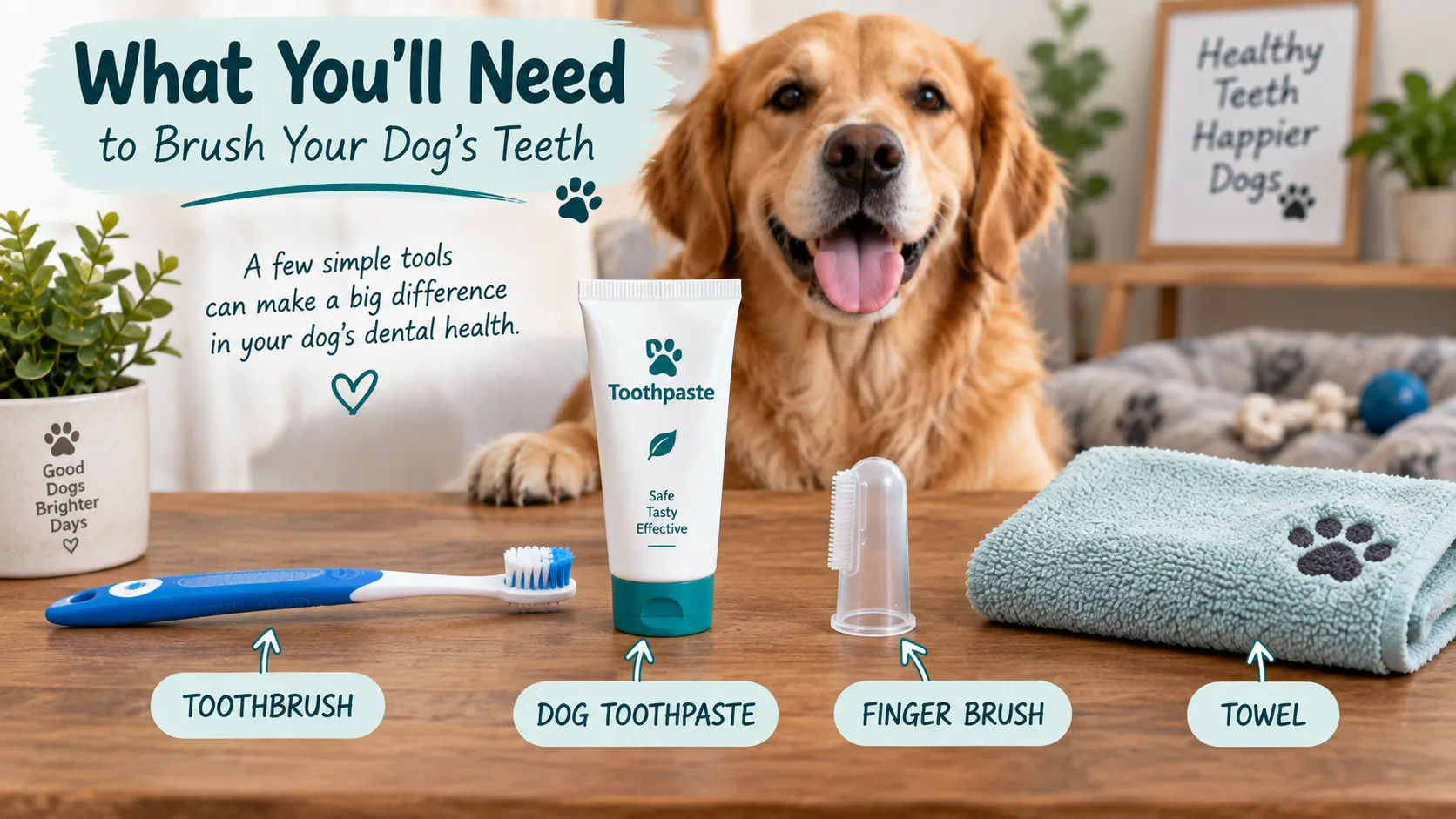
You don't need a complicated setup. Start with a dog-formulated toothpaste and a toothbrush that you can comfortably use in your dog's mouth.
1. Dog toothpaste
Use toothpaste specifically formulated for dogs. For more options, see our Best Dog Toothpaste guide.
2. Dog toothbrush
Choose from a standard dog toothbrush, dual-ended toothbrush, finger toothbrush, or another design that suits your dog's mouth and tolerance. See our Best Dog Toothbrush guide.
3. Toothbrush + toothpaste kit
A kit can be convenient if you're starting from zero and want the basic brushing supplies together.
4. Optional dental wipes
Wipes can be a supplemental option for some owners, but they shouldn't automatically be treated as equivalent to brushing.
Affiliate disclosure: Some links in this article are Amazon affiliate links. As an Amazon Associate I earn from qualifying purchases, at no additional cost to you. We link to Amazon search results and do not display prices, ratings, or availability; check the live listing before buying.
Dog toothpaste
Dog-formulated toothpaste is designed to be swallowed rather than rinsed. Compare picks in our guide, or browse the category on Amazon.
Dog toothbrush
Standard, dual-ended, or finger brushes each suit different mouths and tolerance levels. Match the brush to your dog rather than the fanciest design.
Toothbrush + toothpaste kit
A kit bundles a brush and dog toothpaste together, which is convenient if you're building your dental routine from scratch.
Step 1: Get Your Dog Comfortable With Mouth Handling
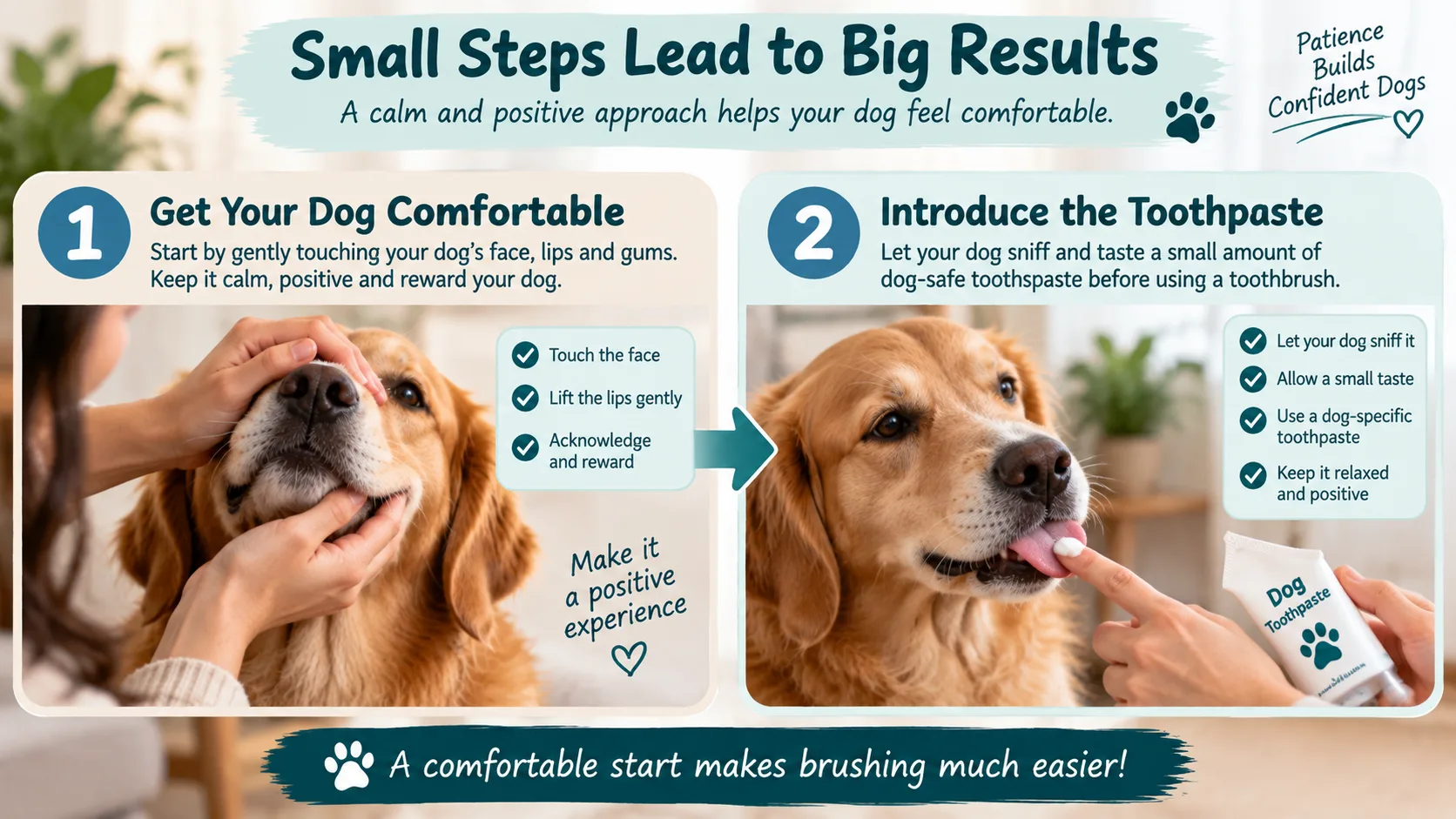
Before introducing a brush, help your dog become comfortable with simple mouth handling. Start by touching the side of the face, then briefly lifting the lip. If your dog accepts that, gradually work toward brief contact around the teeth and gums.
A simple progression is:
- Touch the cheek.
- Lift the lip briefly.
- Touch the teeth or gums for a moment.
- Reward and stop.
If your dog pulls away, stop and try again later rather than turning the session into a struggle.
Step 2: Introduce the Toothpaste
Let your dog smell the toothpaste first. If the product is designed to be tasted, allow a small amount to be introduced before trying to brush. The idea is to make the toothpaste familiar rather than presenting it as part of an unfamiliar object.
Use toothpaste specifically formulated for dogs. Don't substitute human toothpaste unless a veterinarian has specifically told you to use a particular product for your dog. The FDA warns that xylitol, found in some human dental products, is toxic to dogs. For ingredient information and dog-safe options, see our Best Dog Toothpaste guide.
Step 3: Introduce the Toothbrush
Let your dog inspect the toothbrush before putting it in its mouth. Touch the brush against the outside of the teeth first, then keep the first attempt very short.
If you haven't chosen a brush yet, see our Best Dog Toothbrush guide for standard, dual-ended, and finger-brush options.
Step 4: Start Slowly
Your first successful session might last only a few seconds. That's fine. You can build from one or two teeth to several teeth, then from one side of the mouth to both sides as your dog becomes more comfortable.
Don't make a full-mouth brushing session the requirement for every early attempt. A calm short session is more useful than a long session that makes your dog increasingly uncomfortable.
Step 5: Brush the Outer Surfaces
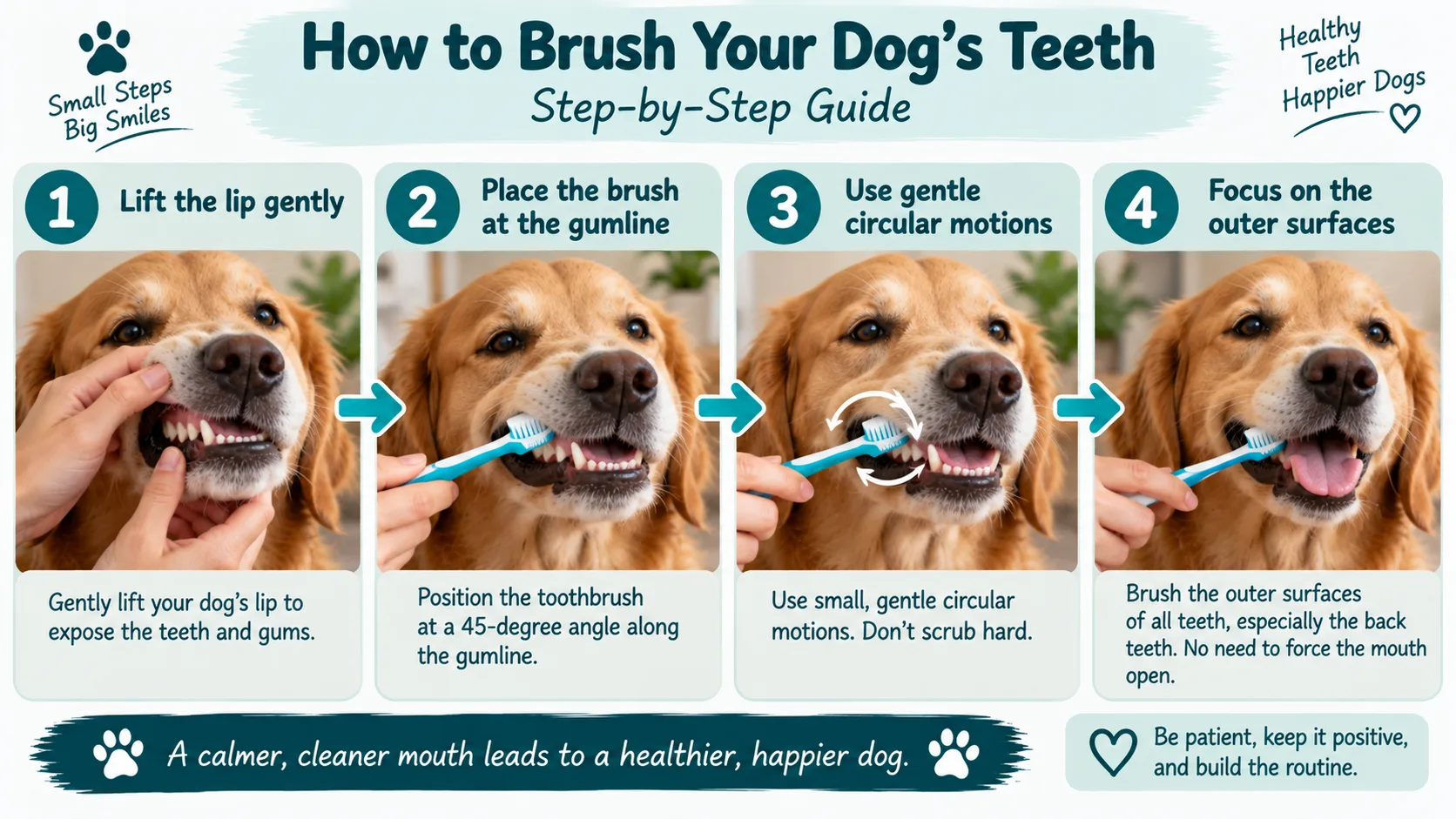
Gently lift your dog's lip and use the brush with light movements along the outer surfaces of the teeth. Work gradually around the mouth and keep the session within what your dog comfortably tolerates.
You don't need to force the brush deep into the mouth. Focus on controlled, gentle brushing and build coverage over time.
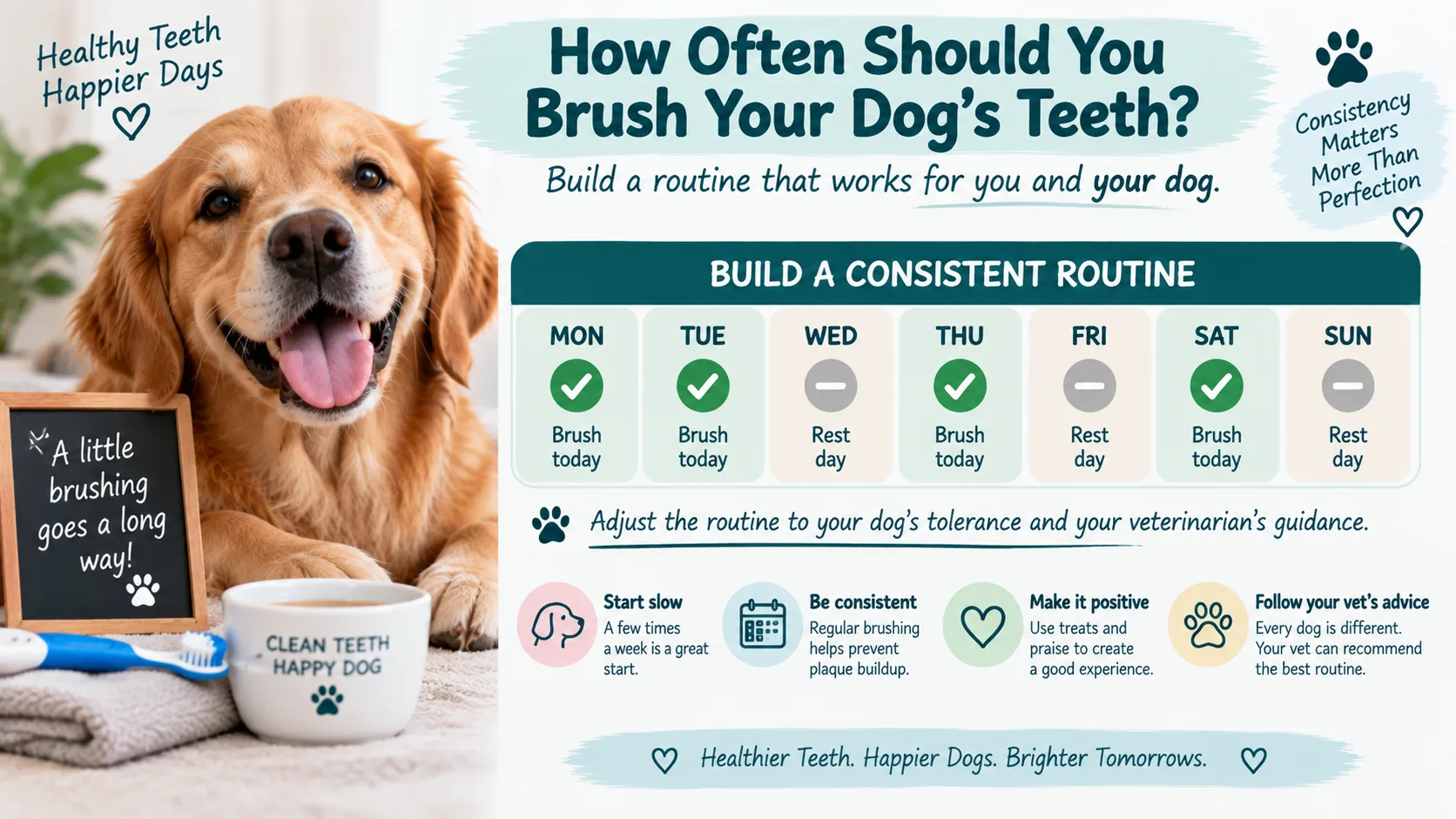
How Often Should You Brush Your Dog's Teeth?
Build a brushing routine that your dog can tolerate consistently, and follow your veterinarian's guidance for your dog's specific dental needs.
The most useful routine is one you can actually maintain. If your dog is still learning to accept brushing, prioritize calm, repeatable sessions rather than trying to do too much at once.
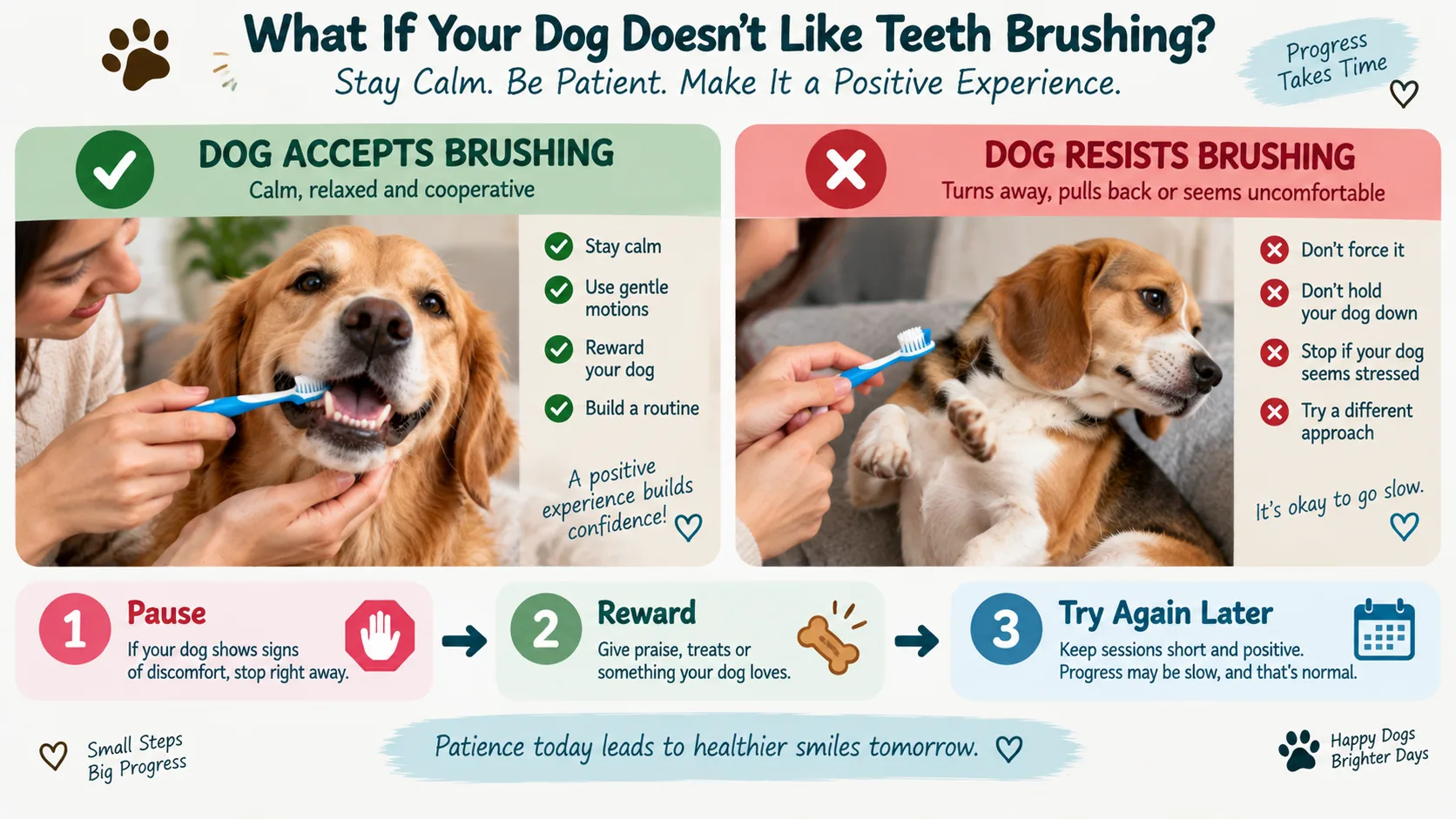
What If Your Dog Refuses Tooth Brushing?
Some dogs simply don't like the sensation of a toothbrush at first. Go back a step instead of forcing the process. If your dog is showing signs of stress, pause, reward calm behavior, and try again later.
Dog turns its head away
Return to gentle mouth handling without the toothbrush and build tolerance again.
Dog bites the brush
Let the dog inspect the brush, but avoid turning the session into a wrestling match.
Dog hates the toothpaste
Consider a different dog-formulated toothpaste if appropriate for your dog.
Dog won't tolerate a normal toothbrush
A finger brush may be an easier way to introduce brushing for some dogs.
Affiliate disclosure: We may earn a commission if you purchase through links on this page, at no additional cost to you.
Common Mistakes When Brushing a Dog's Teeth
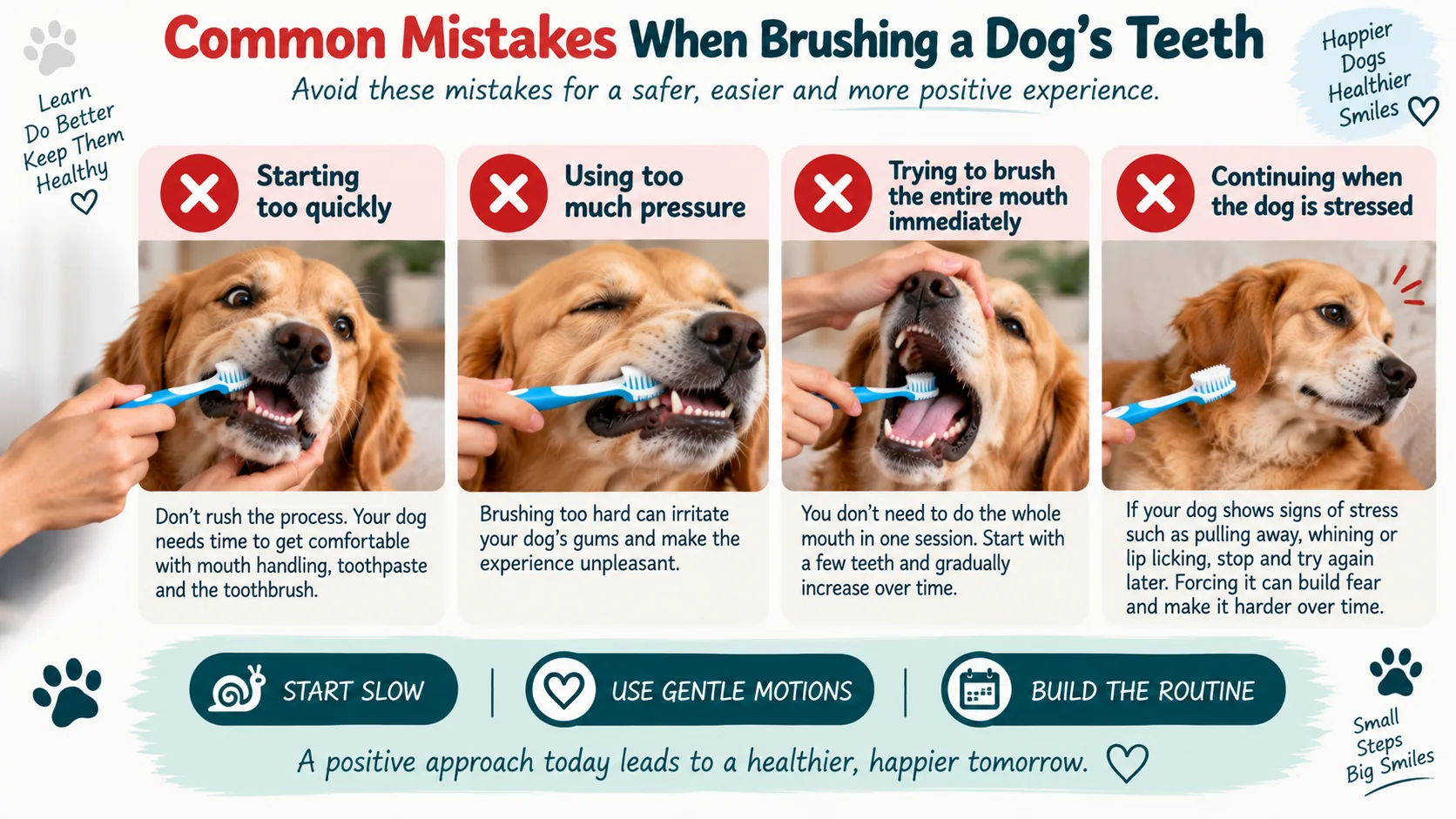
- Starting too aggressively.
- Forcing the mouth open.
- Using human toothpaste.
- Trying to brush for too long.
- Expecting the dog to accept the toothbrush immediately.
- Ignoring signs that the dog is distressed.
- Assuming home brushing replaces veterinary dental care.
When Brushing Isn't Enough
Home brushing is part of ongoing dental care, but it doesn't treat every dental problem. A dog may need veterinary assessment or dental treatment when there are signs such as persistent bad breath, visibly abnormal gums, bleeding, obvious pain while eating, loose or damaged teeth, or significant visible buildup.
Don't try to diagnose dental disease from a single sign. If you're concerned about your dog's mouth, a veterinarian can assess the problem and recommend the appropriate care.
Recommended Dog Dental Products
Once your dog is ready for regular brushing, the products you choose should fit the dog's mouth, your brushing routine, and the dog's tolerance. Our in-depth guides compare specific options; the links below open Amazon category searches so you can browse the current range.
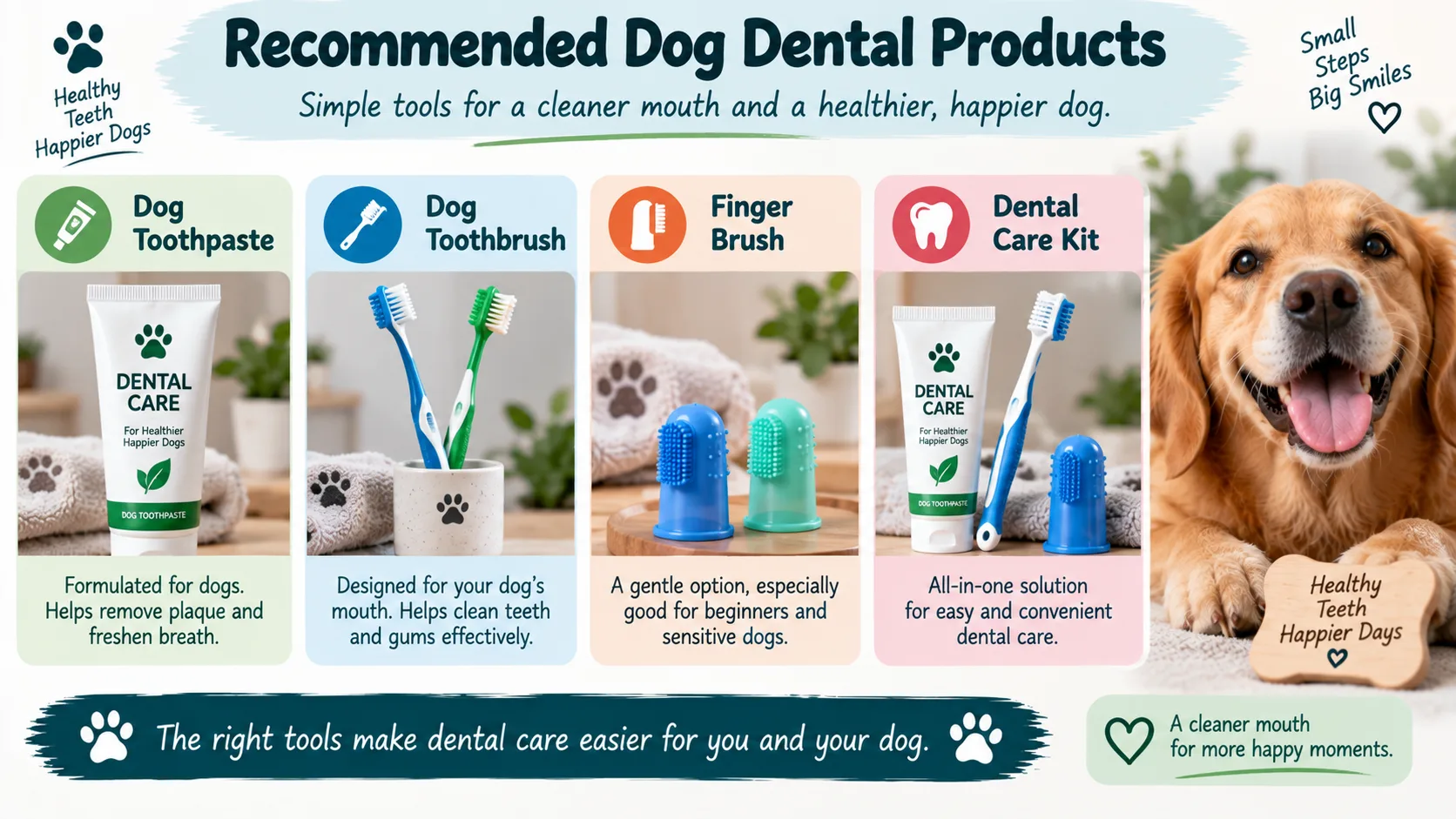
Best dog toothpaste
Dog-formulated and enzymatic options, with ingredients to look for and what to avoid.
Best dog toothbrush
Six picks for small dogs, puppies, and large breeds, covering dual-ended, triple-head, and finger designs.
Finger brush
A gentler introduction for dogs that dislike a handled brush, giving you direct tactile control.
Toothpaste + toothbrush kit
A convenient starting point for owners who need the basic brushing supplies together.
Dental wipes
A supplemental option rather than an automatic substitute for brushing. Use alongside a brushing routine where appropriate.
Dog Toothbrush vs Finger Brush
Neither design is universally better. A handled toothbrush offers reach and leverage, while a finger brush offers direct tactile control that can be easier to introduce for some dogs.
| Factor | Dog toothbrush | Finger brush |
|---|---|---|
| Control | Handle control | Direct finger control |
| Reach | Brush head determines reach | Close-contact design |
| Introduction | Traditional brushing | Can be easier for some dogs |
| Best use | Regular brushing routine | Dogs needing a gentler introduction |
Can You Brush a Dog's Teeth?
Yes. Brushing a dog's teeth is a common form of at-home dental care when done appropriately and tolerated by the dog. The process should be introduced gradually rather than forcing a brush into the mouth.
What Toothpaste Should You Use for Dogs?
Use toothpaste specifically formulated for dogs. Human toothpaste shouldn't automatically be substituted for dog toothpaste. For product options and ingredient information, see our Best Dog Toothpaste guide.
How to Clean Dog Teeth at Home
At-home dental care can include regular brushing, appropriate dental products, monitoring your dog's mouth, and veterinary dental care when needed. Dental chews, wipes, powders, or water additives shouldn't automatically be treated as interchangeable with brushing.
When to Replace the Toothbrush
Inspect the bristles regularly. Replace the brush when the bristles become bent, flattened, worn, damaged, or difficult to clean.
Frequently Asked Questions
How often should you brush your dog's teeth?
Build a consistent routine your dog can tolerate and follow your veterinarian's guidance for your dog's dental needs.
Can you brush a dog's teeth every day?
A dog may tolerate frequent brushing, but the appropriate routine depends on the individual dog and veterinary guidance.
What toothpaste can I use for my dog?
Use toothpaste specifically formulated for dogs.
Can I use a human toothbrush on my dog?
A toothbrush should suit the dog's mouth and be comfortable to control. Dog-specific brushes provide designs intended for canine mouths.
What if my dog doesn't like teeth brushing?
Return to mouth handling, introduce the toothpaste and brush gradually, keep sessions short, and consider a finger brush if appropriate.
How do I introduce a toothbrush to my dog?
Let the dog inspect the brush first, then gradually introduce brief contact after the dog is comfortable with mouth handling.
How do you clean dog teeth at home?
Regular brushing is a practical form of at-home dental care, supplemented by appropriate products and veterinary care when needed.
Can you brush a dog's teeth without toothpaste?
The appropriate approach depends on the product and your dog's needs. Use products according to their instructions and veterinary guidance.
Is a finger brush better for dogs?
Neither design is universally better. A finger brush may be useful for some dogs, while a handled toothbrush may provide more control for others.
When should I take my dog to a veterinarian for dental care?
Seek veterinary advice when you notice concerning signs such as persistent bad breath, abnormal or bleeding gums, pain while eating, loose or damaged teeth, or significant buildup.
Conclusion
Brushing your dog's teeth is mostly about patience. Introduce mouth handling first, then the toothpaste, then the brush, and keep early sessions short and calm. A routine your dog tolerates and you can maintain matters more than a perfect full-mouth session on day one.
Home brushing is one part of dental care, not a replacement for it. If your dog's mouth looks painful or inflamed, has persistent bad breath, or shows heavy buildup, a veterinary dental examination is the right next step. When you're ready to choose supplies, our Best Dog Toothpaste and Best Dog Toothbrush guides can help you match products to your dog.
Related Dog Health Guides
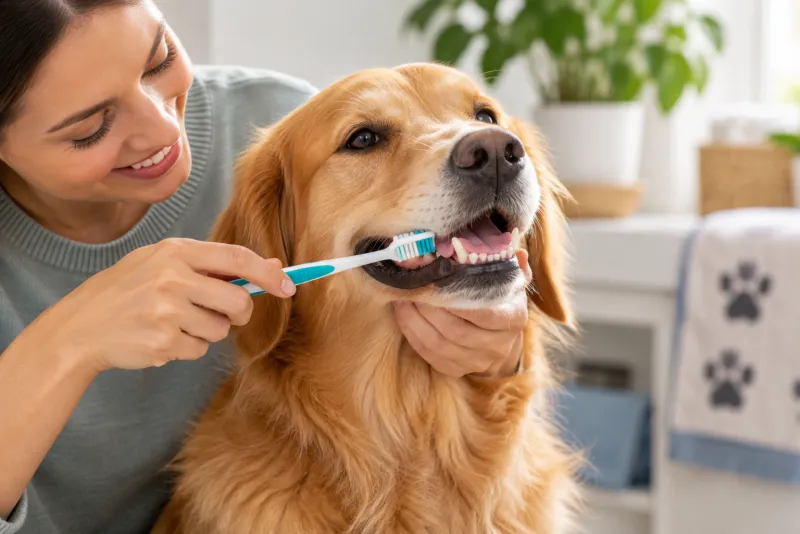 Best dog toothpaste
Dog-safe toothpaste picks, enzymatic formulas, ingredients to look for, and how to brush your dog's teeth.
Best dog toothpaste
Dog-safe toothpaste picks, enzymatic formulas, ingredients to look for, and how to brush your dog's teeth.
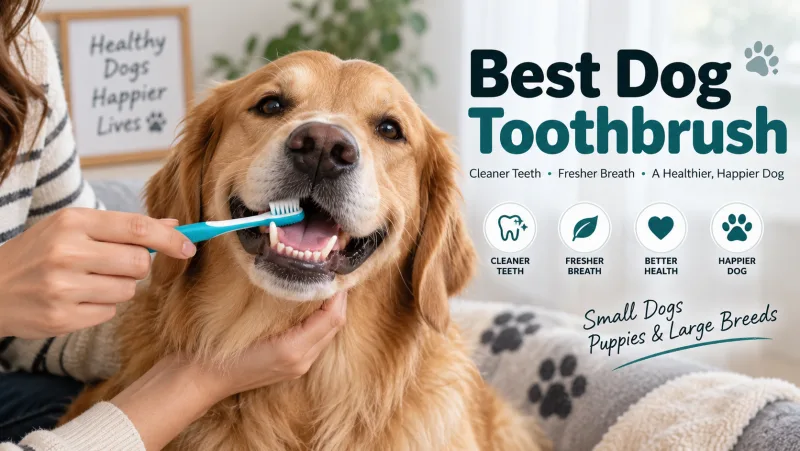 Best dog toothbrush
Six picks for small dogs, puppies and large breeds, from dual-ended to finger brushes.
Best dog toothbrush
Six picks for small dogs, puppies and large breeds, from dual-ended to finger brushes.
 Dog health tips
The everyday-care basics — nutrition, dental care, weight, and when to call the vet.
Dog health tips
The everyday-care basics — nutrition, dental care, weight, and when to call the vet.
 Dog gut health
How the canine gut works and the everyday habits that support digestive balance.
Dog gut health
How the canine gut works and the everyday habits that support digestive balance.
Sources & editorial references
- Veterinary Oral Health Council (VOHC). Brushing and accepted products for plaque and tartar control in dogs. vohc.org
- American Animal Hospital Association (AAHA). Your pet's dental care. aaha.org
- U.S. Food & Drug Administration (FDA). Paws Off: Xylitol is toxic to dogs. fda.gov
- VCA Animal Hospitals. Brushing teeth in dogs. vcahospitals.com
Affiliate note: this page contains Amazon affiliate links to product category search results for the supplies discussed. As an Amazon Associate I earn from qualifying purchases, at no additional cost to you. We link to search results and do not display prices, ratings, or availability, and no product is presented as a treatment for any medical condition.
Medical note: This article is general education for dog owners, not veterinary advice, diagnosis, or treatment. Painful or inflamed gums, persistent bad breath, bleeding, or heavy tartar should be assessed by a veterinarian, who can advise whether a professional dental cleaning is needed.